Transcripts are produced by Sofer.ai and lightly edited—please excuse any imperfections.
David Bashevkin: Hi friends, and welcome to the 18Forty Podcast, where each month we try to explore a different topic, balancing modern sensibilities with traditional sensitivities, to give you new approaches to timeless Jewish ideas. I’m your host, Dovid Bashevkin, and today we are continuing our annual exploration of teshuvah. Thank you so much to our series sponsors, Daniel and Mira Stokar. Thank you so much for your friendship and support over all these years.
This podcast is part of a larger exploration of those big, juicy Jewish ideas, so be sure to check out our website, 18forty.org, that’s 18forty.org, where you can also find videos, articles, recommended readings, and weekly emails. In many ways, what Rosh Hashanah functions as in our kind of day-to-day life is like a beginning that we can return to. When people speak about the beginning of the year, they can be talking about a lot of different things. They can be talking about there’s a fiscal calendar, there’s a school year, you could be talking about January 1st.
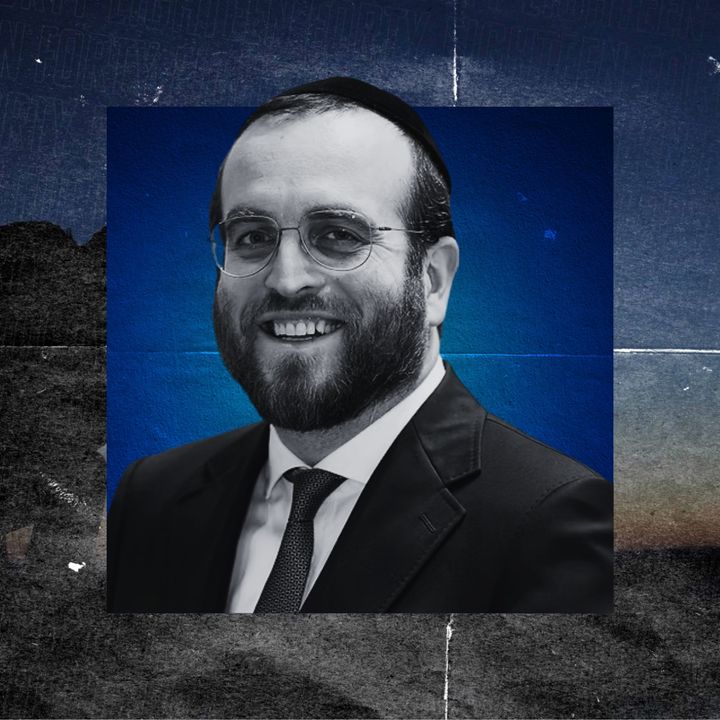
One of the beauties of Rosh Hashanah and the actual beginning of the year is the ability kind of come back to our actual beginning, to take stock, so to speak, of like where are we as our lives unfold? Is there an origin? Is there a initial purpose that should be animating our lives? And Rosh Hashanah is the time that we’re able to go back and find that beginning kernel of purpose that we then actualize throughout our lives. And today’s episode, I think, is a fascinating exploration into those beginnings. I have a very dear friend that I have known for well over 20 years, who we’ll be talking to today, whose name is Eitan Epstein. Eitan Epstein happened to have been my roommate in yeshivah.
That is not why I had him on, though we could do a separate episode about what that was like. I was a terrible roommate in yeshivah, and I should probably be more upfront about that. I should probably actually apologize properly and formally for anybody who had to be my roommate in yeshivah. But Eitan, who was my roommate in yeshivah, went through his own transformation of sorts.
He came in as a boy who just graduated from Ramaz, like the flagship Modern Orthodox high school, and by the end of his time in Sha’alvim, where we were studying in Israel, he had plans that he wanted to go to the most serious yeshivah institutions. His parents ended up making him, forcing him to go to Columbia. That backfired because that he had only, like this wasn’t him. And he went to YU, but then even after YU, he really found his place in the yeshivah world, much more communally, where he raises his family.
And I remember him in that transition, and we would talk a lot about those transitions, even as it was happening. I was watching, he was a grade older than me, and like watching him kind of develop was something very, very exciting. We also used to study together. I studied in Israel in the year 2002, which was a year after September 11th.
And people were still really like, like it was raw. It was still very much in people’s memories. I believe September 11th took place on a Tuesday, and my brother’s bar mitzvah was that Shabbos, and it was one of those Shabboses where they had like three different bar mitzvahs in the shul that week, and it was incredibly overwhelming for everybody, but definitely for my brother, shout-out to my brother Eli, who I love. Fast forward to the next year when I was studying in Israel.
September 11th took place when I was in 12th grade, and when I was studying in Israel, Eitan showed me something really amazing. It was an op-ed. This is before the world was so political. It was very unusual, honestly, at that age to even read an op-ed, to know what an op-ed was, and he showed me an op-ed that was written in The New York Times by Maureen Dowd.
And it’s something I’ve quoted before, and it’s an op-ed that is about growth and development itself. After September 11th, the whole world kind of convinced itself like, “We’ve changed. Like now, America, we’re very patriotic, and we have appreciation for what this country is about.” There used to be American flags outside of homes as far as you could see, no matter the neighborhood. And she wrote this article really cautioning America and the American people to not be too premature in their sense of certainty of how much we have changed.
She has a brilliant line, and this is the line that shared with me when we were studying together in Israel, which said, “Our obsession with how much we’ve changed is indicative of how much we’ve stayed the same.” When we’re constantly going around talking, “Oh, I’m a totally different person. I’ve totally changed,” when real change happens slowly and over time, the typology of change is not just, you know, Moses at the burning bush with this fire of clarity, there’s another model of change which is very slow, which is very gradual. I like to hold up in parallel to the story of Moses at the burning bush the story of, of Rebbi Akiva and watching the slow drip of water and how it can shape a cleft in a rock, just one little droplet of water. And that is the model that Eitan really showed me of how just a little bit daily consistency can really shape who you are as a person.
You don’t need these big cataclysmic events to give you the confidence to then announce to the world, “Oh, I’m totally different. I’ve totally changed.” And he taught me a lot about change itself. And that is why for today’s episode I wanted to highlight a program that Eitan is involved in that I think is so amazing and beautiful, and something that I’ve seen cropping up all over the Jewish world. And that is a program that opens up the doorways to consistent daily Torah learning.
Eitan developed something called the 300 Club, which we will talk about. It’s called the 300 Club just because 300 seconds is five minutes, where he has people who are not studying daily, or most of whom who have never studied daily, and he learns with a bunch, he has other educators who learn with them. And what I wanted to explore is what is it like beginning a journey in Torah learning? Those who have watched the work of 18Forty know this is very similar to what we’re doing in Talmud Daily, and this is very similar to our partners at the Simchat Torah Challenge, run by my dear friend Tanya Singer. It’s an incredible initiative kicking off Simchat Torah that’s trying to open up Torah study to new audiences, people who have never done this before.
This is what’s behind Talmud Daily, which you can check out at talmuddaily.org, and this is definitely what is behind the 300 Club. The commonality of all three is the notion that even if you feel like you are at the beginning, that can sometimes be the sweetest place and the sweetest time to build that consistency, to take your first step in daily Torah learning. And what we’re going to hear from today is not only my dear friend Eitan Epstein and how he thought of this and what this program is really about, but I’m talking to two people within the program who don’t have a background, have never really studied Torah all that consistently, but have taken it upon themselves that every single day, a day will not go by unless we are learning five minutes every single day. And this is, I think, a new paradigm of growth, not that it has never existed before, but to really take that one-on-one what we call chavruta learning and open it up to somebody new who’s never really had the beauty and the taste not only of Torah, but I think something even more important to emphasize is the consistency, daily Torah study, making this a part of our lives.
And the fact that my dear friend Eitan Epstein, somebody who has his own story of growth that we touch upon, took those lessons, seeing all these different communities, and found a way to open up a new gateway for people to come and begin journeys of Torah learning, that is why it is my absolute privilege and pleasure to introduce our conversation with my dear friend Eitan Epstein and some of his incredible, incredible participants in the 300 Club. It is my absolute privilege and pleasure to introduce a friend, we’ll say it right up top, my roommate in yeshiva when I studied in Israel for the year in Yeshivat Sha’alvim, my esteemed roommate who I saw evolve from a pink-shirted high school student to the bastion of Torah and really yeshiva culture. I really mean that in a very, very impressive way. It is my absolute privilege and pleasure to introduce my dear friend Eitan Epstein.
Thank you so much for joining today.
Eitan Epstein: Thank you, Dovid, for having me.
David Bashevkin: So, I want to start with why you’re here to open up this episode. You started something which I think is one of the most fascinating and exciting initiatives in the Jewish world right now, and it is called the 300 Club.
A, I love Jewish initiatives that are just numbers. We know this. I love it. It’s fantastic.
And thank you so much for not, you know, like price is Right-ing me and doing 1839 or 1841. So I really, you know, undercut by just a dollar, you really get messed over. But you started this initiative called The 300 Club. Tell me very basically: what does it mean, what is The 300 Club, what does it mean to be a member?
Eitan Epstein: The 300 Club name came to me, I was driving on the highway, it kind of popped into my head.
We had already begun the program, it wasn’t as if I named the program and then launched it. We had been doing it for a little while.
David Bashevkin: Oh, that’s interesting. It’s the opposite of how how bands start in high school.
Exactly. Always first you you first got to pick out the band name, and then like, okay, who knows how to play an instrument—
Eitan Epstein: You know, that that comes later. I mean, the program itself kind of happened by accident. I had about 10 years ago started the New Rochelle Torah Center, which was kind of a traditional community kollel in New Rochelle, which is where I grew up in Westchester.
And thankfully, that had been successful, and there was always kind of a nagging thought in in my mind, which is an idea my father had planted in my head years ago, that every member of every synagogue should be responsible, as part of the dues, to learn for a specific number of minutes per week in the synagogue.
David Bashevkin: That’s, I just want to pause for a second. We’re definitely not going to go in-depth, and your father deserves more than an episode, more than a mention, he would need a full series. We both agree on that.
Eitan Epstein: Which I’m sure he’ll be happy to do.
David Bashevkin: Yeah, but your but your father, Eli Epstein, is a great friend, has been a mentor and a guide to me. So he has this idea that like part of being a Jewish community is not just paying your dues, but like actually fueling and building Jewish life.
Eitan Epstein: If you if you pay to build a building, and you come on on Shabbat to be in the building, so the rest of the week everyone should be responsible for enhancing the the learning and the studying in the in the building, and so you, you know, everyone’s got to clock in for thirty 30 minutes, 45 minutes.
David Bashevkin: Exactly. Like part of your dues, like 30 minutes of Torah study. That’s a beautiful idea.
Eitan Epstein: Okay.
That was that was that was his that was in my head in my head. Okay. And there was this group of guys that I was always trying to get, and they’re high-paid executive group, they’re moving too quickly, they never have time, and even if they do have time, this week is Monday, the next week is Wednesday, then they’re away for three weeks, and it’s always hard to figure that out.
David Bashevkin: I don’t have just like an hour block standing.
Eitan Epstein: I couldn’t figure out how to do it. They were coming a little bit, but nothing consecutive and not consistently. So it’s about 4 years ago in the summer, I’m having dinner with one of them, David Mann, we’ll give him a shout-out. Okay.
And we’re talking about different ideas, and Shabbat came up, and we were talking about Shabbat and and how we keep Shabbat and how we understand Shabbat. And I said to him, like, we’re talking about Shabbat, we keep Shabbat, but do we study Shabbat? Do we learn about Shabbat? And so I said to him, just kind of popped into my head, I’m like, David, would you study Shabbat with me? And he’s like, how are we going to do that? And I said, why don’t we just do 5 minutes a day on the phone? I was a rebbe in JEC in Elizabeth, and I was commuting and back and forth, and I said to David, let’s just start 5 minutes a day. He agreed. We probably kicked that off in the early fall 2022.
And it was just the two of us, 5 minutes a day, and it was like 5 minutes a day—
David Bashevkin: But every day—five minutes a day.
Eitan Epstein: Every day. And I had no dreams of making anything more of it. I was teaching, I was doing my thing, and I had David as a chavruta.
Purim time, he asked me, can we prepare for Purim? I said, sure. So we prepared for Purim. We actually learned a piece of Ba’al HaTanya, which is, I’m sure, close to your heart, not going into that now.
David Bashevkin: There’s one right behind you, see the camera.
There you go.
Eitan Epstein: And and then he said, you know what, Pesach‘s coming, let’s prepare for the seder. So I said, oh, that’s a good idea, 5 minutes a day, you can give him like a little nugget to prepare for the seder. And early on, he says, you know, I’m taking notes.
Now, I’m in the car driving, I’m doing this by heart.
David Bashevkin: And he’s shaving, like doing the whole—
Eitan Epstein: Like—and he tells me he’s taking notes. And that’s the first time in 6 months that he’s taking notes, and if you know David, it’s not exactly, you know, a notetaking type of guy. I said, why are you taking notes? He’s like, because I got to come to the seder prepared.
You know, he’s got kids that are coming, and they know their beans and they have questions—
David Bashevkin: Of their own—
Eitan Epstein: And I want to have something. Yes, he’s taking notes. And at that moment, a light went off in my head, I’m like, there’re definitely other guys who would do this. And I quickly kind of got a group of guys in New Rochelle together, probably 10 or so, and I sold this idea of like 5 minutes a day on the phone, and they’re picking these most obscure topics, like I’m like, no, I’m not preparing separate topics for 10 people, just follow my lead, we’re going to do we’re going to prepare for the seder.
And we prepared, probably 10 guys.
David Bashevkin: I Each separate, it’s always one-on-one.
Eitan Epstein: Always one-on-one. And again, I’m still not thinking this is becoming anything, I was just like, let’s just get some guys together, and it’s a good way to get FaceTime or, not FaceTime, just voice time with these guys.
We go into say- into the Pesach, and I’ve I’ve quickly, the night before, typed up like a quick summary of all the stuff that we did, because I know that everyone wants to come to the seder with, you know, their notes. And after Pesach, they’re just like, let’s continue. Like, they liked it. This worked.
This worked, I got them. Like, I finally got these guys that were ungettable.
David Bashevkin: Like this is the Torah study that is actually fully integrated into my life, into my calendar, there’s a rhythm to it, and there’s a it’s manageable. 5 minutes is like, you can find 5 minutes.
Eitan Epstein: So there’s one guy in particular who was like hard to pin down, and his name was Ari Glass Okay, give him a shout-out. We’re giving out shout-outs. And at one point, like early on, I’m like, it was back and forth throughout the day, I’m like, Ari, I need a time, just give me a time. He’s like, 8:02.
And ad hayom hazeh, till this day To this day.
David Bashevkin: 8:02 is Ari’s time. Till 8:07.
Eitan Epstein: 8:02 to 8:07, that’s his time.
I said, just give me a slot, give me a time. And through the summer we kept it going, and in the fall we kind of got introduced to Englewood, so I moved into Englewood, kind of a similar type of, you know, group get-together, 10 guys, 10 or so guys. And again I’m pitching it to people, and at this point I’m seeing like there’s kind of there’s growth potential here. And we finished the year and things were growing, and probably at that point I kind of created the name 300 Club, just popped into my head, getting back to that.
Now that’s a great point because there are now like over 100 teachers, and I meet teachers and people studying, they’re like, “What is the 300 Club? They’ve been doing it for three years.” So now we got that clear.
David Bashevkin: You at some point started to scale it, meaning you started with like what I would call like yeshivah grads that it’s been it’s been a minute since they’ve been in yeshivah, but they went through the system. They probably went to like a Modern Orthodox high school.
Eitan Epstein: Yeah, I think basically that was everyone that was doing it at this point, people that had gone through the Modern Orthodox system or for sure were in the Modern Orthodox world at this point.
David Bashevkin: But then it started to branch, like you started to move beyond even the Modern Orthodox world.
Eitan Epstein: That’s right. I don’t remember the first person, but I think it was posted on a chat. Someone was enjoying it, he was like, “You know, I’m going to put this on some sort of business chat that I’m on.” And at that point we had opened ourselves up to kind of like, I don’t know who’s coming.
You know, it wasn’t like targeted anymore, I wasn’t picking the clients, it was just kind of opening myself up to who and a couple of people joined, and I saw immediately that their interest level, their excitement was palpable. It was amazingly exciting to be engaging with them, and the most fascinating part was and still is, is that it’s the same topic every day for all people. And they’ll catch me, they’re like, “Do you say this to everyone?” I’m like, “Yeah, the same exact thing.”
David Bashevkin: Wait, what do you mean by that?
Eitan Epstein: It’s the same It’s five minutes of prepared content that I’m curating from, you know, different places, and I’m sharing it with everyone, and they’re all hearing the same piece of Torah. And so sometimes they’re like, “Did you share this with someone who’s not Orthodox?” I said, “Yeah, absolutely.” “How’d you do that?” I said, “Maybe some of the words were not as” Like change the words, but it’s the same Hebraicized and maybe, you know, and at one point I remember I was driving with my kids, because I’m still doing a lot of this in the car, and they listened to me about four or five in a row.
I had an Orthodox, I had an Orthodox, a non-Orthodox, I had an Israeli type of guy, I had a yeshivish guy. So they’re hearing the same piece.
David Bashevkin: They hear you on the phone.
Eitan Epstein: And you do like some gentle code-switching, you know.
Exactly. You’re making you’re making the guy feel a little bit comfortable, you know, so there’s Gods and there’s Hashems, and there’s a little bit of things that move, and every now and then you throw in some Yiddish to get them, you know, get the guys excited, but they like it. It’s authentic, it’s real.
David Bashevkin: One thing that’s important, meaning, and you have this now for men and women.
Eitan Epstein: Correct. So at one point I was, you know, I don’t it’s hard to remember exactly the timeline, but someone said to me, “Why don’t you do this for women?” And I said, “Perfect.” And I, you know, got couple of suggestions of who could teach, we started to hire women teachers, we now have a women’s director. We’ve kept everything, you know, male and female separate, gender separate, just because I think a big part of it is the relationship that develops.
David Bashevkin: And it’s much healthier to have—
Eitan Epstein: Much healthier, and I’ve heard from so many different people that I’ll meet them like, “My teacher’s my best friend.” So you want the best friends to be cultivated in a, you know, gender-separate way so that people feel comfortable and people can connect.
David Bashevkin: And this is really the vision of like all religious growth ultimately comes down, one-on-one relationships. 100%. Because like, you know, I think about this a lot, like even the greatest rabbi in the world if he would come up to you, the average Jew, and start telling them what to do, tell me what to do, my first reaction would be like, “You don’t know me, you don’t know my life.” Part of what makes Torah and Jewish life so amazing is that it like it needs to address you, where you are, where your actual life is. It’ll take you in a whole journey, but like it can’t it can’t be divorced from the actual person.
Eitan Epstein: That’s right. We live in a generation where everything is hyper-personalized. Yeah. Our suits are customized, our our social media is customized, I mean Amazon’s watching you and telling you what fits you and this is your shoe size and this is your thing.
Like we almost don’t even have to think about who we are, and the concept is that the Torah we study should be the same way, because imagine if your teacher—
David Bashevkin: Will remain human, also.
Eitan Epstein: Your your instructor is exactly, your instructor’s with you and your instructor is learning the words that you like, the topics that you like, the stories that fit in. The idea is that you can put in stories that like almost the same way AI would do, because they remember the stories, like, you know, “This reminds me of something you said three weeks ago,” and you’re bringing you’re personalizing those five minutes, and so the person feels amazing. It’s it’s relevant, it’s personalized.
You’re choosing like their Torah. Exactly, it’s their it’s their piece, but yet it’s the same Torah, meaning I’m not watering it down, and it’s not fluff, and everyone’s getting I’m I’m I insist, you know, for the people I learn with and I tell all the other teachers as well, there’s got to be words of Torah that are shared. It’s not just a story of belief believing in God, there’s got to be words of Torah. Not just like a nice, pithy, which is great, there’s a place for that.
The words the words of Torah are powerful. Sometimes it’s just a pasuk, sometimes it’s more, but you’re introducing the world of the yeshivah to everybody: Rav Chaim Volozhin, and the, you know, the Brisker Rav, and the Chazon Ish, and the Rambam, and the Ramban, I’m not going in in Yeah, yeah.
David Bashevkin: Chronological order—here. But you’re going to offend somebody if you leave them out.
Eitan Epstein: But yeah, I want to stop at some point.
And Dovid, before I lose control, but you’re bringing in you’re bringing in all of that stuff and you’re sharing it with everyone, and the power of Torah It’s addictive. I mean, just this morning I started learning with someone, and he called me, and two hours later, “I was just at a meeting and I introduced you to someone else. Can you learn with that person also?” Literally, we learned less than five minutes, and it’s immediate, “Wow, this feels great,” because a Jewish soul wants to hear the Torah.
David Bashevkin: So I want to go back, and, you know, it kind of relates to my own curiosity about your journey.
As I said, you know, somewhat jokingly, we didn’t just live together, we also studied Torah together. We studied what’s known as musar, like ethics together, and we studied Mesilat Yesharim, which is the the Pathways of the Upright, written by Rav Moshe Chaim Luzzatto, traditionally known by the acronym Ramchal. And I have two major memories, both of which I think I’ve shared on 18Forty, but you’re here. Number one is the first day that we learned together, and my Mesilat Yesharim is like so near and dear to my heart.
It’s like beat up, like it’s it’s serious. But the first day, I came probably like four minutes late, like a negligible time. The fact that I was there, honestly, I was expecting a parade. I’m I’m here, you know, like, and you said like, “Look, you got to either come on time or don’t come at all.” And I was like, “Okay, you’re crazy.
You’re a You’re a crazy person.” But it also said something like, I said, “You know what? I’m going to come on time.” And we plowed through, like, in a very real way, like taking it like, what if this is real? Imagine that. Imagine Judaism was a real system for how to live and build your life. And it told me the that value of time I had way back then. But the other thing I find fascinating, and I’ve quoted you about this before, and you said, “You’re not going to mention the article that I gave you 20 years ago again?”
Eitan Epstein: But if I would have known that anything I shared with you in that year in Sha’alvim would be like going through the annals of history and recorded over and over again, I would have been much more mindful—
David Bashevkin: Of what I shared with you.
We were in Israel the year 2002. It was your second year in Sha’alvim, it was my first year. It was right after just a It was a year after September 11th. And you shared me an article from Maureen Dowd.
Again, this is not because you’re a lover of The New York Times, you don’t ascribe to It’s the last time I heard you quote Maureen Dowd. First and last. If you’re not a But it’s a very profound article, and one I’ve come back to over and over again. It’s called “Mirror, Mirror of the Fall”.
And in that article, she’s actually talking about spiritual change. And she says our obsession This is the line that you told me. You’re like, “I’m not sure if I got it right,” and I spent like three years trying to find the article to see if you got it right, and you did. “Our obsession with how much we’ve changed is indicative of how much we’ve stayed the same.” And it was a very profound idea, especially during a year in Israel when we are so obsessed with like, “Have we changed yet? Have I Am I shtark? Am I super frum? Did I make it? Am I there yet?” And we took very different paths.
Like you took a path of like really like a breakthrough, like you immersed yourself in the yeshivah community, and I was maybe like a little more slower, rockier, bumpier, whatever it was. We’ve both had our bumps in the road. But one of my questions about your journey, which I find so fascinating, is you kind of leveled up in the type of community that you affiliate with. You affiliate with a much more Torah-centric community.
And the level of Torah learning valued in that community is, I would expect, at a much more serious or in-depth level than what you are transmitting. How do you deal with the struggle of like most of the Torah that I’m delivering is not really, you know, that high-level Torah that is prioritized and kind of shaped in my community? Do you ever find yourself almost like looking down or belittling your own contemporary work? How do you stay like still manage to find the dignity and importance of like introducing the basics when you yourself were so drawn to a community that’s like, “We’re way past the basics. We’re like We’re in the major leagues. We’re in the”, you know, they’re not interested in We’re We’re not focusing on like the This is stuff that should be covered in elementary school.
And you spend a lot of your day teaching Torah that likely is covered, you know, in more in the early years in the community you affiliate with. So how do you manage that? How does your contemporary affiliation kind of affect the way that you view and appreciate the work that you’re doing in the 300 Club?
Eitan Epstein: Great question, but I will disagree on on your kind of assumption of what we’re doing. I’m a big believer in when we a teacher teaches, any teacher teaches, you got to put yourself in the shoes of the person that’s listening. How are they going to receive that? And then be selective in terms of the content that you’re presenting, but there’s plenty of high-level mature mature content that you can share with your audience, and each time each time is it’s specific person, but in general the audience that you’re you’re teaching and they want to hear that.
And so I I disagree with that in the sense that I I think, and I keep this in the front of my mind, any day that I’m sharing a piece of Torah with the group that I’m learning with, I would be comfortable and proud to share it with my next-door neighbor, with my rav, with anyone of the.
David Bashevkin: I’m so happy you said that. I I happen to totally agree with you, and it’s one of the commonalities of why I’ve been so drawn not only to you, we’re old friends, but so drawn to the 300 Club. It’s a genuinely brilliant idea.
I have like fantasies of like, oh my gosh, we should merge and just like bring this.
Eitan Epstein: Oh, that’s great. You’re in charge of fundraising—
David Bashevkin: I thought you were going to be in charge. What you’ve done is like created a new common language to share the depth of Torah with a wider audience.
Eitan Epstein: So I want to, yeah, totally. Again, these are like moments and flashes. I was sitting at the New Rochelle Kollel, the New Rochelle Torah Center, with a good friend of mine, a doctor in New Rochelle, Yoel Heft, and he said to me, “It’s not fair that all of the great Torah is rarely translated. I mean, ArtScroll’s done an amazing job, but they’re translating old books.
They’re translating, yeah, but none of the current Roshei Yeshivot, the shiurim, the lamdut, all of that never gets carried over. Like who’s translating that? We barely can write the write it the first time in Hebrew, we’re not translating it.” And so it was like, whoa, what if we brought that over? And again, it’s nugget-sized, it’s five minutes, but what we’re sharing is lamdut, what we’re sharing is machshavah, Maharals and things, and this type of high level, and the the point is, is that these people are sophisticated. They may not have spent ten years learning, they may not have spent five, they may never have spent any time in yeshivah, but their minds are mature, they’re sophisticated, they’re brilliant people. They’re adults.
These are adults and highly successful, not not highly functional, highly successful.
David Bashevkin: They don’t need to be like spoken down to.
Eitan Epstein: Exactly. So if you lift the bar not only in in in in the content, but in the sources that you’re sharing, in the presentation, I mean, there are people, and I speak quickly because I’m doing this 50, 60, 70 times a day, the guys will tell me, “Speak as fast as you can.” And I’m going on 2x, and they’re listening, because these are really smart people.
And I can imagine sometimes they’re sitting there during, you know, a speech, a sermon, a dvar Torah, whatever they’re listening to, and they’re like, “We get this. Give us the good stuff.” And I find that across the board, regardless of the background. Today, I’m just, you know, I’m not going to share the piece today, but today there was a pasuk, there was a Rashi, there was a there was a, you know, different mekorot that I’m sharing with people who Sources. Sources, sorry, I was trying to be good about that.
You know, I remember early on someone said to me, “Who’s Rashi?” Yeah. And I said, I looked up, and I said, “My God, I have the opportunity to introduce the most impactful person in my life—
David Bashevkin: And I get to teach somebody who Rashi is.
Eitan Epstein: Not just the Rashi, but who Rashi is! And now I’ve learned with him for three years, and I use that, and he knows who Rashi is. It was like that introduction was priceless.
But if I never would have said that, so he would have lived his whole life and never heard about Rashi? He would have heard about Judaism, he would have heard about the State of Israel, he would have heard about all the important topics that are spoken about, and the nice ideas, and the ethics—
David Bashevkin: Sure.
Eitan Epstein: Of Judaism. But he never met Rashi! Like Rashi is Rabban shel Yisrael. Yeah.
He’s the first, and we have to introduce Rashi, and we have to—
David Bashevkin: Introduce—he’s the educator in chief of the Jewish people.
Eitan Epstein: No, the Ramban, the Ramban speaks about Rashi, lo reishit habechor, I think he says. He’s the first. He came first.
David Bashevkin: Yeah, he’s the first he’s like the firstborn of the commentaries.
Eitan Epstein: Yeah, we have to introduce our commentaries to to the people.
David Bashevkin: So I I I want to touch on something that is slightly sensitive, but but we both kind of struggle with this, and and you didn’t mention it, but I’m curious. You know, these type of initiatives, they require your life and your real time, and you have to fundraise for it.
How do you navigate just like on a very practical sense? Do you charge participants? And like how have you been managing with taking kind of a one-on-one relationship and then like trying to build and like fundraise around it so it so you can have the capacity to like grow where it needs to grow?
Eitan Epstein: So we don’t charge participants. That was a internal debate, and I’ve spoken to a couple of, you know, advisers and friends about it. My belief is that Torah needs to be accessible to everyone, especially the clientele we’re dealing with. Some people have had real difficult experiences early on in life with learning Torah.
Some people have never learned Torah, and they’re not looking for another monthly subscription. And so to introduce them to such a program and be like, “Yeah, there’s a monthly subscription, it’s only whatever, or it’s six months free and then we’ll get you,” the taste didn’t didn’t work for me.
David Bashevkin: I’m kind of with you, yeah.
Eitan Epstein: And so Torah‘s going to be Torah‘s going to be free for everyone.
We run based on donations. It’s difficult. Fundraising is not something that I ever looked to do. It’s not something that’s easy.
David Bashevkin: You know what you and I have in common? We both grew up in communities and surrounded by people who are the philanthropists and not the askers. Yeah. Yeah. That’s a very tough, I I I had the, a very hard time, I still do.
I’m much better at it because I think I’ve I’ve learned how to build the confidence in my own mission, But that’s a very tough switch.
Eitan Epstein: It’s very hard. Someone once said to me, Wouldn’t you rather be the guy writing the check than the guy asking for the check? And the answer is yes, I would be. But at the same time, if you or I were in a situation where God forbid we had to collect money for a family member, or for an operation that someone, we wouldn’t think twice about it.
And I honestly look at the program that we’re running here as the same way. No one’s in physical danger, but there’s a spiritual danger for individuals, for Jewish for Jewish people. This is what everyone’s talking about. If if if I don’t do this, if I don’t bring this, if we don’t bring this, who’s going to do this? And we’re going to get, you know, get up to to to Shamayim, we’re going to get up to God after 120 years on this earth, and He’s going to like, Why didn’t you do this? And I’m like, Well, it was the fundraising was tough.
They’re like, That’s what was hard? Yeah. You know, your grandparents didn’t have food. Yeah. You’ve got everything you need, and the question is just making the right introduction with the right person, and that’s what we have to do.
And and and I believe, I mean, we’re running month to month, but there is no doubt in my mind when you see the these hear these stories, and you see these people, you meet these people, and one after the other, this is changing my life, five minutes a day. What’s the price tag on that? It’s priceless. If I was the richest guy in the world, I wouldn’t let anyone donate to this program, I would take it myself. I’m reminded of something someone told me early on from Rav Aharon Kotler, who was fundraising for the BMG, the Lakewood yeshivah which he started, and he had a lot of difficulty at the beginning, and someone that was with him said, How could it be that the rosh yeshivah was going around door-to-door, and you’re getting pennies and dollars? Like, this is crazy.
And he said, Because when we do that, we have the opportunity to tell more people about our yeshivah. And if we got one check, then we’d be done. He’s like, We’d be able to go And he quoted a Wow.
David Bashevkin: Isn’t that a profound idea?
Eitan Epstein: He quoted a Ramban.
The Ramban says there were no signs to go to the Temple. When the Jewish people had to go to the Temple from Israel, there was no Waze, there were no signs, there were no maps. How’d you get there? The pasuk says, L’shichno tidreshu uvata shamah. And the simple understanding means that you’d have to go to see the Shechinah, God’s presence.
L’shachen could also be your neighbor. And the Ramban says you had to knock on a guy’s door and say, Hey, I’m lost. How do you get to Jerusalem? And you know, his wife would scream from the back, Hey, why aren’t you going? Okay, I’ll go also. So they would walk together and they’d walk together.
And so part of the process is meeting people and telling them about what we’re doing, and whether they’re going to be your big donor or not, they’ll give you something or not, now they know about the project, and maybe they’re going to meet someone tomorrow in their office, or on the street, who who could use the Torah, and like, you know what, I couldn’t give, but it’s a great project. And so the opportunity to meet more people is an opportunity to spread the project. And I think God makes it harder for great organizations to do this so that we can tell more people about what we’re doing.
David Bashevkin: That is the most powerful and meaningful answer that I could have ever asked for.
Eitan Epstein: It’s hard, but it’s true.
David Bashevkin: Cuz that’s what I want. I just want it to fall down from heaven.
Eitan Epstein: Yeah, but then you’d And you’ll never meet with the next 20 people, and in those 20 meetings will be another, you know, who knows what? Another idea, another connection, another L’shichno tidreshu.
You get to the Shechinah—
David Bashevkin: You have to knock on your neighbor’s door.
Eitan Epstein: By meeting the shechenim. You have to meet the shechenim. You have to meet the neighbors.
David Bashevkin: So, that’s one thing that I wanted to ask you about, and really like my final question, because I love featuring this. Like, featuring people who are either just beginning a journey in Jewish learning or who are setting up the road for the beginning of a journey in Jewish learning. How has this program kind of changed the way you look beyond the Orthodox community, number one, and how has this program changed the way that you look within our community? Like you you you have a You’re kind of like standing at this doorway where you’re dealing with a lot of adults who are sincere and thoughtful and sophisticated, but for a myriad of reasons, did not make daily Torah study a consistent part of their life until they met you. How has being involved in this program changed your relationship almost to like the Jewish people? Because like, you’re dealing with a lot of neighbors.
You’re dealing with a lot of people who like, come all the nooks and crannies, you know, both in the kind of mainstream communities kind of fell out after, but also people like we’re going to talk to later in the episode, in Arizona and Chicago like you You really are are finding like the the hidden gems of the Jewish world. I’m curious what effect it’s kind of taken on you.
Eitan Epstein: Well, it’s a process. It’s a journey.
I think early on, I had a meeting with a good friend, George Rohr, and he gave me a point and he said, Don’t look at the labels. Don’t focus so much on Orthodox, Conservative, and Reform, and everything in between. And I think that was kind of like set me on a certain path to begin to take the person apart from the label. That was the kind of the beginning, and then there’s a beautiful idea in the Tomer Devorah, the Ramak, Rav Moshe Cordovero writes about the need for us to sometimes look look off, take, you know, zoom out from the negative.
It’s very easy to find the negative or the difference in someone else. What if you look for a positive? What if you focus on the positive?
David Bashevkin: What if the mission was—
Eitan Epstein: Right. You have to find—
David Bashevkin: We’re not leaving until I’m not—I’m not going to deal with the negative part. We disagree, there’s a difference of opinion, there’s a difference of practice, but I’m going to find something about you that I love.
And when I find that thing, that’s what I’m going to think about, that’s what I’m going to focus on. And the most incredible answer came out from that process, which is the Jewish soul is the most amazing thing. Like, I don’t even have to look for what you do and how you think and how you act, your soul is on fire, because I’m going to see that in the first three days that we’re learning. I’m saying the response that you get, the neshamah, the pintele Yid, whatever you want to call it, that that that’s on fire.
That essential Jewish identity. And and that’s what you’re working with. You’re working with souls. You’re you know you’re you’re a doctor you know a doctor dealing with souls, you’re dealing with the soul, and then all of a sudden the other stuff is like details.
I mean, I’ve been asked a couple times, people ask me to discuss controversial topics, and I say same thing. I said, if we discuss this topic, you will like me less and maybe I’ll like you less, and we’re going to be no better for it, because the same issue will exist when we finish talking about it. I’m not going to talk about it. I want to go back to the sources, back to the Torah, back to what unites us and not what pulls us apart.
And I remember having a conversation with someone in my neighborhood, and and we were talking about something similar, and I said it’s very easy to dislike someone, it’s very easy to criticize someone. It’s much harder to like someone. But when you begin to start liking someone, you start to love them, and it’s very difficult to criticize them. And it’s not that we don’t have a difference of opinion, and I definitely know that I’m different than my chavrutas, the people that I’m learning with, and they’re different than me in many different ways, but we’re all different, and I’m not going to focus on it.
In the same way I’m going to be selective in terms of the content that we are sharing with each other, I’m selective to a certain extent with the issues that we talk about. I’m not going to talk about the issues that are going to get us upset and that we have you know there’s a divide. Leave them aside. Other people will figure those out.
Yeah, there’ll be other times. In the meantime, let’s talk Torah. And that’s what the conversation sounds like. People say, like, do you schmooze? Not really.
It’s five minutes, it’s it’s a hello, it’s a good morning, it’s a it’s it’s you know, hey, how are you, and then we start learning. And that’s really I think what’s been able to kind of to bridge, I don’t want to say bridge the gap, but to connect souls. I mean, the souls are connected, and the relationships are incredibly deep. And I’ll just you know I’ll I’ll end with a story which I think you know really captures a lot of of my experience here.
Personal story, I don’t think I’ve shared it yet, and now I’m going to share it with your massive audience that’s listening to this. But but two years ago on Simchat Torah, it was the year after October 7th, if those that you know watched the Torahs come out of the aron, out of the ark, it’s interesting, there’s always a parade, we take out all the Torahs that we could find, and we have some beautiful ones with silver crowns, and then somehow we bring out the ones that are have become invalid, they’re pasul. And they always have a little rope tied around them.
David Bashevkin: Yeah, a sefer Torah that is not up to standard that it could actually be read, maybe it’s missing a letter or a word or whatever reason, they tie a rope around it almost like a gartel around the sefer Torah.
Right.
Eitan Epstein: So, I was looking at it and you know I’ll be honest with myself, and I’m thinking to myself, I really hope they don’t give me that one. Like, I want to get the nice one, the fancy one. But then I was then I was thinking a little bit more, like, why why do we bring them out? Why do they come out?
David Bashevkin: Why Why do we bring them out at all?
Eitan Epstein: Why did no one fix it from last year? Like, if we if we’re not going to deal with them, so then like why are they here? But yet they come out.
And lo and behold, you know, it’s a selection process, and I got I got the pasul sefer Torah, I got the one with the with the belt around it. And I was holding it and kind of childishly, you know, wished I would have got the other one. How fast can I switch and convince someone to hold this? And then I took it, and I was like thinking to myself that there’s so many Jews that probably feel like that, that feel like they’re neglected. Like, I I wish someone would would teach me that.
I’m the pasul sefer Torah. I’m the pasul sefer Torah. I’m the one that I’m the one that—
David Bashevkin: No one wants to carry me.
Eitan Epstein: No one wants to carry me, no one wants to learn with me, no one thinks I even care about learning.
And if you’d give them just a little bit of a of a chance, you know, who knows what which sefer Torah is missing one crown, one one little piece of ink is smudged, who knows what they’re missing, and all of a sudden it’s it’s we’re back in business. And I took the sefer Torah, I was crying, crying now, crying and crying and crying. And it was like, what are you crying about? I said, I couldn’t believe there’s so many Jews. I was holding that sefer Torah, but that sefer Torah represented every Jew that that that that that’s left in a situation where they’re part of the circle, they’re here, but like we could give them so much more and we can enhance that.
We can have a pride in carrying them. Yeah. And then next year they can come back and they could feel like they’re they’re one of everyone else. And the difference is so small, it’s five minutes a day.
Like, what are we doing with these people? And the following year on Simchat Torah on Sukkot, sorry, it’s the same holiday, one of my chavrutas called me up and he’s just getting involved and he tells me he was sitting with a rabbi, I think it was his Chabad rabbi, and he’s learning about the you know the four things that we take on Sukkot, and he says, I am a willow. I said, what do you mean you’re a willow? He says, cuz some he was told some Jews have smell and some Jews have taste, and the willow, the aravah, has no smell and no taste. Has no smell and no taste. He said, I don’t know anything, I don’t I’m a I’m a willow.
And I was like, whoa. And I said to him on the spot, I said, you know, we take at the end of Sukkot on Hoshana Rabbah, we take a separate bunch of five willows, five aravot on Hoshana Rabbah, and we take it and we knock it. You think you could take this thing that has no smell and no taste and make it any worse? We made it worse. We took off the leaves, we hit it till the leaves come off.
I said, but you know what we do with it afterwards? We throw it on the top of the Aron Kodesh. Wow. Why? I said, because some Jews have smell, some Jews have taste, some Jews have both. But a Jew is a Jew is a Jew, and that’s what it is no matter you can’t And you also belong on top of the Aron Kodesh.
And you’re you’re top. You’re top. You’re not in the Aron Kodesh. You’re not the sefer Torah…
And now you’re on top of the aron kodesh. And he tells me, he asked me, “When’s Sukkot?” This this this Jew this Jew just asked me last night, “When’s Sukkot this year?” I said, “It’s coming up soon.” He said, “I want to I want to build a sukkah this year.” Wow. We don’t know the effort is so, so small on our part what we can share with Jews. Their neshamah is waiting for it.
And in in a second, you can take that sefer Torah that has a belt around it, that feels like it’s outside, that feels like no one wants to engage with it, and all of a sudden it’s dancing in the middle of the circle.
David Bashevkin: I always am looking for book recommendations, and specifically I’m curious of what you’ve heard kind of in this kind of work, people who are just beginning Jewish journeys. But I’m curious, do you have go-to books to begin learning journeys with? Either a book or like where you actually I want to start learning, I don’t know where, what do you usually tell them?
Eitan Epstein: That’s a great question. I wish I had a great answer to that question.
I like the Sefer HaChinuch for the ta’amei hamitzvot. The Sefer HaChinuch, when he describes the mitzvot, many times—
David Bashevkin: We don’t know who wrote it, but it’s like a—
Eitan Epstein: 14th century—
David Bashevkin: It could be a grandfather, it could be it could be a great-grandfather, that’s what they suspect. Yeah, but it’s a 14th century work on all the 613 commandments that goes through He wrote it for his son to understand the corpus of of all of kind of the commandments and Jewish practice. And it’s very sweet cuz sometimes he like addresses his son.
Right, his son, exactly. Like, bubeleh, like like, pay attention, this is important right now. What I and I love that What I love about the Chinuch is that the way We don’t know who wrote it, maybe some the Ra’ah, whatever, it’s a separate conversation, but but what I love about it is that it gives very what I would call pragmatic like the reasons are things that you can like readily understand. Doesn’t rely on like the supernal heavens, but like every mitzvah has a clear emotion, discipline, practice that it’s trying to bring into your life.
Eitan Epstein: Right. So I I love the world of the rishonim, the medieval commentaries. They’re often terse. Yeah.
They don’t write a lot, and rarely do we kind of see them explaining things on our level, which is exactly what you said. And here you get a glimpse into the Ra’ah or whomever wrote it, and he’s explaining the mitzvot, which I think is critical for an introduction to Judaism, which is we’re not just here to perform. The word ta’amei hamitzvot, which is what it’s called, is both a reason and a flavor.
David Bashevkin: I love that.
Eitan Epstein: And all of a sudden, when it has a flavor, there’s a no’am, like David HaMelech, King David, says in in Psalms in chapter 27, lachazot beno’am Hashem, I want to bask in the ne’imut, in the pleasantness. And when you introduce Judaism as something pleasant and understandable and understandable and pleasant, all of a sudden it’s something that we want to engage in, we want to know more about.
David Bashevkin: I love that. Rav Tzadok says that as well.
Every mitzvah And you see it on every page of Chinuch. Every action, every commitment that we have, it has it should taste like something. Exactly. It has taste.
It’s supposed to cultivate And that taste is going to be something very personal, Personal, absolutely. but there’s also like you need to taste it. That’s a great recommendation.
Eitan Epstein: I love, I mean that’s as a book.
The place I like to start with people is just to pull apart Modeh Ani. It’s the first line of the siddur on so many levels. I mean, if I wrote a book, I would write at least, you know, a chapter on Modeh Ani because there’s just so much meaning there. And we all know Rav Tzadok, which you quoted before, everything goes after the beginning.
Yeah. And the first line, the first words, what do we say when we get our soul back in the morning? It’s Modeh Ani. The fact that modeh, hoda’ah, is to thank and is to admit, and that’s a Yehudi, and there’s so much there. So that’s my like introduction.
When I meet a person for the first—
David Bashevkin: Time—
Eitan Epstein: I think that starting—
David Bashevkin: Point we pull apart Modeh Ani. I start earlier. Modeh Ani, which is a very late addition to the siddur, is based on the third perek of the third chapter of Lamentations. That’s where it gets its language from, and I have a theory that the third chapter of Lamentations is is the introduction of modern consciousness.
Wow. For a different time, but I absolutely love that, and Modeh Ani is that. It’s how we literally begin our day. It’s an incredible incredible blessing.
My next question: if somebody gave you a great deal of money and allowed you to take a sabbatical with no responsibilities whatsoever, but you have to go back to school Somebody gave you a great deal of money to go back to school and get a PhD, what do you think the subject and title of that dissertation would be?
Eitan Epstein: Something sociological. I’m I’m fascinated by how Judaism develops over the years, the centuries. I don’t have more more thoughts on that, but the understand like the ideas Sociology of the Jewish people.
David Bashevkin: Yeah, that’s I love that.
I love that, I love that. My final question, I’m always curious about people’s sleep schedules. What time do you go to sleep at night, and what time do you wake up in the morning?
Eitan Epstein: This is bad because there are going to be a lot of people upset about this answer if my mother is still listening to the episode.
David Bashevkin: Think she’s going to make it to the end? I feel she’ll make it to the end.
Eitan Epstein: I think she’ll make it to the end, and then I’m going to get a I’ll know when she hits the end cuz I’m going to get a phone call. I I don’t have a great sleep schedule. I’m usually not in bed before 1:30, 2:00, and I’m up before 7:00.
David Bashevkin: Nuh-uh! So little? Oh, that’s why you’re strung out.
Okay, that makes sense.
Eitan Epstein: Only one of us went gray.
David Bashevkin: My dearest friend, Eitan Epstein, for real, this has been such such an absolute privilege and pleasure, and I mean this from the bottom of my heart, continued success, joy, confidence. I think we are doing very similar work, and I am hoping, not for either of our success, but for, for the Jewish people, that you see incredible success fully realized, incredibly soon.
Eitan Epstein: Amen, and the same to you. It was a pleasure.
David Bashevkin: I’m just going to say it very briefly now, but the idea that he said about the pain of fundraising, about the difficulty of having to go out and using that as an opportunity to kind of like share your message, I found that so profound and powerful, and why I am so excited to partner with my dear friend Eitan to share the message of whether it’s the 300 Club, whether it’s the Simchat Torah Challenge, whether it’s Partners in Torah, whether it’s Talmud Daily, whatever it is, there is a special beauty in daily Torah study. After talking to Eitan, I said, ‘Look, I want to talk to people who are in this program, who are taking those first steps in Torah learning.’ And Eitan was kind enough to connect me to two different people.
Now we are going to hear from somebody who is really incredible, has a wonderful, like, powerful radio voice. I really enjoyed speaking to him. Here is our conversation with Richard or Rick Weissberg. What I want to talk about, and I’m so grateful to have you today, Rick, is I want to talk about what it actually feels like and looks like to begin a journey in learning later in life, in Torah learning.
And I wonder if you could kind of begin by giving me a snapshot of your engagement with Jewish life up until joining the 300 Club.
Richard Weissberg: Okay. Prior to joining 300 Club, you know, I would say my Jewish journey, my journey through Judaism, through engagement with the community, my religious experience, my cultural experience was involved both with community and temple, but lacked what I would view as knowledge. And I, you know, I could read Hebrew, I didn’t know what I was reading.
I went to temple and felt the spirituality of it, the religiosity of it, but I didn’t make all the connections. I didn’t have a full understanding of who I was as a Jew, nor did I fully understand, therefore, what my identity was, what my purpose was in relation to Judaism and also my life, and then how I was going to activate. And was that going to be an organic process or was it actually going to be a path that I set out on my own, intentionally? And as life would happen, unfortunately, you know, we got to October 7th. And like most Jews, not all, but like a lot of Jews, that was obviously a seminal moment in terms of who I was as a Jew and what my identity meant and and what my actions were going to be going forward.
So I I would say I set out almost unintentionally on a three-pronged process. The first of which was in February of 2024 through the Jewish United Fund of Chicago, I went on one of the first trips to Israel. Wow. Yeah.
At that point, you know, obviously everything was so raw, so lacked complete understanding, you know, no real sense of why or how this could possibly happen, and struck deeply into my soul. And so when I went to Israel with about, I think there was about 15 of us, both men and women, you know, we experienced everything that you would expect to experience. We went We went to the kibbutzim, Kfar Aza, we went to the Nova festival, we met with the kibbutz members who had been forced out of their homes into Tel Aviv hotels, we picked oranges with the farmers who no longer had the Thai workers, obviously, who were slaughtered during all this and had left the country, and we met soldiers, and I then fully underst- stood what in life was important to me and what my mission was going to be going forward. I did not intellectualize it at that point, I simply felt it within my soul.
And so what could I do in order to advance this process of both internal healing of creation of knowledge about who I was, my identity, my purpose and what Judaism actually meant to me? And the first part of what I did was to become informed, to become educated, to fully understand what was going on in the ground, what was what were the dynamics, how could everything like this have happened, how could Jewish kids be protesting in encampments against Israel and in support of Gaza in the midst of this massive crisis? Where was their identity? Why did they not have the same visceral need to, you know, come to the aid of our community? And so I ended up joining a number of different organizations to educate myself. Those, you know, and I won’t I don’t really necessarily need to name them all, but, you know, one or two that were particularly helpful to me on the educational front was the Washington Institute, which is a think tank, I became a—
David Bashevkin: Yes, sure.
Richard Weissberg: And met some just terrific, fantastic people. I’ve now also moved over to supporting and also becoming extremely interested in the Foundation for the Defense of Democracies, the FDD, which is much more of an activist organization, in my opinion, in terms of—
David Bashevkin: Sure.
Richard Weissberg: Putting their research into action and in information. And then, probably most importantly, I joined the Israeli Economic Forum, which is a group of 500 and 500-plus individuals throughout the world from 23 different countries, it might be more now, all of whom initially intended to come together to really spread Israel innovation, technology, and economic development throughout the world. And then, of course, October 7th happened and that transitioned into really looking at a number of other different issues, including antisemitism, and relationships with other countries. The organizations took has taken trips to Azerbaijan, you know, in the midst of, you know, the crisis.
We have been to Israel a couple times. We go to Washington DC on for conferences as well. And through this community, I’ve met some of the most incredible people that have given me strength and given me confidence that you know, we are going to succeed over time in maintaining the strength of our community. However, there was a a big hill to climb, as we’ve now seen, where the snowball is rolling down that hill in a rather dramatic fashion.
And so, I did everything I could to inform myself, to become educated, to intellectualize this, which, to me, is the equivalent of studying Torah, the intellectual side. The secondary side of that is the spiritual side of that. So, I now had to figure out how I was going to go from the education of what was going on in the ground to understanding who I was as a person. And I didn’t know organic I didn’t know in an inorganic way who that person was.
And then I was very fortunate to meet several different people through a lot of friends and family members who have introduced me to various religious leaders that I will say have changed my life. I didn’t know that I was going to be studying Torah, I didn’t know the forms in which I was going to. I could read Hebrew as I said, but I didn’t fully embrace it. So, what was I going to do? How was I going to approach it? And again, as life would happen, it just kind of happened organically.
I spend four months a year in Chicago and then I spent eight months a year in Ari- While the whole year, I belong to a Reform synagogue, the North Shore Congregation of Israel, which is in Chicago, with an amazing rabbi, Rabbi Geffen. But I’m only here for four months, so I spend a lot of time in Arizona, and I needed to become part of that community. So, when I was on a conference in Washington, D.C. with the Israel Economic Forum, Levi Shemtov, Rabbi Levi Shemtov, was one of the speakers, you know, Chabad, and I’d never been to a Chabad in my life.
And, by the way, as a Reform Jew my whole life, all of this was very intimidating to me.
David Bashevkin: It shouldn’t. Yeah, I want to hear about that, meaning until this point, growing up, most of your interactions and even like family connections were with other Jews with similar backgrounds to your own, or did you have, like, you know, that stray Orthodox uncle? You know, that a lot—
Richard Weissberg: No no no strays in my my family. We were No, we we we had no strays. There was always this underlying respect for Judaism in my family and the communities that we lived in.
It wasn’t a highly progressive Jewish community, but it was a Reform community. And but the intimidation that comes with, you know, Orthodox Judaism, you know, if particularly when you’re younger, and you you really don’t fully embrace or understand what’s going on, and you’re going to temple and you’re singing songs and you’re learning, and it’s, you know, mostly all in English, and it’s interpreted for you, and, you know, that does not necessarily engender the open-mindedness that comes with looking at a Chasidic Jew, you know, and wondering, “God, how are how am I like them? How,” you know, so it’s intimidating to some point. In other ways, it is extraordinarily respectful and incredibly impressive, but it seems like a boundary that’s hard to cross over.
David Bashevkin: Exactly.
It just feels like that’s not who I am. Like, God bless you in your lives, but this is not me. This is not Exactly.
Richard Weissberg: But that’s when you’re young, when you’re so caught up in, you know, the social norms, the the economic environment that you’re living in, the community that you live in, the people who you’re friends with, you know, that, you know, it it it’s it’s a wonderful life, it’s beautiful, but you’re not mature enough to embrace what’s actually happening in the world.
So, you tend to either be judgmental or you don’t care. And you also don’t have purpose or identity at that stage to fully understand who you are. But when you get older, it is the most beautiful thing in the world, because you now have the freedom to to to learn, to choose, to set a path. And and, by the way, that path may just happen out of nowhere without intent, but to keep an open mind to allow yourself to learn and fully embrace who you are.
And so, when I when I went to Rabbi Shemtov after the after his speech, I said to him, I said, “Listen, I live in Paradise Valley, Arizona.” And I I actually went to him, and he sent me to his son. So, I was speaking to his son, and as I said to him, I said—
David Bashevkin: Good intro to Judaism: you went to the rabbi, he sent you to his son.
Richard Weissberg: All right, so now already I’m intimidated. But anyway, so, and I went to the son, and I said, “I need a rabbi in Arizona at the Chabad house.
Could you give me a name?” Sure enough, pulls out his phone, makes a phone call to Shloimy Levertov, Rabbi Shloimy Levertov. And the Levertovs basically, I believe, have three Chabad homes houses in Arizona, and of all the family members, I think there’s two brothers and the father. And so, when I got back to Arizona, I called Shloimy, and I went over there, and I said, you know, “I don’t know enough about the Torah. I don’t know enough about who I am.
I don’t know and fully understand the path that this is supposed to take me. I need to be educated.” So, I started studying with Shloimy.
David Bashevkin: Where where did you start, you know, if you remember, if you can even recall, where did you start with him?
Richard Weissberg: From the beginning.
David Bashevkin: Genesis, Genesis Genesis 1:1.
Richard Weissberg: Genesis, exactly. And I hate to use this term, it wasn’t Genesis for Dummies, but it was certainly a level that I needed to start with in order to—
David Bashevkin: Sure.
Richard Weissberg: Fully understand the path. I didn’t want to start the book in the middle.
You know, even though the timing was probably the middle, I didn’t want to start there. I wanted to fully I wanted to understand structurally what the Tor — What is Judaism?
David Bashevkin: What what is this?
Richard Weissberg: Judaism. What is it, and why is it? What are these stories of Purim I’ve been reading? What is Sukkot? What, you know, what is Elul? You know, what what I understood Rosh Hashanah, and I understood Passover, and I know we were repenting, and we had to, you know, throw away all our sins and start over again. I you know, I you know, I knew all that.
So you know, I I I sat with the rabbi pretty much every Thursday at noon at the Chabad house, studying with him for an hour. And inevitably, you know, you develop a friendship if it works. And I have a very good relationship. In fact, one of the most amazing things that we did, the rabbi came to me and said, “I’m thinking about bringing a former hostage to Arizona.” He says, “But it’s, you know, there’s financial considerations.” I said, “You know what? We’ll get it done.
Don’t even worry about it. I’ll work with you on this. Let’s do the math.” It turned out that we could we could basically make it work if we got 250 people at at the hotel that we rented. It turns out I got to spend a day with Omer Shem Tov and his father.
Wow. I picked them up at the airport. An amazing human being. We ended up having 525 people show up at this event.
Which Which in Arizona is absolutely spectacular. So anyway, that’s where that part of it began. And then, amazingly, I met via somebody you’ll be speaking to later, Susan. Susan had heard about me, by the way, via the Omer Shem Tov, that I was bringing him, and she wanted to sit down and talk to me.
So we sat down and talked, and then we became fast friends. That’s just an aside. But she said, “You know, you really have to go meet Rabbi Pinchas Allouche at Congregation Beit Tefilah.” And I go, “Okay.” And she goes, “It is a modern Orthodox shul.” And I go, “Oh my god, never been to one.” Although I shouldn’t say that, I was married Orthodox, believe it or not. Wow, okay.
David Bashevkin: Yes. How come you were married Orthodox? Do you remember?
Richard Weissberg: My wife was raised Orthodox.
David Bashevkin: Fascinating. Interesting, okay.
Richard Weissberg: By a rabbi by the name of Rabbi Jungreis up in New York.
David Bashevkin: Oh, sure. Okay.
Richard Weissberg: Yeah, I figured you’d—
David Bashevkin: It’s a that’s a brand name.
Richard Weissberg: Yes, it’s a brand name, particularly the rebbetzin. Yes, exactly. So you know, pretty pretty amazing experience. So anyway, so I said, “Okay, I’ll go meet Rabbi Allouche.” And so I went into the temple, I called up Rabbi Allouche and, you know, Rabbi Allouche is, “Yeah, come on in.” I came in, after five minutes, and I kid you not, I can honestly tell you that our connection was as visceral as anything that I’ve experienced in Judaism.
There was just this feel, there was just this love that we immediately had for each other. And now all the mysticism of who the Chasidic or the Orthodox Jews were flew out the window. And all of a sudden, I was with a learned person who knew so much more than I did, who I could relate to in the most incredible of ways. And I joined that temple instantaneously without even getting to know the congregation, because I figured the congregation was reflective of who the leader of that institution was.
Beautiful. And sure enough, I went to temple that Saturday, and of course I showed up at 9:30. I don’t What do I know, right? And there’s 20 guys there. And you know, it was like that I don’t know if you remember that FedEx commercial where a guy spoke 1,000 miles an hour, got everything that he wanted done in in that minute time, and then the commercial ended.
Well, I sat down, and it was like that. It was it was like a machine gun of words flying out, no English, all Hebrew. But I sat there, and there was this rhythmic pentameter that was going on that just kind of hit me. And then I started The cadence.
David Bashevkin: A cadence and a rhythm.
Richard Weissberg: I’m a music guy, and so it hit me. It like I felt something. I didn’t know what was going on.
I could read what they were were reading until they were like three paragraphs ahead of me.
David Bashevkin: It’s like jumping onto a moving treadmill. That’s what’s like it’s really, you’re it’s got it’s at top speed and you’re just jumping on, and it doesn’t slow down for you.
Richard Weissberg: And I’m running at I’m running at 4.5 miles and they’re running at 7.6.
Exactly. And I can’t catch up, but I don’t care. And all the people who were there at that time came up to me. They they, “This is the page that we’re on.” It was one of the most welcoming communities.
And as the as the the day as the morning went on, about I don’t know, I’m guessing, a hundred and The place was packed. Women on one side, men on another. There was probably 150 people on a Saturday morning in a in a Modern Orthodox temple in Phoenix, Arizona, where there’s a hundred thousand Jews that are disparately spread out throughout the community showing up at this place. I’m shivering now thinking about it because it it it was just such a moment of joy and happiness for me that I couldn’t wait till next Saturday.
And then I couldn’t wait till the Saturday after that. And then I could not wait until Shabbat dinner, which I went over to it at Rabbi Allouche’s home, where he had 40 people. Of course, 12 were his family. And and the balance were members of the community, people who came in from Israel.
And then the rabbi came to me and he said, “I’d like to study with you.” And I go, “Me?” I mean, he goes, “Yeah, you.” And so I go, “Well, I’m an early riser.” And he said, “Well, so am I.” So we started studying every Tuesday morning at 4:45 in the morning at my house. Wow. He comes to he comes to my house when I’m in Arizona, the rabbi does, every Tuesday morning at 4:45 a.m., and he asked me what I wanted to study. I said, “Well, I got the Torah —
David Bashevkin: ” I was about to ask you.
You started with Genesis, so you kind of have that moving. Where did you start with Rabbi Allouche?
Richard Weissberg: So my view was that studying with Rabbi Shlomy is sort of the core basics of learning about the Torah. It’s about the the the the whole process, the whole evolution, the the rules, the laws, the morality, the the conceptual view of what the Torah is. So I said to Rabbi Allouche, “I’d like to study the mysticism side of the equation.
I’d like to I want to learn that because, frankly, you know, for me, I don’t know if this analogy really holds well or not. The Torah is classical music. The mysticism is jazz.” I love that.
David Bashevkin: I love that.
Richard Weissberg: Yeah, so I get the improvisation through the mysticism, which is my inner soul understanding and embracing what the Torah means to me, but I get the basics of it all. I get the basics of it all by studying the actual Torah. And I’m doing this all one-on-one with the most incredible people. I mean, some of the most brilliant.
I mean, I would not have somebody Let me put it this way. I want a professional helping me through this process. I’m not giving my investment dollars to some random guy off the street. I’m going to find the best people I can.
I just somehow found them, in my opinion, in this case. And then, so the Rabbi Allouche and I spend you know, once a week I go to temple now every Saturday morning, shocker, and—
David Bashevkin: Do you know what text of mysticism you study with him?
Richard Weissberg: What’s that? Well, so let me explain how the mysticism works for us. We sit down. I serve the rabbi a cup of coffee.
I have a cup of coffee. It’s 4:45 in the morning. We sit down and it all just begins. And we share our relationship.
We share our views on the world. We open up our minds to our each other’s visions. We project our views toward each other. And then in between it all comes the mysticism.
I I can’t tell you exactly what part of it all and where in the book and, but I know I know just by the names he’s throwing out there. That’s the thing with all—
David Bashevkin: Well, Rick, I want to say something. I think that the fact that you’re able to sit in conversation with another Jew talking about how you understand the world, that’s not a break from mysticism. That might be its ultimate expression, which is so beautiful.
Richard Weissberg: And that’s my point, is that’s how I view it. That’s where the the the my my spirituality, my soul, my my heart, that’s and and and my freedom to express myself comes out. And the beauty of it is I get that in return from one of the most beautiful human beings I know. And so, it is just amazing to me.
And then a good, good, good friend of mine, a guy by the name of Cary Cooper, who’s from Chicago, long-time friend, he and I had been talking a lot about the things that we’re doing, that about Israel, about our Judaism, etc. He goes, “Rick, you have to join The 300 Club.”
David Bashevkin: He’s the one who introduces you this concept of The 300 Club? Yep. Explain what was the pitch that he gave you. Explain what’s The 300 Club, like how he pitched that to you, what it is.
Richard Weissberg: He said, “First of all, Rabbi Eitan, Rabbi Eitan Epstein, Epstein, is probably one of the most amazing people he’s ever met in his life.
And if you get nothing other than a relationship from him, that’ll be good enough.” And Cary actually has had a more religious background than I have over time. So when he tells me this, I think there’s veracity to it. I know there is. I also trust him implicitly.
He he said, “I have learned more from the Rabbi over the last two months than I have my entire life in Judaism.” And so, I’m like, okay, I’m you know, I’m open—
David Bashevkin: Let’s give it a shot.
Richard Weissberg: Let’s give it a shot. So, I get off the phone with Cary, and I immediately call the Rabbi. And again, instantly, it’s like you know, Jews find Jews.
And when they find them, it’s like the most amazing thing in the world. That’s why having 500 members of a community in the Israel Economic Forum is incredible, being a member of a congregation where there’s 850 families, your connection is instantaneous as long as you’re on the same page, which you know, somehow I found that. I found the same page. So I I spoke to the Rabbi, and you know, I could tell immediately the connection that we had, and we hit it off right away.
So here I am in Arizona still when this started, and he’s in New York, three-hour difference at the time, and he says, “All right, I want to do it every day, what do you say, starting to- tomorrow?” The 300 Club is what it sounds like.
David Bashevkin: It’s 300- 300 seconds.
Richard Weissberg: 300 seconds, 5 minutes of Torah study, either based on the parashah or a subject matter that the the Rabbi is extraordinarily interested in. And from from the first meeting to today—
David Bashevkin: I I think—
Richard Weissberg: I’ve missed twice, and I I think we’re approaching a year.
Wow. So let me put it this way. I’m I I would say today I’m in The 300 300 Club. I think we’ve had we’ve had probably 300 meetings for 300 seconds.
Of course, with me, as you can probably tell, they should have called it The 3000 Club. But but, you know, that that’s another story. So the So the Rabbi and I speak every morning at in Chicago at 8:45 a.m., and he’s usually extraordinarily prompt. And he will he will go over something he’s that he’s either interested in for that day or, you know, that’s relevant to where we are in the Torah and the parashah for the week and or the holiday that were like right now we’re studying Elul, which I had no idea what the heck Elul was, frankly. And now, don’t ask me to explain it, but I get it. I am now in the renewal stage of preparing for Rosh Hashanah. I love it. And I’m—
Richard Weissberg: Like if somebody heard me say that a year ago, they they they’d fall off their chair.
But but anyway, so I can freely tell you I’m madly in love with with Rabbi Eitan. His preparation is extraordinary, his care for others is absolutely amazing and terrific, his knowledge base is as as good as any I’ve experienced. His messaging is not simply about what’s in the Torah, it all relates. Inevitably, whatever we learn that day, I can cite something that happened the day before or the week before or with my children or with my family over my history.
And so now I get the structural Torah, I get the mysticism, and I get structural Torah with free-form conversation that relates to my life.
David Bashevkin: Rick, this is an absolutely beautiful story, and I really only have two questions for you that I kind of want you to help, you know, we have a very, thank God, one of the things I’m most proud of is how diverse our listeners are. Many of our listeners probably identify more with Rick from pre-October 7th, and I’m sure that there are many listeners who only identify with the direction that you’re headed. And I want you to spend a moment talking to each audience, and I want to ask the following question.
What are the barriers for, you know, that earlier version of yourself pre-October 7th, you know, you spoke about maturity of being able to see the other, is there anything that you could say now to other Jews who maybe are just starting to see past the fog, and to encourage to to not fall into the same barriers, to be able to really take control of their own Jewish education and trajectory, letting go of some misconceptions, maybe about Orthodox Jews or other types of Jews or serious Torah study? I want to know what you would tell your more kind of classical traditional Reform Jew, and then afterwards I want to hear what you would tell the Orthodox community, those who kind of were raised within this system of rich education, who have so much I think to offer beyond our own community. But what are some of the mistakes or barriers or, you know, even very innocent faux pas that we can make within our community when we are interacting with those who don’t share that rich background? I would love if you would take a moment and speak to each of these communities, because you see both and interact with both so deeply.
Richard Weissberg: Cleanse your timeline. That’s the first thing I would tell you.
Cleanse your timeline. Stop listening to the rhetoric. Stop spending your time in front of the negativity. Open your mind and be free.
Do not allow your previous misconceptions, because that’s what they are, of who, you’re a Jew. That’s all you need to know. You’re a Jew whether you’re an Orthodox Jew, you’re a Jew whether you’re a Reconstructionist Jew, you’re a Jew whether you’re a Reform or Conservative Jew, you’re a Jew. But what you don’t, what a lot of Jews prior to October 7th do not have is identity.
They don’t, and I, and by the way, I don’t proselytize about any of this. The main reason why I did this, went onto this journey was number one, it was instinctive, and it was intuitive, and it was because of the trauma that we were going through as a people and the world was going through. And I got caught up in it all just like everybody else, and all the negativity, and, you know, all the all the podcast stations that were, you know, going on, and the protesting, and everything else. And the thing is is is that if you don’t understand the risk that we face at this stage of our lives, you can never adjust or change to get better.
You’ll simply fall into the crowd theory of that negativity. So the first thing I would tell is you cleanse your timeline. Instead of instead of seeing all those people, you like music? Put in an artist in your timeline. Put in sports in your timeline.
Stop listening, stop looking, and learn. That’s what I would tell you. And and by the way, so what I said before just before I started this was, you know, I did this intuitively and instinctively, but I also did it for one big purpose. I don’t like to shove anything down my children’s throats.
You know, like addiction, you can’t tell somebody who’s addicted to just stop, right? That doesn’t do it, they have to be able to do it on their own. And it’s as simple as that. You know, the corollary to that is I can’t tell my children to be religious, but I certainly can be an example to them. I certainly can be an example to them.
I can go to temple, I can learn. They see what’s going on. They know what’s happening. I don’t have to tell them.
I don’t have to, you know, put it in front of their face and tell them to do that. And by the way, they’re 40 and 37, that’s ineffective anyway you look at it. But when they see it, my daughter joined a temple, she put her kids through Hebrew school. Just open your mind up to the possibility that there’s more to life than you know.
And the hurdles of understanding who you are and and and the process that you have to go through it is is such a phenomenal journey of self-discovery and and belief and faith and love and God. You know, people say, “Why do you believe in God?” And I say, “Because I do.” And I can say that now because I have I now understand the history of our people, I realize the beauty of the community. I now have identity and purpose. I now understand guardrails, because there’s a lot of guardrails in the Torah.
You Oh, yeah. I understand morality better than I have. I understand bravery, bravery, I understand God, family, strength, love, knowledge, and extraordinarily important to me is philanthropy. I understand the need for tzedakah, for charitable giving.
I understand why I give to what I give. I understand unselfishly, and I know when people say that, that’s like to tell you the truth, but I I I understand with humility why I do it. I understand why I should hide in the sukkah while doing good outside and not wanting credit for it, but just having the the the belief and beauty of helping our community. So our, for both parts of the community, the Reform side that has not embraced Judaism except during the holidays, to the Orthodox that do it every day, every morning, pray however many times a day, say the Shema twice, they should understand that there is this amazing group of people out there who aren’t going to be quite like them, but have the same respect for the religion that the Hasidic do, or the Orthodox do.
And so, this is too important a period of time in in the history of the Jewish people. We are living history. They’re going to be a thousand years from now, this period of time is go — This is it. It’s going to be just like the other thousand, or the 2,000 and the 3,000.
And if you remind yourself from that and you’ve read the history of it all, which you get through the Torah, right? Where else are you going to get it? I don’t know. I mean, people have written about it. I guess you could do the Talmud too, right? I know. But, you know, if if you read through that and you don’t come away thinking about how important Judaism is in your life, then, you know, you’re still a Jew, but you’re missing out in one of the great opportunities to meet people who are not quite like you, but share the same the exact same values, morals, and standards of living life for family, friends, love, community, and God.
And I think if both of those groups don’t understand and can’t get over the hurdle of coming together and loving each other, they’re the ones missing out. And so, that’s what I would tell them.
David Bashevkin: Rick, this has been such a privilege to hear from you. I mean, A, you have such an eloquence, and as I said the first time we spoke over the phone, I can listen to you speak all day.
You have a voice for radio. I mean—
Richard Weissberg: Face! I got the face for radio, I know. I’m telling you!
David Bashevkin: I’m so moved by what you said and the excitement and the honesty of your journey. I hope it is as contagious as it was for me to all of our listeners, because really now is the time to seize control not just of your history, but of your present.
And that’s what you did, you allowed history to give you the confidence to seize control of the present, and I am so grateful grateful for you taking the time to speak with us today. So thank you so much, Rick.
Richard Weissberg: Thank you, Dovid. I really appreciate it.
David Bashevkin: To understand how different communities are initiated towards Torah study, of making the case for Torah study, and really like having the confidence, even for those who grew up where this is a part of your life, it gives you confidence being reminded of how novel and how joyful this is, because we can oftentimes become numb to it. If this is something you’ve been doing your entire life, it just becomes the white noise of daily Jewish life. But there’s something so incredible talking specifically with somebody who still retains that newness and that joy of Jewish learning, something that we try to hold onto for the rest of our lives. It is my privilege and pleasure to introduce our next conversation with a 300 Club member.
Here is our conversation with Susan Sorosky. Susan, I am so excited to have you on 18Forty, where we are exploring people who have just begun journeys in Jewish learning, in Torah learning. Thank you so much for joining us today.
Susan Sorosky: Thank you for having me.
Happy to be here.
David Bashevkin: So Susan, before we kind of get into how you began your actual journey into learning itself, I was wondering if you could start by telling me a little bit about what was the Jewish knowledge that you were raised with, that you had before really coming into Jewish learning?
Susan Sorosky: Well, I was actually raised an Episcopalian household and grew up that way until I met my husband of 25 years, who is Jewish. So that was my first introduction to Judaism. So, very, very little before I met my husband and raised our children.
And we raised our children in in a Jewish manner, I would say, lighting candles, going to services, kids were bar mitzvah’d, but I did not choose a path of conversion until much later in my journey.
David Bashevkin: When you first got married, you know, you were from different backgrounds obviously, and then eventually you decided to convert, but I’m curious, at what point did you say, “I want even more than this. I want more than Jewish identity, Jewish family. I want to really understand what this is”?
Susan Sorosky: I think, you know, when we when we decided to have children and it was important to us to decide on having one faith, it was easy for me to understand that Judaism was much bigger idea, a religion, an ethnicity, a a way of life.
So I chose that for my children before deciding to convert. My path to conversion actually happened after October 7th, immediately after that, because I I saw myself standing on on on on opposite line, I suppose, as my family, and I needed to be deciding to have my identity aligned with them, to be standing in a in a Jewish faith with them. So I decided after October 7th to convert, and I completed a a Reform conversion, and I just felt like the process was amazing, I love learning more about it, but it wasn’t I wasn’t there yet. My journey had not finished, even though I had reached this culmination.
And it was then that I really discovered the Orthodox part of Judaism, and then I realized there were this immense immense depth of learning, of spirituality, that I really had nothing, no idea about, having really grown up in the in the Reform tradition and learned about that and converted in that. I I I saw a depth after conversion. I was not at all where I wanted to be. I was learning Torah, but I wasn’t living Jewishly, and I I was I was searching for something right right before I found the the 300 Club.
David Bashevkin: How did you first get exposed even that there was a community beyond your own?
Susan Sorosky: Like, oh, like like, oh, there are—
David Bashevkin: These—there are these other kinds of Jews and like different varieties. Like, how how does that first get introduced to you? And and why is your reaction so positive? For a lot of people, especially those who go on a conversion journey, when you find out that there are like even more serious Jews, like I could understand why somebody would react like, “Enough already! Like, we’ve come as far as we’re going to go, and like I don’t need to know about another community that that that I need to like strive to.” Like, so how did you get exposed, and like why was your why do you think your reaction was so curious rather than feeling judged? Wow, interesting.
Susan Sorosky: Yeah, I actually just met this woman at a at a cocktail party before a lecture, and she saw my Magen David on my necklace and approached me and talked to me about her pathway. She had also had a Reform conversion, and then she was attending this Orthodox synagogue, and I I I asked her about it.
And we were looking for a change, our rabbi had retired, and I guess I wasn’t really plugged into the services. The sermons were a little bit down the middle, nothing here nor there, again searching. And she said, “You need to come to Congregation Beit Tefillah. Rabbi Allouche, you may or may not know, an amazing rabbi.
You’d go and be inspired and see this whole new way of life.” And I went in the first time. My husband sits on one side of course and myself on the other. We’d never neither of us have been exposed to that before.
David Bashevkin: We left Was that like, “What? What is happening right now?
Susan Sorosky: “Like will I—
David Bashevkin: See him again?” Right.
Susan Sorosky: “Will I see him again? What is he thinking this whole time?” I’m having this beautiful time surrounded by this amazing community of women. It was not at all what I thought. And Rabbi Allouche gives his sermon, and everybody starts clapping after the sermon. The room was full of pride of being Jewish in a in a difficult time after October 7th.
It was overwhelming feeling actually that we connect to every single Shabbat, which is why I go every week. And I I was eyes just eye-opened to this this this amazing side of Judaism. I had no idea. If I actually knew that Orthodox Judaism existed—I did not know—I would have converted 25 years ago.
It was it was an immediate pull to me. And so my husband says, you know, I love rules, so I’m somehow attracted more to the Orthodox sect, but I love learning. I love the depth. I absolutely want to learn about all of the commandments, but it was more than that.
It was deeply spiritual and deeply connecting in a way that it hadn’t been before for me. And then I realized what I was searching for was that, and it was an instant We left the service, we got in the car. I said, “Honey, what did you think?” not knowing what his experience would have been. And he said, “Let’s join.” And we joined that day and been a big member of the synagogue since since that time.
David Bashevkin: Wow, that is absolutely incredible. So tell me a little bit about your learning journey. You know, I always think you know one example that I use is, and I’ve written about this, is there’s something very exciting about learning for the first time about like what happens at the end of the Torah. Like does Moshe make it into the land of Israel? Does he does he not? And like there’s something very special about re-approaching texts that when you’re raised with it, you’re first introduced to as a child before you even learned to have like the wonder for the stories, it becomes like the foundation of your own identity.
But you’re coming to it much later in life, and I’m curious what you’ve learned about the the dos and do nots, where to begin, where not to begin, how to ensure that you’re that you don’t burn out from your learning journey. I mean there are people who get excited and they you know like you get excited about a food, you get excited about something in culture, you get excited about religion, you stuff yourself and then you’re like, “I don’t want to see that again. I can’t look at another slice of pizza.” So how did you how did you learn how to make a sustainable journey in Torah learning? Where did you start and what what were kind of the lessons about how to ensure that the journey remains sustainable?
Susan Sorosky: Yeah, I mean great question. My rabbi actually newsletter was focusing on that today.
But so it’s so easy to have the initial spark or initial excitement about something and how to sustain how to sustain that with consistency, really. So I mean I immediately started a pathway through our rebbetzin and and learned weekly in that manner, started reading the Torah and and following that all the way through, and I’ve just started the second time around for myself, you know, and really also you know getting into the 300 Club, which I’m sure we’ll talk about in a second, talking with Tzila, my teacher in Israel. Just for example, we’re talking about a morning blessing, how that can be such a rote thing that we say every single morning and understand the words, what does that mean. Well, Tzila and I have decided to go into the depth of what the meaning of those words are and and that connection.
I mean there are so many layers. We must have We must have had three days on on distinguishing the day between the night. So you know there’s what I see is yes, there’s just these words, but there’s this depth and we can keep going and going and going and unpeeling all these layers, so something that feels simple and trite or perhaps, you know, banal becomes holy and important and and beautiful. So I just see I just see layers and layers and layers, so for me uncovering them all and going deeper is exciting and it’s it’s not kind of boring.
Or otherwise.
David Bashevkin: Well, I’m I’m very curious, you mentioned the 300 Club, and Rabbi Eitan Epstein happens to be a longtime friend of mine, which is how I found about this, and I thought that it really is a genuinely incredible work. He was actually my roommate in yeshivah. I don’t know if you know that, I don’t know if I mentioned that.
I did not. He was really, really something, but I’m curious. How did you even come to learn about the 300 Club? Here you are, a convert who is living in Arizona, you’re not exactly like in the center of Jewish developments in the community, how did you come to learn about the 300 Club?
Susan Sorosky: Oh, this is the coolest story. So, there’s somebody, a member of a club that I belong to, Rick Rick Weissberg, and everyone has been An actual club? An actual, like social club.
Exactly. And everyone keeps talking, I need to need to meet this Rick character. He is a is a neat, neat Jew in our club. And one day, Rick and I, paths crossed over, and he says to me with such excitement that in the middle of talking, in this a few-minute snippet, he’s done this thing, it happens to be something Jewish, I’m not quite sure what he’s talking about, just transformed his life.
And so, I’m I’m like, wow! And he mentioned, “You know, we should have lunch together sometimes.” So, I text Rick, and we we meet for lunch. We were there for about three hours. The whole time, we’re having a beautiful conversation, lots of back and forth, but I’m interested in what this thing is. So, eventually I ask him, and he talks to me about the 300 Club, and about how this beautiful club he where he he participates, he speaks with his teacher, Rabbi Eitan, every morning, and how it completely sets the tone of his day, and bringing Torah into his life, and he was just just overwhelmed.
I immediately send Rabbi Eitan a message, and he connects with me. I tell him my story, and then I connect with the woman who’s in charge of the women’s division. “What are you looking for?” I tell her my story, and I said, “Well, I work and I’m very busy. I go to the gym in the morning, etc. I’d love to start at 5:30 in the morning, Arizona time.” She said, “Oh, okay.” And then she’s it goes There’s a few messages back and forth on WhatsApp.
“I’m sorry it’s taking so long. We’re just having trouble finding you a teacher.” Right? Oh, really? Really?
David Bashevkin: Not everyone’s dream is to have that 5:30 5:00 a.m.
Susan Sorosky: Yeah, yeah. It was it was it was a little bit of a of a stumbling block until she said, “I just have the most amazing idea. There’s this woman named Tzila Shulman who lives in Beit Shemesh, Israel, and she’s a wonderful teacher, and she would love to be your your learning partner.” And so, now I connect every morning at 5:30 in the morning with Tzila who’s on her mountaintop in Beit Shemesh.
I’m on my mountaintop on the top of Camelback Mountain, Arizona, and we have this beautiful connection. It’s it’s just absolutely amazing.
David Bashevkin: Wow, it’s such an incredible story. But my I guess my I I I have some more rapid-fire questions, but something that I would love to hear from you kind of reflect upon is you are a serious and grounded person.
You are a medical doctor, you are somebody who takes their life clearly very seriously, making serious choices, setting up a family is you’re not flighty, you’re not normally what somebody would associate with like, you know, like a spiritual seeker, like, “Yeah, let me just drop everything and go to the top of the mountain.” I’m curious how you explain this or even the reactions to people in your life that this journey, that religious transformation, religious identity has become so central to your life. Do do people react that it’s strange? Do they understand it? How do you explain it to people in your life who have known you of like, “We didn’t see this coming, like what’s next? Are you going to start your own synagogue? Like where where where where are you headed with this?” Tell me how it kind of integrates into the existing friendships and relationships you have in your life.
Susan Sorosky: Well, I think it’s funny cuz one of our exercises for Elul with Tzila was asking our children to give us some descriptions of what they think of us and and then maybe using those positive things to really build on and bring more of into the world. And the one thing my kids said, both of us both of them was, “You’re just all-in.
That’s just your personality is all-in.” All-in. All-in. So, I think actually no one was surprised about my relationship to this because this is just how I approach things and I’m I’m a passionate person. I’m grounded, but I I I will follow things all-in.
So, I don’t think anyone was surprised. I think it’s actually interestingly, hopefully, helped to deepen some of my other friends’ connections to Judaism. All of my friends are are in the Reform Judaism tradition. And so I try, you know, even just simple informational things about holidays that, to tell you the truth, we didn’t even didn’t talk about Tishah b’Av, for example.
Nobody knows that. I send group messages, I talk about the Lamentations, I try to educate. I hosted my first Passover. Wow.
So I’m trying to I’m trying to, you know, bring some depth to some of the the Jewish people that I know that haven’t been exposed to this, and bringing them to the synagogue, and everyone is reacting really beautifully. I find that I bring it in even into my relationships with patients, Jews, Christians, and I love trying to connect with other people’s lights, and I find it just very contagious, and people Nobody seems surprised, I guess. It only helps, I think, bring depth to the relationships.
David Bashevkin: I want you to give advice to two different communities because you stand at the nexus of two very different worlds that don’t always have a point of interaction, though we’re all one people.
And that is, what are the barriers or maybe some of the mistakes that you’ve seen or nothing malicious, obviously. I don’t I don’t think any Jew is consciously malicious, but what are some of the maybe misunderstandings that the Orthodox world may have about those who are within the Reform tradition? And then I’d like to hear from you to almost advice within the Reform world about some of the misconceptions about how from a distance very often the Orthodox community may seem. What is the advice you would give to each because it’s so interesting, you talk with such appreciation for, you know, the depth that that that these Jewish communities have given you, and and I think really, and I’m not saying this like like as hyperbole, you have an incredible ability to give depth to both of these communities because you kind of see both and you see the gap of the the way that the the missing interaction in the middle. So what is the advice that you would give to the Orthodox world when approaching a Jew like yourself who grew up within the Reform tradition? And what advice would you give somebody within the Reform world who is kind of anxious and like, “I don’t know that like I could find anything within that Orthodox world.
They seem very judgmental. They seem very distant from where I am”?
Susan Sorosky: Well, I I think, and I’ll I’ll say also at at Congregation Beth Tfiloh, being a Modern Orthodox shul, and being very accepting to different levels of, you know, Jews, observances, etc., there is a sense of acceptance there. So I I feel like being coming from the Reform side, and as some of my other friends that have joined that are Reform, there isn’t any kind of, I don’t know, judgment that I feel towards that. You know, maybe I would just I would just offer that there’s a lot of ways to practice Judaism, and different ways resonate with different people or different lifestyles, or how they were brought up, and, you know, being a Reform Jew is an amazing thing also, and maybe that is more fitting in with their lifestyle at that moment.
But I also think like from the Reform side, there’s just a maybe a misunderstanding, I would say the most simple thing that I try to tell people is is the separation between the men and the women. I think from the Reform side, at least from what I see, they might have an expectation as some somehow hierarchical, the men versus the women, and I try to explain the way that feels and the sense of community with the women and and the sense of equality and and the the tradition there. But also, you know, for me it was the focus on on on Zionism and really pride in feeling Jewish, and I don’t know if that’s from the synagogue where I was from, it was not necessarily the feeling that I was receiving or embodying there versus now, but, you know, if that’s something that’s important to you, my Reform friends, and feeling prideful and and Zionist and talking about that, for me, I I feel like I I feel that more on the Orthodox side. Again, I don’t know.
And surely, there’s lots of rules. People are obsessed about, you know, “I have to do all these things,” but, you know, I think it’s important to know what they all are. You know, and in the Reform, you know, we might choose which ones resonate more with us, and I think that’s okay. I think even as I complete my Orthodox conversion, which I’m in the middle of, I know there’s going to be some things that I’m I’m not, you know, 100% resonating with and won’t be part of my life, and maybe that’s a little bit of a mixture of Reform and and Orthodox, but I invite my Reform friends to come with me.
Just come with me and experience the feeling there, and I think a lot of the barriers will be broken down. From the other side, from Orthodox to Reform, I just don’t feel that where I am, so I don’t I don’t feel a sense of not accepting or not understanding, but.
David Bashevkin: You know, for a lot of people, the gender separation in synagogue, that in Orthodox synagogues, you know, there is a gender separation, there’s a mechitzah. And to a lot of people, it is almost like it’s a total deal-breaker, a non-starter that we still have that.
It’s 2026. How is that possible? I’m curious just to hear from you, in the way that you integrated into the community so beautifully, and and you’re, like you’re a medical doctor, you obviously have a sense of like I’m not inferior, and you wouldn’t want any sort of cultural lens that made you feel that way. Why is it that that experience was not a deal-breaker for you?
Susan Sorosky: I, I don’t know. I just, I try to keep an open mind, and I knew nothing about it and why that separation was there or or much about it until I just delved in.
But it wasn’t. I just I just wanted to, I wanted to experience something different, and I was seeking something more spiritual. And I found it at Congregation Beth Tefillah, and I and I love it there. I mean, when the Torah is being taken around the room, and we all hold hands, and on our side, this beauty of this of this communal experience with the women, we dance and celebrate simchot, and it’s just it’s just different.
It’s not at all what I thought. I didn’t I don’t know, I just jumped right in. And but I I think it is, it is, it all is, it is, it is a non-starter for some, and I I just try to educate, and, you know, not push too hard on people that are not interested. But I do talk about it a lot.
Yeah.
David Bashevkin: Our final rapid fire questions: I’m always curious about books, book recommendations, specifically books that helped introduce Judaism to you in a way that was digestible. You sound like somebody who is very hungry for knowledge, and I’m curious, what are the books and the thinkers that really helped usher you and and and stoke your love for Jewish learning?
Susan Sorosky: I think, you know, actually there’s one on my table, ’cause I always forget the name of it, that I’m reading right now called 60 Days: A Spiritual Guide to the High Holidays. I’d say probably one of the most amazing things I learned about during the Reform conversion and then delved in during the Orthodox conversion is is the preparation for the High Holidays, and and Elul in particular.
It’s just such a powerful- Again, no idea of that before I came in, and maybe that’s my mine not Reform, again, I just didn’t know. And so that’s been a very powerful book, and we’re working through that actually with my teacher in Israel right now. And now we just started Pirkei Avot, and wow, I think that’s going to be the next one on the horizon. A rabbi will laugh, ’cause I my conversion got put off several months because I want my kids to be able to attend.
And I wrote him an email, and I said, ‘Rabbi, I’ve read all these books here and here,’ and I added all the pages up. It was 4,700 pages over the last year. And I said, ‘What What do I read next? What book do I read next?’ And he said, ‘How about just focus on living Jewishly?’ You’re good. So, yeah, no, but he he gave me Nevi’im, so I I’ve just started on that as well, so.
David Bashevkin: The Prophets, unbelievable. And I’m curious, on your journey, speaking of focusing on living Jewishly, looking back at all of the Jewish practices that you’ve been introduced to, do you have a favorite practice, whether it’s a blessing or a holiday that you were introduced to that you weren’t previously either aware of or something that you were doing, that has really stood like, ‘I love this. This this resonates and really captures my love for Jewish life and the Jewish people’?
Susan Sorosky: I mean, I think on on a regular basis, that that is Shabbat, and we now, you know, fully embrace that in my house, not just lighting the candles, but opening our home. On Friday night, we had a beautiful dinner with eight guests on Friday, and it’s just a beautiful thing.
And then attending synagogue all all day on Shabbat and really making that such a holy day, that is really my touchpoint through the day. And holiday-wise, might have been Shavuot this year. What a what a powerful holiday. Also no idea what that was until about a year ago.
Again, some of this is is me. I’m not going to say that’s Reform. It’s just my my understanding of of these holidays and and the connections between them all and the and the pattern of of the whole year. It’s absolutely amazing.
It’s really neat.
David Bashevkin: Well, you should know, my brother-in-law works in Big Law, and I I believe he told me once it’s a very Jewish firm that he’s in, as many New York firms are, and he said, ‘When you have a when you have a report that you need to get back at a deadline, but you know you’re not you’re not going to get it in time, you just say, ‘I’ll have it for you after Shavuot,’ ’cause you know they’re not going to know when that is.’ They’ll be like, ‘Okay.’ Okay. I guess it’ll be after Shavuot. Whenever that is.
Yeah, yeah.
Susan Sorosky: But yeah, no, I just think how the calendar dates are all linked together, and not just For me, it was the High Holidays before.
David Bashevkin: I could not agree with you more. It happens to be that I think the greatest product almost of the Jewish people is, in fact, the Jewish calendar.
If you just learn how the Jewish calendar works, when are the holidays, you cover like almost the majority of all of Jewish life and Jewish practice, just understanding the difference between day and night, how do months work, what’s in a year, what are the like that’s everything, and we hold the Jewish people are holders of the Guinness Book of World Records, I don’t know if you know this, for the oldest functioning calendar.
Susan Sorosky: Look at that.
David Bashevkin: Yep, that is the Jewish people. We are That is us.
Susan, I’m so grateful for coming on, especially I know it’s early for you, an early Sunday morning in Arizona. Thank you so much for sharing your story with us, and just continued success and joy in your journey of Jewish learning.
Susan Sorosky: Thank you so much for having me. Have a wonderful day.
David Bashevkin: It is very interesting that in the daily prayers known as the Shemoneh Esrei or Amidah, the daily prayer that we say in the morning, in the afternoon, and at night, it is very interesting there is no set blessing where we request, so to speak, a connection with Torah learning. There is no blessing that focuses on Torah. We have blessings that focus on our physical health, we have blessings that focus on the redemption of the Jewish people, we have blessings that focus on appreciation, we have blessings that focus on our spiritual health. The only place where Torah is mentioned in our daily prayers is in the blessing of Hashivenu Avinu letoratecha, the blessing where we request, God, return me back to your Torah.
This is the blessing every day that we pray for teshuvah itself, to return to God. And I think it’s very interesting that specifically in this blessing that we also ask God to return us to Torah itself. Why are Torah and repentance so intertwined together? And they most certainly are. I think at the heart of the idea is this idea of learning how to interpret and really find comfort and meaning and purpose within our own lives and within our own self.
The ultimate act of teshuvah is not just returning to God, is not just returning to community, is returning to our deepest form of self. But it can be very hard to access that self. How do we know what we really want? How do we know who we really are? In so many ways, Torah is that very roadmap. And not just the body of work, the information of Torah, the experience of Torah, of always looking to interpret, looking for contradictions, resolving contradictions, and finding meaning in a text that has all sorts of large and small contradictions.
In many ways, the process of interpretation of Torah is a mirror image in the process of interpretation of self, how we approach our own lives, how we approach our own meaning. And that is why I don’t think it is a coincidence that in the blessing that we talk and we pray to God for that return, for teshuvah, is the one blessing in the entire day that is specifically focused and mentions a return to Torah itself, that notion of Hashivenu Avinu letoratecha, where we pray, God, return us, our Father, to your Torah. Let us feel a sense of purpose in our everyday lives. Let Torah not be something that just lives on bookshelves, or or sits in the front of the synagogue, but there should be a Torah, a sense of purpose, a sense of meaning that animates from within our lives, and ultimately getting in touch with that inner purpose, that most essential purpose, is the act of teshuvah itself, the Torah that belongs and that is within each and every one of us, that purpose that we’re all trying to access and realize in our lives for the goodness, for the blessing, for the decency of all those around us and all those we love.
From the bottom of my heart, wishing you and your entire family and communities a shanah tovah umetukah, a happy, healthy, sweet new year. Well, thank you so much for listening to 18Forty. This episode, like so many of our episodes, was edited by our incredible friends, Denah Emerson and Tzvi Simchon. Thank you both to Denah and Tzvi.
And thank you once again to our incredible sponsors, Daniel and Mira Stokar. We are so grateful for your continued friendship and support over all these years. If you enjoyed this episode or any of our episodes, please subscribe, rate, review, tell your friends about it. It doesn’t cost a penny, and it really helps us continue to grow and reach new audience and continue to put out great content.
You can also, of course, donate at 18forty.org/donate. Of course, we love hearing from our community. You can leave us a voicemail with feedback, questions that we may play on a future episode. That number is 212-582-1840.
Once again, that number is 212-582-1840. If you’d like to learn more about this topic or some of the other great ones we’ve covered in the past, be sure to check out 18forty.org, that’s 1-8 followed by the word 40, F-O-R-T-Y, 18forty.org, where you can also find videos, articles, recommended readings, and weekly emails. Thank you so much for listening, and stay curious, my friends.