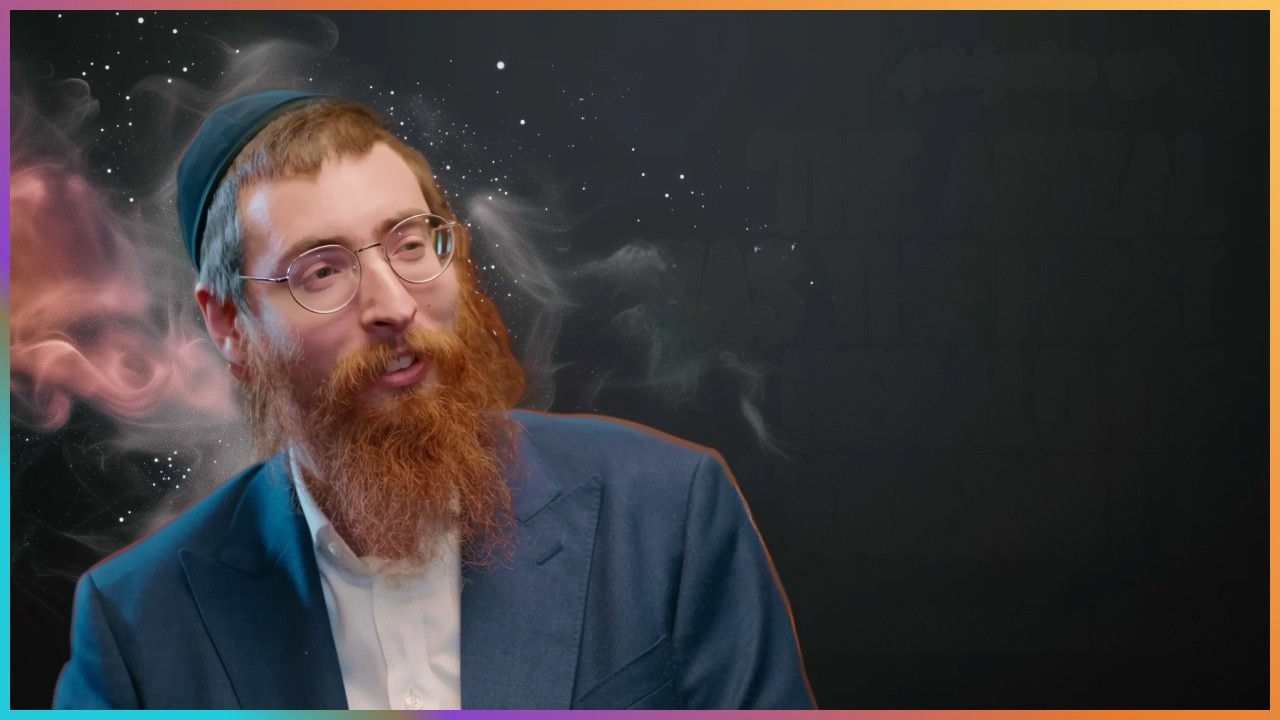
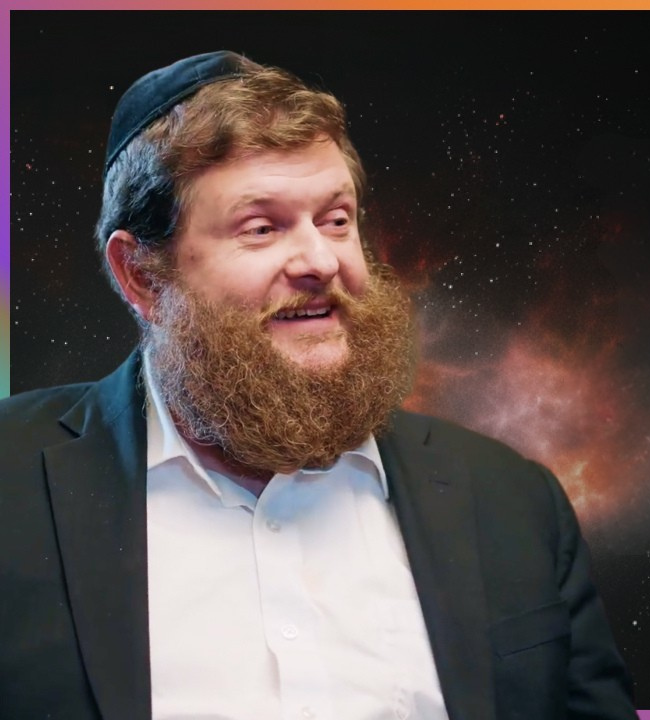
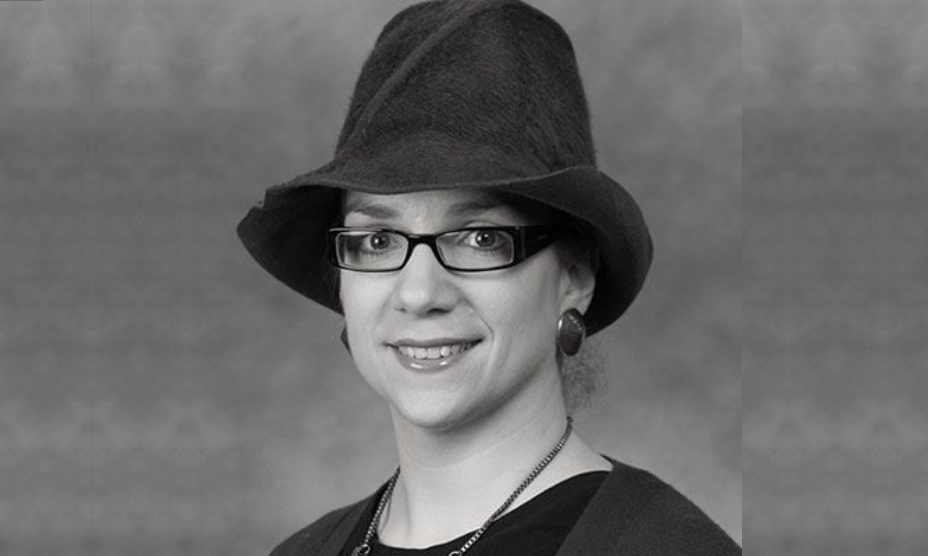
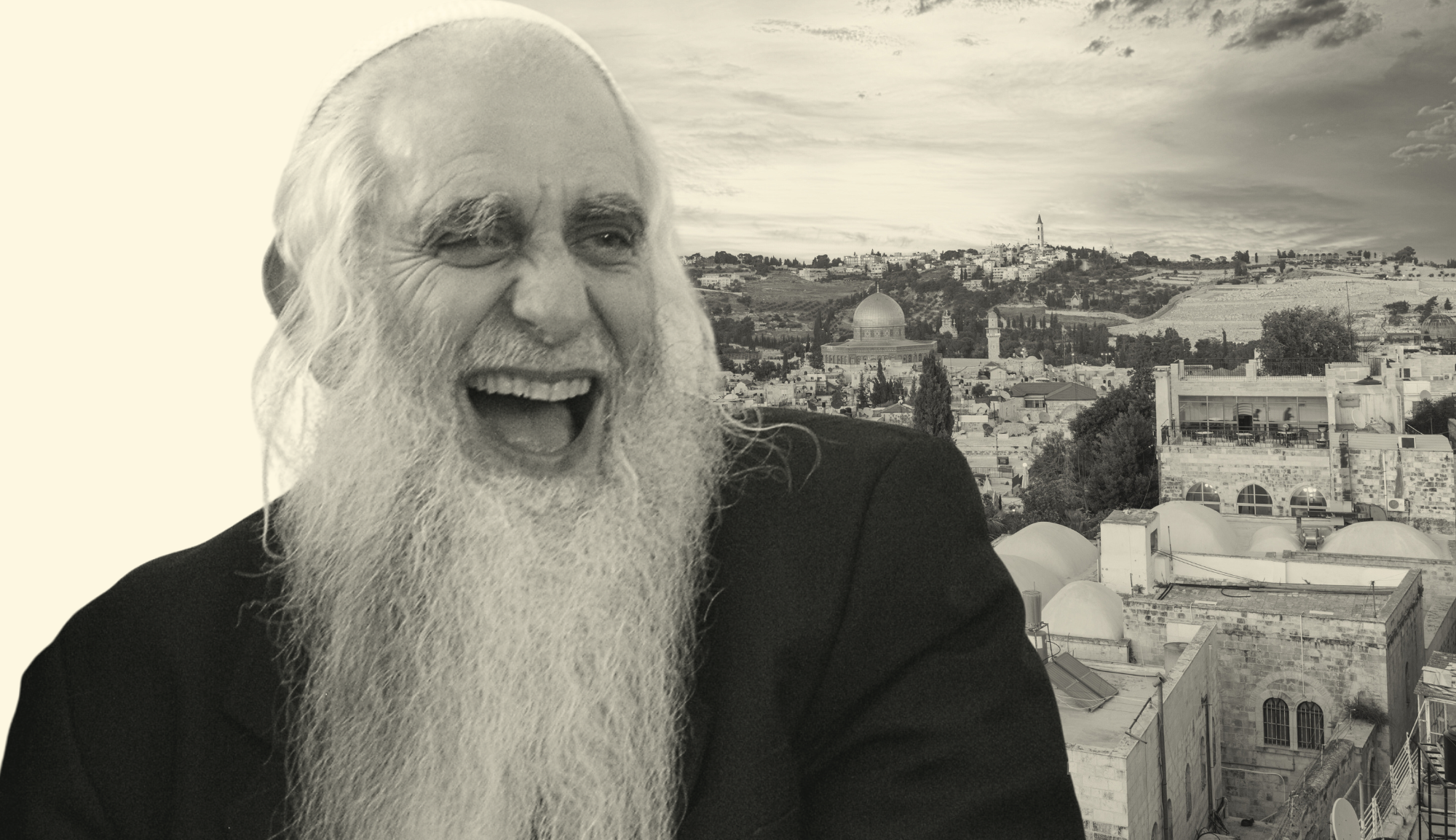
RABBI DR BENJI LEVY. Dr. Eli Rubin, thank you so much for joining us today. Author of Kabbalah and the Rupture of Modernity, contributing editor to Chabad.org, you’ve got a PhD, you’ve done incredible things. Really grateful to have you here.
DR ELI RUBIN. I’m very grateful to be here. Thank you, thank you.
LEVY. Besimcha [happily]. So mysticism, Jewish mysticism. You write a lot about it. You’ve got a book on it. What is Jewish mysticism?
RUBIN. Well, the word mysticism usually is understood to refer to union, connection with God, with the divine. So Jewish mysticism is the Jewish path to connection with the divine. And being that it’s the Jewish path and being that it’s a path, it stretches all the way back to the prophets and all the way down till the present day. It comes through Chazal [the Sages], it comes through the Zohar, it comes through the kabbalists of the medieval era. It comes through the Arizal, Rabbi Isaac ben Solomon Ashkenazi Luria. We have a whole long tradition, which is a textual tradition.
So Jewish mysticism is found in texts, but it’s also a tradition of practice because it’s fundamentally linked to the practices of Judaism. And more recently, it comes to us primarily through Hasidism, and in my case, I’m a Chabadnik [Chabad Hasid]. And so for me, and anything I’m going to say today is going to be an attempt to elucidate, to explain, to communicate what I’ve learned from the rabbis of Chabad, the great mystical masters of Chabad, beginning with Rabbi Shneur Zalman of Liadi, who was obviously a student of the Maggid and the Baal Shem Tov. And coming down to the seventh Rabbi, the Lubavitcher Rabbi, Rabbi Menachem Mendel Schneerson.
And to speak of Jewish mysticism in that sense, at the end of this long tradition, is really to take on a responsibility, to risk making mistakes. I’ll probably say things that are not as they should be said, but it’s also a privilege and I’m eager to participate in this discussion and to answer whatever questions I can to the best of my ability.
LEVY. Well, perhaps the reason there was no successor to the Lubavitcher Rabbi was that he wanted to empower his Hasidim to each go on and to share their own thoughts.
RUBIN. That’s probably the case.
LEVY. So, how did it start for you? How did you connect to Jewish mysticism in a deep way? How did you come to [be] writing a book on this?
RUBIN. Well, I grew up in a Chabad family in London. But I would say that the first experience of my own that I would classify as a mystical experience happened when I was a teenager. I was not then studying in a Chabad school. I was in a – I would say a yekkesha [non-Hasidic] high school.
Menorah Grammar School for those who know it, in London. And part of that meant that it kind of forced me to confront my identity as a Chabadnik, as somebody from a Chabad family in a non-Chabad school. I started to study on my own. I studied Tanya, but when I was, I think, seventeen years old, before Purim I studied a maamar, a discourse, of Rabbi Shneur Zalman of Liadi about Purim.
It’s the maamar “chayav inish lebesumei.” It’s a maamar [article] commenting on a passage from the Talmud, which says that one is obligated to drink on Purim until one doesn’t know the difference between blessed is Moredcai and cursed is Haman. Got that right.
LEVY. So that means you haven’t reached that state.
RUBIN. Despite the fact that Purim was just a couple of days ago, I managed to get it straight. And that maamar [article], part of it was that the maamar is about the nature of Torah study, the mystical purpose of Torah study, Torah as a parable to understand God. And I was at that time studying Talmud in a very serious way. So it kind of resonated with me, this whole idea that there’s a mystical dimension to the Talmud study that I’m doing and enjoying just as Talmud study because of the logic of it, because of the intellectual power of it, that it has this whole mystical dimension.
So, that Purim was a great Purim. You know, that was the Purim that I remember. And I remember because of the high of having kind of imbibed this maamar [article]. I was kind of drunk on the teachings, on these mystical teachings. There was probably some alcohol that helped the excitement to grow and the enthusiasm to grow, but it was really these very powerful ideas –
LEVY. By the way, one of the opinions [regarding] “lebesumei” [a man is required to imbibe until he does not know] is that it doesn’t have to necessarily be through alcohol, but through the actual idea. So it sounds like you did both that year.
RUBIN. Right, right. To me that’s the beginning of a journey. It also was the first time that I’d studied a discourse like that, of such [a] kind of kabbalistic complexity, on my own and mastered it. Whereas previously I’d studied more basic texts. So that was a moment that kind of set me on a certain journey. I don’t know if I was already on that journey before or if I was –
LEVY. But [you] definitely remember it as pivotal.
RUBIN. Definitely a pivotal moment for me.
LEVY. And in an ideal world, would all Jews be mystics?
RUBIN. I think not only all Jews would be mystics, I think all people would be mystics.
I think this idea of: If mysticism means to connect to God then all people should feel connected to God, and if all people feel connected to God, then their actions – they’ll live better and differently than they do now.
LEVY. So what are they connecting to? What is God?
RUBIN. What is God? So, this is where I have to kind of take the – what do they say? Take the fifth?
LEVY. Plead the fifth.
RUBIN. Plead the fifth. There’s a phrase quoted in, I believe, in Teshuvot HaRivash quoting another sage –
LEVY. Responsa of the Rivash.
RUBIN. Responsa of the Rivash, quoting another sage who says, “Ani mitpalel bedaat zeh katinok.” When I pray, I pray with the attitude, with the mindset of a child. I think, really, to think about God you have to go beyond theology. Any theology is always going to be inadequate because theology is human beings using language, using concepts that they draw from the world around them. And however much they abstract them, there is no way for a human being to know God in a way that can be clearly defined. God can be known, but to know God is to know the unknowable. So this is the place where language breaks down. And there’s a teaching from the Baal Shem Tov, not so much a teaching, almost a warning from the Baal Shem Tov, which is recorded in Chabad texts that people should not study Kabbala. Even though, of course, Chabad is full of kabbalistic concepts and sources and it is really in many ways not so much commenting on kabbalistic sources but integrating them into its new formulation of a Jewish mystical theology. This warning not to study Kabbala is because when you study Kabbala, Kabbala uses images, uses certain concepts that are, again, borrowed from human language. The ten sefirot [divine emanations], chochma [wisdom/insight], bina [understanding/analysis], daat [knowledge/integration]. These are qualities that you would ascribe to a human being. A human being can be wise. To say that God is wise is really to apply a human term or to to misapply, in a certain sense, a human term, right? To God who is beyond any human experience, any human concept. So, yes, you have to go beyond theology. To do theology properly, you’ve got to go beyond theology.
LEVY. So you basically said, I’m not sure exactly what God is. And then you explained why it’s hard to really understand what God is. Because you’ve got to go beyond theology to really be able to appreciate it.
RUBIN. Yes, on the one hand, it’s something that is very difficult to talk about and to explain. But that’s not to say that I don’t know God or, you know, I could say things like God is the very ground of being, right? I might have a very sophisticated theology but if you ask me what is God –
LEVY. Express it.
RUBIN. The first thing I’m going to tell you is that whatever [it] is going to be, whatever I know is going to be a diminution, a reduction of the immensity of what God in fact is.
And then to reduce that reduction into language is a further reduction. It’s like if you said to me, what’s love? Even if you could believe that I know what love is, it’s hard for me to express it in that way. And therefore how much more so [is God].
LEVY. What about the Jewish People though? What’s the purpose of the Jewish People?
RUBIN. One of the things that comes to mind is that the Gemara in Berachot says: What is written in the tefillin [phylacteries] that God wears? Which itself, we just spoke about the problem of attributing human language or human concepts to God, right? So the idea of God wearing tefillin, again, it runs directly into this problem.
LEVY. So God wears, according to this Talmudic statement, phylacteries, the religious things that our males wear and it says “mi ke’amcha Yisrael,” right? “Mi ke’amcha Yisrael” –
RUBIN. “Mi ke’amcha Yisrael goy echad baaretz.”
LEVY. Who is like the Jewish People, a nation alone in the Land of Israel?
RUBIN. Right, so that would be the basic translation, the simple translation, a nation alone in the llLand. And there’s a teaching attributed to the Baal Shem Tov that the way this should be read is the nation who makes God one in the land – “goy echad baaretz.” The nation who brings the oneness, the One into the earth –
LEVY. Beautiful.
RUBIN. Okay, so the purpose of the Jewish People is to reveal the oneness of God on earth.
LEVY. So how does prayer work?
RUBIN. Rather than saying, asking, answering how prayer works, let’s ask: What is prayer?
LEVY. So what is prayer?
RUBIN. Prayer is a process. A phrase that is often cited in Chabad sources is that prayer is a “sulam mutzav artza verosho magi’a hashamayma.” A ladder that stands upon the earth and its head reaches the heavens.
LEVY. And that source, while quoted in many Chabad sources, comes from the Torah itself.
RUBIN. Right, absolutely. It’s a verse from the Torah –
LEVY. From Genesis.
RUBIN. Referring to the ladder that Jacob saw in his dream.
LEVY. Correct.
RUBIN. And so we have this concept of the ladder of prayer, that prayer is a process by which a person who is very much in this world, rooted in this world, living in this world, living a worldly, earthly, earthbound life climbs out of the mundanity of earthly existence and ascends upward while remaining firmly with his feet planted on earth. The bottom of the ladder remains on earth, but you begin with a submission to God, a recognition of God, which is itself kind of to pull oneself away from the dream or nightmare of the world, which is a place of theological ambiguity. It’s not clear that God exists, right? You have to believe, right? You have to convince yourself. You have to debate with other people who will say that God doesn’t exist, right? There’s this question that hovers over earthbound existence, especially in the modern era. Does God exist? And so to say modeh ani lefanecha, I submit before you God, or I thank you God, I acknowledge you God, that’s already a move away from the world, a move upwards.
And then you have a step-by-step progression, which, again, the mystics describe as this ladder. Pesukei Dezimra [part of the morning prayer]. You have the verses of praise, praise of God, which kind of gets a person into a mood, not just of acknowledgement, not just the basic level of acknowledgement, but exciting themselves about the greatness of God.
LEVY. So prayer is really a journey. It’s a process through many rungs in the ladder.
RUBIN. It’s a journey of ascent. And then –
LEVY. Whilst retaining your feet on the ground.
RUBIN. Absolutely. And as such, it’s also a process of transforming your perspective on the reality that you inhabit the rest of the day.
LEVY. Because as you’re higher on the ladder, you’ve got a different perspective when you look down.
RUBIN. Absolutely. And when you come down from the ladder and you enter, you go to work –
LEVY. You saw something different up there.
RUBIN. You’ve seen something different up there. Exactly. So you have that impression, that vision, the vision of that, that you take in during prayer. There’s a language, a formulation that the Rashab Rabbi, the fifth Chabad Rabbi, uses in his tract on prayer, which is “lehistakela beyikara demalka.” I believe it’s rooted in earlier mystical sources, but [it means] prayer is to gaze upon the glory. It sounds to me like a Zoharic phrase.
LEVY. Yeah.
RUBIN. Because it’s Aramaic. It’s definitely the language of the Zohar.
So, to gaze upon the glory of the King, right? So that vision that you focus on during prayer is one that you can then take into your daily activity. You see the world differently. You can look at the world as a place of divine opportunity rather than just as a kind of cutthroat and man eat dog, dog eat man kind of world. You see it as a place as seen from a higher perspective because you have gone on that journey up the ladder of prayer.
LEVY. So interestingly when we talked about when you were sort of initiated into mysticism, you reflected on a maamar, on a discourse that related, ultimately, if it’s the one that I’m familiar with, to what Torah study is all about. How would you summarize, whether from that maamar or others, what is the goal of Torah study?
RUBIN. So, in that particular discourse, Torah study is framed as the “mashal hakadmoni,” the primordial parable or rather the parable for the primordial one.
A parable by which you can understand God. So that itself also has a kind of ladder-like quality to it. He brings this idea that Shlomo Hamelech, King Solomon, was so wise that he was able to articulate 3,000 parables on any Torah idea. He could go one level deeper and then another level deeper, such that each level of understanding became a parable to understand yet another deeper dimension. And then that level itself, that understanding, became a parable for yet a deeper level of understanding and so on, 3,000 parables deep. And so he has this idea that when you study Torah, you’re studying the wisdom of God.
But the wisdom of God is communicated to you in a way that is analogous to the way a master teacher would have to teach a very small child. You go step-by-step; you teach them one concept and then that becomes the building block for another concept and so on and so forth. So even the parts of Torah, the revealed parts of Torah, the nonmystical parts of Torah, the legal parts of Torah that deal with the the halachot [laws] of monetary affairs, the laws of marriage, divorce, all kinds of things, the laws of Shabbat, kosher laws. On the one hand, these are as they present themselves to be: laws about human conduct, but they also begin to provide a theological picture. And they can be seen as parables that have a deeper level underneath them, which is the mystical dimension. And the Zohar has this phrase “nishmata denishmata de’oraita” [the soul of the soul of the Torah]. There’s the soul of the Torah and there’s the soul of the soul. So there are levels within levels.
But another important idea of Torah is not just that it’s about the human being ascending upwards, coming to know God through their knowledge of Torah. But this is also the way God communicates. It’s a downflow of divine wisdom into the world. It’s the way God is projecting Himself, making Himself known to man, to humanity. It is the vehicle by which God’s will and wisdom is communicated to us so that we can apply it, so that we can live it out in the reality of the world and make God manifest in the world.
So whereas I would think of prayer primarily as a move upwards towards God, Torah is the gift that God gives us. It’s a move downward from God to us, towards the world. Vayered Havaya – Hashem – al Har Sinai.
When God gave the Torah, he said the Torah says: God descended upon Mount Sinai. Right? So this Torah is a move from God towards humanity and towards the world.
LEVY. But does mysticism view women and men as the same?
RUBIN. I think it’s undeniable that the Jewish mystical tradition treats gender difference very seriously. In the Zohar, the typologies of the male, Za, Zeir Anpin as the Holy One blessed be He, the male facet of the divine on the one hand, and then Malchut or the Shechina as the female facet of the divine, and their relationship is fundamental.
So there’s a gender difference but it should never be understood in a reductive sense, [i.e.,] in a way that says the male is this way and the female is this way and none of those characteristics can ever cross that gender divide. Rather, it should be understood as a relationship. And the Zohar is all about the relationship, the coupling, the yichud, yichudim [togetherness]. The unification of the facets of God, which appear different, appear distinct, but the distinction between them and the separation between them is actually understood as a kind of exile, as a divorce, as a problematic relationship. And it’s the reunion that is the marriage. Or the messianic hope is to achieve a mature, unified relationship in which the distinctions between the male and the female are not just overcome but in a way transformed or turned over. So we have the idea of “eishet chayil ateret baala” [a woman of valor is the crown of her husband], which everyone sings on Friday night. “Eishet chayil ateret baala,” which the mystics understand to mean that the woman of valor, which is the feminine facet of the Divine, which has its corresponding embodiment, manifestation, personification in women on earth becomes the crown of her husband. Meaning the crown is something that is above, transcends, beyond, encompasses, encircles the masculine aspect of God. And so I think the relationship parable is very useful here because a relationship isn’t a static thing. A relationship is something that develops; it has its good points, it has its bad points. Ideally, a relationship should mature over time so that people can come to know each other better and share with each other their experiences more and more.
And I think that part of the development of the messianic process is the maturation of the relationship between men and women. So not just between Kudsha Brich Hu, the Holy One Blessed Be He, and the Shechina, the male and female aspects of God, but also the the parallel in the human realm [that] we do have in Judaism. And certainly in the mystical tradition, there was understood to be a distinction between men and women. And that distinction holds true till the end. And yet the distinction is not an absolute one or a reductive one. It’s one that develops and matures such that more and more is shared.
Coming back to the Lubavitcher Rabbi, who I mentioned at the beginning, I see myself as a student of his, and anything that I’m trying to say is an attempt to communicate what I think he would have said. He cites a teaching of the Arizal, the great kabbalistic master, that the mitzvot asei shehazman grama, the positive time-bound mitzvot that, according to halacha [Jewish law], women are not obligated in. So there are two ways to understand this. Is it that these mitzvot have nothing to do with women? There’s no purchase as it were, just as a non-Jew has no mitzva to keep Shabbat and if a non-Jew were to keep Shabbat they wouldn’t be fulfilling a mitzva. Or do they too have the mitzva, it’s just that they’re not obligated? So when they do these mitzvot, these time-bound positive commandments that they’re not obligated to do, they are fulfilling the mitzva.
So the Arizal has this idea that they are in fact, in a sense actually obligated to do the mitzvot, but because men and women share souls, i.e., they’re in a relationship, their mitzva is done by their other half, right? So there it’s a very fascinating idea because he talks about this in the context of tefillin. He cites this mishna in Sanhedrin, which is about when people are sentenced to death. It’s a very strange mishna. When people are sentenced to death, what does God say? That’s what the mishna asks. And the mishna says God says my head is hurting and my arm is hurting –
LEVY. The two places where one puts on tefillin.
RUBIN. These are the two places where one puts on tefillin. So God’s tefillin, this goes back to the idea that we referenced before: “Mi ke’amcha Yisrael goy echad baaretz” [who is like the Jewish People, a nation alone in the Land of Israel], the Jewish people are on God’s tefillin. And so when there’s something wrong with the Jewish people, God’s tefillin, as it were, are defective. And the Rabbi points out that the mishna had been discussing differences in the law as they pertain to men and women, ish ve’isha. But then when the mishna discusses this, it says Adam, which translates as man but it means human being –
LEVY. More like a person.
RUBIN. Exactly. So the Rabbi understands – the Rabbi says that in God’s tefillin, men and women are equal. That’s [his] words –
LEVY. Beautiful.
RUBIN. And so therefore in the parallel on earth, it must be that in some way they are equal; they participate in the mitzvot in this kind of dynamic relationship. So to me this is one of the thorniest questions, the most difficult questions. And I don’t think even what I’m saying does justice but I want to emphasize this point about a relationship developing. When you ask what does Jewish mysticism say about men and women, I don’t think what was said once upon a time is the same as what was said in the second half of the twentieth century. And as we get closer to the Messianic Era, I think this is something that continues to shift and change so that women become greater and greater participants in ways that are similar to but not the same as men.
LEVY. What is the biggest obstacle to spiritual life?
RUBIN. I think the biggest obstacle to spiritual life is misplaced humility. We think that we’re not worthy of being spiritual. Often we look for a tzaddik [righteous person] to do the spiritual work for us and to kind of –
LEVY. Another righteous individual, not ourselves.
RUBIN. Not ourselves, somebody to be inspired by. And I think one of the messages of the Tanya is that everyone can be like a tzaddik. The beinoni is somebody who may be drawn towards doing things that are not righteous yet manages to motivate themselves to act in a way that looks externally exactly like a righteous person. And he quotes the saying of the Sages, Chazal, every person is obligated to say, matai yagiyu maasai lemaasei avotai Avraham Yitzchak veYaakov. Every person is obligated to say, when will my actions reach those of my forebears, Abraham, Isaac, and Jacob? [This] is [the] idea that we have these people whom we put on a pedestal, but we shouldn’t be afraid to emulate them. We shouldn’t have this misplaced humility.
LEVY. Because they also were once upon a time the person looking up to the other person.
RUBIN. Precisely.
LEVY. We need to become them.
Why did God create the world?
RUBIN. Why did God create the world? I’m going to give the answer that the fifth Chabad Rabbi gave. Now, he gave this answer in a long manifesto, which has sixty discourses, and he gave it over several years. So I’m going to give you the –
LEVY. The summary.
RUBIN. The summary in a nutshell. The earlier kabbalists had the idea that the purpose of creating the world is to reveal God’s infinitude, which was manifest prior to existence. The full revelation of God’s infinite splendor should be revealed in earthly-bound, limited existence without being entirely dissolved.
And the way we do that is through studying Torah and doing mitzvot. Torah revealed God’s infinitude in the limited materiality of the world such that it becomes transparent to the infinitude of God. But the Rashab Rabbi, Rabbi Sholom DovBer Schneerson, was not happy with this answer because he felt that it was somewhat circular. This is because ultimately, if God was already fully manifest prior to existence, then nothing new is being achieved by manifesting God fully in the world. All that’s changed is now there’s also a world.
Before, God was manifest fully, and now God is manifest fully in the world. So the Rashab Rabbi argued that the purpose of the world is actually to create a new kind of manifestation of God that was never manifest before. So prior to existence God may have been manifest infinitely, and yet through existence we can make God manifest in entirely new ways. And that comes through the struggle of earthly reality. That comes through the darkness, through the sense of God not being manifest, and through human beings being ultimately autonomous entities who have to somehow understand God themselves through their limitations, in their limitations, that creates a new kind of divine revelation that was never revealed even to God’s own self prior to existence.
LEVY. Wow. So you just said that human beings [are] autonomous. Does that mean that we have free will? Does free will exist?
RUBIN. Absolutely. I think there’s at least two types of free will that exist.
One is just a kind of regular agency. I believe very much in that. But then there’s a deeper kind of free will, which the Hassidic masters speak of, which is the free choice of the essential soul. And that’s a free choice that comes either at moments of crisis, at moments where the weight of the world seems to be pushing you in a particular direction and you need this essential power to kind of break free of the weight of circumstances and choose God. And that’s a choice made freely by the essence of the soul, which is not bound by ordinary circumstances. And in a sense, every time a Jew, especially in the modern age, where we’re free to do anything else – we are free to not show up to shul [synagogue]. We are free to live secular lives if we so wish. The choice that we make daily or that we make sometimes, to embrace our Judaism, that is a free choice. That is bechira [choice]. And the Lubavitcher Rabbi, Rabbi Menachem Mendel Schneerson, actually says that we have greater free choice now than we ever had before precisely because we live in an emancipated society.
LEVY. More optionality.
RUBIN. Yes.
LEVY. What do you think of when you think about Mashiach [the Messiah]?
RUBIN. I think of the phrase from the Rambam at the end of the Sefer HaYad, his great code of law, where he says “lo yei eisek kol haolam ela ladaat et Hashem bilvad,” the work of the entire world will not be anything other than to know God alone.
So in that, there’s a few points. One is that there’ll be no other work, right? So our needs will be taken care of and we’ll be free to excel in the higher order of things.
Second of all, it’s universal: “kol haolam” [the entire world]. It’s not just something for the Jewish People. This is something that all people will participate in, and not just all people, the world itself, the very physicality. “Kimilo haaretz de’a et Hashem.” He quotes the verse from Isaiah the prophet that the earth will be filled with knowledge of God, which is the earth itself. The inanimate earth too will be a place that becomes transparent, it becomes a medium for the revelation of God. The Chabad mystics go so far as to say that we will know God primarily through the body and the soul will receive its knowledge of God from the body.
LEVY. Wow.
RUBIN. Right? So it’ll be a visceral experience of the divine.
LEVY. Amazing. So is the State of Israel part of that process towards the final redemption?
RUBIN. Well, I think that the most important messianic event that happened in the land of Israel in the last 500 years was the revelation of the teachings of the Arizal, the greatest mystic since the revelation of the Zohar. And we’re still living in the era of that tremendous revelation opening up and developing. And I think when we think about the Messianic Era – I was once asked by Dovid Bashevkin on a previous episode of 18Forty what I think of when I think of the Mashiach [the Messiah] – as the King Mashiach, who do I think of? What do I think of? And I said something like, well, maybe it’ll be a political figure. And someone called me out and said, well, wouldn’t it be a great tzaddik [righteous person]? So here’s the place to say that I think politics plays a role in the Messianic revelation, but it’s very much a secondary role.
So all the things that happened throughout the time of exile are steps on the road to Mashiach. But if I would put it on a scale, I do not give special significance to the political event of the founding of the State of Israel. I give much more significance to the tremendous revelation, expansive revelation of mystical teachings that continue to happen both in the land of Israel and across the world. And Mashiach is ultimately something that will encompass the entire world.
LEVY. What is the greatest challenge facing the world today?
RUBIN. I think that one of the greatest challenges is our inability to overcome our own limited perspectives. And mysticism is one of the things that can help you do that. It doesn’t always. Sometimes it kind of pushes you into an extreme where you’re unable to countenance anyone who doesn’t share your mystical vision.
But ideally, mystical experience should open you up to realize that you share that, that you’re all part of the one. Right, the “goy echad baaretz” [a nation alone in the Land of Israel]: We are the nation who reveals the One on earth. And so the biggest challenge I think is recognizing that there are many different constituencies in this world who all have different needs and are all part of humanity.
Within the Jewish community, we have this problem. We have different camps who kind of, each one does their own thing and it’s very hard for us to see beyond our own righteousness and find a way to lift up others, to participate in others, to help others participate in this larger human journey of redemption.
LEVY. Wow. This is probably going to be the hardest question for you to answer because you wrote an entire book on it. So I guess the challenge here will be tzimtzum [contraction], to be able to give a very short answer, and I refer our listeners to the full book. But how has modernity changed Jewish mysticism?
RUBIN. I think we need to flip the question around and ask how has Jewish mysticism changed modernity or how did it make modernity? Because I believe that the Arizal was the first herald of modernity. The question hinges on what you think modernity is. Right? The way I think about modernity is that it is a sense of rupture, a sense that God is beyond the world. A sense that God is outside –
LEVY. This is what modernity is?
RUBIN. Yes.
LEVY. Or mysticism?
RUBIN. Modernity. Because Descartes, who was one of the first modern thinkers, says there’s spirit and there’s matter and those are two completely separate realms. That’s a rupture of God from the world. And that can become atheism, that can turn into a materialistic conception of the world, or maybe at the same time it can become a conception of God not as a God who’s just the creator of the world but God who’s beyond the world. God who is much more than what we can begin to imagine through the prism of the world. The Alter Rabbi in that maamar [discourse] that I mentioned at the beginning, the Purim maamar. He has a phrase “ein zeh ikar ha’Elokut ma shehu mehaveh olamot” – the main thing about God is not that he created the world. Which is a kind of mind-blowing concept and it’s a concept that puts God at a remove from the world, right? In a way it’s anti-mystical.
But it’s the beginning of a new kind of mysticism.When you start from that perspective that God is totally removed from the world, then when you start to think about what the relationship between God and the world is, and what the purpose of the world is, everything starts to change. And that can be construed in all kinds of ways and it has led to all kinds of different world views. You have Spinozism, you have Leibnizism, you have Newton. All these people are operating in the era immediately after the revelation of the Arizal, who was the first, I believe, to think of God, to talk about God in terms of rupture. Tzimtzum [contraction] is a rupture, shevirat ha’kelim [breaking the vessels] is a rupture, a kind of catastrophe that leads to –
LEVY. The birth of the world.
RUBIN. The birth of the world. And it creates a new way of thinking both about God and about the world and about the relationship between God and the world.
LEVY. Fascinating. So you mentioned many different schools of thought there and how they can affect [the world] and you quoted different thinkers. If we’re sticking within the area, let’s say of mysticism, what differentiates Jewish mysticism from other forms of mysticism?
RUBIN. Well, the key thing is that Jewish mysticism is intrinsically linked to the Torah and the mitzvot. And so that is fundamentally Judaism. Right?
LEVY. That is already going to differentiate.
RUBIN. That’s the fundamental distinction there and that also means that because Torah and mitzvot are directed towards living in the world, Jewish mysticism is always going to be very grounded in society, in real life, in family life, in home life. Jewish mysticism can never be something that is entirely kind of cloistered, entirely ascetic. Jewish mysticism is always going to have to strike a balance between the ratzo, the prayerful ascent upwards, and the shuv, the return back to earth to make God manifest in the world.
LEVY. So what if someone isn’t necessarily expressing it in a ritual way? Can that person, let’s call them not religious, if they call themselves that, can that person still study mysticism?
RUBIN. I think everyone can and should study mysticism. “Gadol Torah shemevia lidei maaseh.” Great is study because it brings you to action. It’s the saying of the Sages.
LEVY. Or the Talmudic statement.
What about, can it be dangerous? Can Jewish mysticism be dangerous?
RUBIN. Well, yes, mysticism can be dangerous. I said before that the Baal Shem Tov warned against studying Kabbala because you’re using human terms to think about God. So the challenge of mysticism is the challenge of thinking the unthinkable. And it can lead to all kinds of problems. It can lead to extremes. And I think the antidote to that threat is Torah and mitzvot. In other words, Jewish mysticism always has to remain tethered very firmly to the halacha [Jewish law], to the parallel tradition of practice. Now, even if you’re somebody who doesn’t practice, that doesn’t mean that you shouldn’t study the mystical teachings of Jewish mysticism or of Kabbala. But it does mean that when you’re studying it, you should understand that the nature of these teachings is such that they are attached to practice. So to really understand them, you’re going to have to practice. You can begin to study and you can get started on that journey, but if you want to actually experience what’s in the text, you can read text, and then you can live those texts. And to read texts and to live texts or to live mystically are two very different things.
LEVY. So beyond the rituals, it’s interesting that sometimes people talk about relationships outside of the area of Torah, but really that’s the greatest expression of it. What type of father or mother we are, what type of spouse, what type of friend, what type of child, relationships in your life. How has your study of Jewish mysticism influenced that? Can you think of one practical relationship or one actual example where Jewish mysticism has actually influenced how you look at that relationship or how you behave in it?
RUBIN. Well, I think in all areas of life, of interpersonal relationships, I mean, if I point to one particular teaching –
LEVY. Relationship, not teaching.
RUBIN. One second, we’ll get to relationships. One particular teaching is the teaching of chapter thirty-two in the Tanya about loving your fellow as yourself because every person is a part of yourself, an extension of yourself. Our souls are all rooted in the one God, and so God is the father of all of us. That’s a teaching that for me, I think, has impacted the way I treat everyone. Certainly in my home life, my family life, I try to give room to the spiritual practices, the spiritual life of my spouse. I don’t want to put my own spiritual life before hers.
So to me, that’s a very important thing. Even to the extent, I don’t know if I’m allowed to say this in public, but on Rosh Hashana and Yom Kippur, if she wants to spend time in shul [synagogue] and somebody needs to take care of the kids, I’ll be happy to do some of my prayers in private in order that she can have her personal spiritual experience. That stems from this fundamental understanding that there isn’t a competition here. We should not see ourselves as two people. That goes especially for a husband and a wife, but I think that that principle is meant to be extrapolated [and] extended more broadly to other human beings in general. We have this instinct almost to compete and to feel that somebody else’s gain is our loss, but that’s not actually how it is. Somebody else’s gain is your gain –
LEVY. Wow.
RUBIN. There’s no competition.
LEVY. We’ve had so many conversations about different topics and looked at teachings that relate to those topics. I’d like to end just with one teaching.
What’s one transformative idea from Jewish mysticism that inspires you or that you can sort of share with us right now?
RUBIN. One transformative idea from Jewish mysticism.
Well, I think we’re sitting over here in a shul [synagogue] and in front of the ark it says “shiviti Hashem lenegdi tamid” [I place God before me always]. Now this isn’t necessarily a mystical teaching. This is a verse and it’s in many, many shuls. But I think that is a fundamental principle. Placing God before you – when you walk in the street to see God in everything, to see God everywhere. That is to me one of the most fundamental mystical teachings.
It’s expressed in that verse, but the place for me where it’s developed into a theoretical paradigm, a teaching as it were, that can be internalized in a very deep kind of way is in the second part of the Tanya, Shaar Hayichud Vehaemuna, where he speaks about the teaching of the Baal Shem Tov: “Le’olam Hashem devarecha nitzav bashamayim.” Forever God, your word stands in the heavens. He says that the word of God creates the heavens and stands in the heavens. So to [look] upon the heavens is to see the word of God, to look upon the earth is to see the word of God. To me, that’s the meaning of “shiviti Hashem lenegdi tamid.” It’s not just to remember God, but wherever you look, what’s in front of you? What’s in front of you is the word of God. God is communicating to you through reality, in reality. Reality itself is God speaking to you.
LEVY. It’s like God goggles. So Dr. Eli Rubin –
RUBIN. Divine lenses.
LEVY. It’s beautiful to hear that as your final teaching for this conversation because it’s clear that’s how you view the world. Every single question brings together sources, not just sources in a theoretical sense but a shiviti Hashem, a practical living. And we give you our blessing that you continue to teach, continue to share, and continue to view the world in that way so that it transforms your own relationships and those all around you.Thank you so much.
RUBIN. Thank you, Benji.