Transcripts are produced by Sofer.ai and lightly edited—please excuse any imperfections.
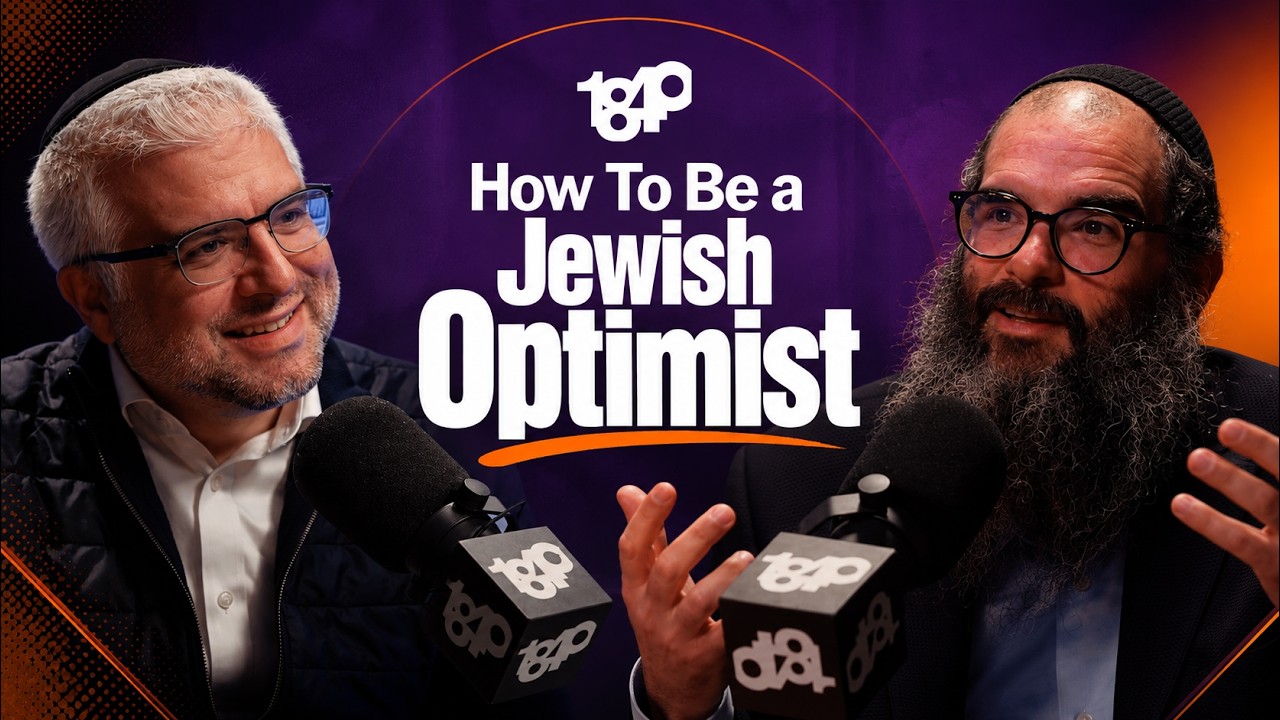
Dovid Bashevkin: Hi friends and welcome to 18Forty, where each month we explore a different topic balancing modern sensibilities with traditional sensitivities to give you new approaches to timeless Jewish ideas. I’m your host, Dovid Bashevkin, and today we are reflecting on October 7th, its aftermath, and what we, the Jewish community, have learned. This podcast is part of a larger exploration of those big, juicy Jewish ideas, so be sure to check out 18forty.org, where you can also find videos, articles, emails, and recommended readings. Today’s episode is with a very, very dear friend, Elliot Kaufman, who just published a book called In the War Room: The Inside Story of Israel’s Fight Against Hamas and the Iranian Axis, which he co-wrote with Yonah Jeremy Bob.
I know Elliot Kaufman for many, many years. He’s been the in charge of the letter section of The Wall Street Journal and he now serves on the editorial board of The Wall Street Journal. He is a remarkable person who has a Jewish story and a Jewish journey of his own, as well as being at the heart of The Wall Street Journal’s reporting on October 7th, and what makes his latest book so remarkable is it really tells the entirety of the story. He really had unprecedented access, these hours-long conversations with Bibi Netanyahu, talking to the playmakers on the Israel side and the American side, the Biden administration, the Trump administration.
I’ll be honest, I am personally less interested in like the political maneuvering, that’s on a personal level, but I found the book equally fascinating, to go behind the curtain and really see the sensitivities and the negotiations, the internal negotiations, of how to respond to the tragic massacre of October 7th. To me, this is more than just a political story. This is Israel fighting for its own narrative, Israel fighting for its right to govern its own borders and its own state, and really what the vision for the State of Israel should be. And I can’t think of anybody better than Elliot Kaufman, somebody who really is deeply immersed within the Jewish world, has been on a Jewish journey of his own, and really is a journalist par excellence.
Everything is deeply sourced. And the way that the book, the writing of the book, really takes you through it like a narrative, and it really is jaw-dropping to kind of revisit the entirety of this story from the beginning of October 7th, the trauma, the murders, the brutality, but then moving into where Israel landed on the world stage, and something that I am still grappling with, I think so many Jews are grappling with to this very day, how did it get so bad after Israel was brutally attacked, how did our standing on the world stage really get so bad? There is nobody who I could think of who is better to speak to, who is really both with distance, but also deeply immersed in the politics, in the values of this world. It is my absolute privilege and pleasure to introduce our conversation with Elliot Kaufman. I am so excited to be sitting with my friend, somebody who I’ve known for really quite some time.
It’s been close to 10 years, believe it or not. My dearest friend, Elliot Kaufman, who sits on the editorial board of The Wall Street Journal. Elliot, it is such a joy to be sitting with you today.
Elliot Kaufman: Thank you for having me.
Dovid Bashevkin: So I wanted to begin. You have an incredible book that we have over here called In the War Room: The Inside Story of Israel’s Fight Against Hamas and the Iranian Axis, which you co-wrote with Yonah Jeremy Bob, who is the correspondent for The Jerusalem Post, I believe?
Elliot Kaufman: Senior military correspondent.
Dovid Bashevkin: Senior military correspondent. And, and the book is really a jaw-dropping, on the ground, behind the curtain, talking to all the decision-makers about what happened, not just October 7th, but going into the war in Iran, the entire story of how this unfolded, which has been on everyone’s mind.
And I was trying to figure out where to start with you, because I’m interested in not just October 7th and its aftermath, I’m actually fascinated by you. You are on the editorial board of The Wall Street Journal. You have a very significant role in shaping the voice of the Journal, particularly on issues related to Israel, related to the Middle East, and I wanted to start start kind of in the middle of both your story and October 7th, which which let’s start with the day of October 7th itself. Where is Elliot Kaufman on October 7th?
Elliot Kaufman: I am on the Upper West Side of Manhattan.
I am offline for the holiday, and I am in a dream world, let’s say. You know, funny enough, I was actually reading my now co-author’s previous book, yeah, okay, Target Tehran, wonderful book about how Mossad has really penetrated Iran. And we would see that more than even he knew later on in this war, June 2025, that 12-day war. But at the time, I’m reading this, reading about the mastery that Israeli intelligence has over Iran, but also other fronts, and I’m really thinking Israel has got this.
Dovid Bashevkin: We got this.
Elliot Kaufman: We got this, okay? Israel Israel is so far ahead of all of its enemies, things are going to be okay. That’s where I am on October 7th, and I’m afraid that’s where a lot of Israel’s decision-makers, that’s where they too were on October 7th.
Dovid Bashevkin: Exactly.
There was a a very sense, a false sense of security we had, particularly with Gaza and Hamas. And I think the question that that aches at me the most, you know, we’re a few years out from October 7th, is how can it be, you know, I looked today in The New York Times, I know those are your competitors, but I’m sure you, and one of their editorials today was something about like AIPAC has failed, AIPAC is over, Israel is, and the way that the sentiment has so radically changed since October 7th, the fact that the Jewish people are on the defensive, the fact that it is so in vogue among celebrities, in the culture, to condemn Israel, to kind of talk about what happened in Gaza, divorcing it from October 7th, divorcing it from Hamas, to see the state that the world is in now, I still find it shocking. It still feels to me, I mean, there’s a Talmudic phrase that I always come back to: olam hafuch ra’isi. I see an upside-down world.
It it’s so divorced from any sort of moral foundation, in my opinion. And I guess my my opening question for you and the book is, was this Hamas’s plan the whole time? Was the plan to begin a war, knowing that Israel is going to have to react, knowing that it is nearly impossible on the world stage to react in a way that will be measured according to the modern standards, not of war, because nobody knows what the standards of war, we’re not more, you know, philosophers of war, but the we we haven’t had major wars in the world, especially in the West, like people are just like, “We don’t want to see any of this stuff.” And knowing that Israel is going to have to respond and they’re going to use this in a calculated way to essentially marginalize Israel, which is which is so cruel, it’s a cruel way of doing it, where essentially the way that you’re going to marginalize Israel is murdering and butchering civilians, going into them, knowing that we’re never going to take over the country, but we could marginalize it based on their necessary response to what we do and it’s going Was this always the plan?
Elliot Kaufman: I think I might surprise you by answering no, it wasn’t. This was Hamas’s fall-back option. And I think people find this very difficult to wrap their heads around.
Hamas’s plan was to destroy Israel. Full stop. Full stop. And it wasn’t just Hamas’s plan.
This was the plan of the entire Iranian axis, which Iran had spent decades working on, made multi-billion dollar investments into surrounding Israel with this ring of fire that would one day engulf Israel: Hamas from Gaza, Hezbollah from Lebanon, the Houthis from Yemen, militias in Iraq, Iran itself, as we would see, its own ballistic missile arsenal, nuclear program. Iran was building towards something, and the innovation of Yahya Sinwar, Hamas’s leader, was to say, “I’m going to start it right now. I’m not going to wait for Iran to say we’re all ready, we’re all on the same page, let’s do this at this appointed time.” Sinwar said, “If I just get the ball rolling, everyone else, everything else, will follow. And we won’t only slaughter Israelis in the south, we’ll slaughter them in the north, we’ll have buildings toppling in Tel Aviv, Hezbollah’s missile arsenal, Iran itself will join in.
We will, one way or another, make Israel unlivable. Swarm it, overwhelm it.” I mean, Hamas in many of its plans contemplated not just massacring in the south, but actually linking up with fellow Hamas terrorists, Islamic Jihad terrorists in the West Bank, making it all the way making it all the way across, or getting north enough to maybe link up with Hezbollah coming down. And what we ended up learning over the course of this war, I remember hearing it from Prime Minister Netanyahu himself, he told me we were totally taken by surprise the extent of Hezbollah’s preparations for an invasion of northern Israel. And that’s the front on which Israel was, you know, relatively ready.
Israel had anticipated a war on that front, and still, blown away. Their intelligence far underestimated what Hezbollah had with its Radwan force by Israel’s border in southern Lebanon. So as horrid as October 7th was, as shocking as it was, I think when we look back, we have to say Sinwar’s plan, ultimately that didn’t happen.
Dovid Bashevkin: I mean, he wanted to destroy the State of Israel.
Elliot Kaufman: And he thought he could do it. Do it. He not only had that intention, okay? Israel was wrong about his specific intentions, but in the broad scheme, we knew, you know, everyone knew that the Iranian Axis wanted to destroy Israel. But they also had the capabilities.
Hezbollah had a missile arsenal 150,000 strong. Israeli projections were that just on the first day alone, if Hezbollah had launched as many missiles as it could, some 6,000 to 8,000 missiles on day one, it could have killed 5,000 Israelis, dwarfing what Hamas did, 1,200 Israelis. It could have knocked out much of Ben Gurion Airport, about a third of the Israeli electric grid, devastated Haifa, toppled towers in Tel Aviv, much, much worse.
Dovid Bashevkin: Now, when you from the information and you the access is really jaw-dropping.
I mean, you had time directly with the Prime Minister, with Bibi Netanyahu, you had time with Witkoff, with all of the playmakers, both on the US side and the Israel side, Gallant. I mean, you really had incredible access to this world. The fact that that when Hamas came in, they actually were not immediately followed by the Hezbollah missiles to their full capacity, that they weren’t immediately followed by Iran, do we know why? You know, like, in a crude way when you said this, like, they had a plan to destroy all of Israel, it reminds me it’s very spooky. I have a friend named Israel Mizrahi who has a who has a rare bookstore in Brooklyn, and one of the most fascinating pieces that he ever sold, he sold it to a to a library in Canada where where you’re from, I think it was in Vancouver he sold it to them, but he he found a book of statistics of the Jewish population in North America that belong that was in Hitler’s library.
And we don’t actually know what he was using this for, but we know it has his stamp, his personal library. This was a book, and he wants to know the demographic of Jews in North America. Do we know why, meaning this was probably their best shot, why didn’t Iran and Hezbollah join in this party and really, like, take the best shot at toppling Israel probably since the War of Independence?
Elliot Kaufman: This is the question, and it troubled Israelis none more than than Defense Minister Yoav Gallant. And in the days following October 7th, Gallant couldn’t understand why wouldn’t Hezbollah have have joined in, the very best opportunity it would ever get.
And he came up with a theory. He said, “Hezbollah is just waiting. It’s waiting for us to transfer our forces to the south toward Gaza, and that’s when Hezbollah is going to strike. And this is one of the main reasons Gallant, right after October 7th, argued that Israel should not strike hard in Gaza, instead should take the war north, hit Hezbollah hard before Hezbollah could do the same to Israel.
But to answer your question, the best theory Israeli intelligence has is that Hezbollah’s leader, legendary leader, Hassan Nasrallah, likes to follow the plan. He had a plan. Everything was supposed to wait, and they would do it at the appointed time when he was ready. Sinwar broke from that plan, and in that crucial day or two, that window, Nasrallah blinked.
Dovid Bashevkin: He kind of like chickened out a little bit.
Elliot Kaufman: That’s not his character. He doesn’t he doesn’t want to rush things, you know. He wants to go according to the plan very carefully.
He blinked. Iran blinked. In that in that moment, Israel rushed troops north, rushed forces north. The US, Netanyahu’s first request actually of President Biden was to send these aircraft carriers to the Eastern Mediterranean just to tell Hezbollah, “Don’t.” You know, as Biden put it.
He missed that opportunity. Instead, October 8th, Hezbollah enters the war, shooting some 50 mortar rounds, far less than what it could have done, and it kind of got stuck. Got stuck firing on the Israeli north, hitting abandoned homes over and over and over again for 10, 11 months until Israel was finally ready to shift its forces north from Gaza to the northern front. And then it was Israel that escalated the fight and really took Hezbollah by surprise.
Hezbollah didn’t know what hit it, could barely get a response off after the pagers, sabotage, the strike on Nasrallah, and the and the devastation of its most important asset, its missile arsenal.
Dovid Bashevkin: What really fascinates me is, you’re on October 7th, you’re on the Upper West Side, there is a very different battle that begins almost immediately after October 7th, where you see in the universities, in the western side, in the States, immediately after, SJP, the Students Students Voices for Palestine, right?
Elliot Kaufman: Students for Justice in Palestine.
Dovid Bashevkin: Students for Justice in Palestine, thank you. They’re like already on October 8th in New York City, no less, like gathering together and and having campaigns for the Palestinian plight, which is a serious plight and something that we could definitely discuss.
But that was jaw-dropping to me. I actually remember it was my friend Josh Grunbaum, who you may know, who’s the first to even put it on my radar that there are people in the in the days like, like maybe 48 hours, and there are people who are going on television and saying, “No, this the the Palestinians are the ones who are correct in here,” and it was so unimaginable. It was like, did you see What do you think, and did you did your research uncover how did they mobilize so quickly in the West to shape this story and capture the hearts and minds of the young people in the United States of America so quickly? It was like it had to have been coordinated. It ha- I mean, I I don’t know that it was, but like what did your research uncover? Did the Israeli government appreciate how mobilized the West had become against Israel in those days, and it only got so much worse as weeks and months went by?
Elliot Kaufman: Very good questions.
Most of the Israeli government thought that Israel would have more time than it did, okay? More time than it did before the whole media narrative would shift, would turn against it, and revert to the familiar Gaza war narrative that Israel had seen before: Hamas’s CNN strategy, basically using its own people as human shields so that it could get bad images for Israel on CNN. And I’d say within Israel’s war room, we saw the people who had the least experience with the US assuming that Israel would have the most time, would have the most understanding from the West. So people like Yoav Gallant, people like Benny Gantz, assuming that October 7th was of such a different scale Surely this would have more of an impact. People who spent more time in the West, Prime Minister Netanyahu, Ron Dermer, saying, maybe not so much.
They knew there was a clock, a countdown, and they would have to take that into account. Yes, and what I would say is there are two different camps that we can think of here: the hard-line anti-Israel, and the people who aren’t so engaged, they’re probably liberal, maybe they’re maybe they’re leftist, but they’re not like hard-line, vicious anti-Israel at the start, okay? Two camps. That first camp was already there, celebrating the October 7th massacre on October 7th, on October 8th, and I think it’s worth giving some detail on this point right here, because you have the National Students for Justice in Palestine organization sending out a toolkit on October 8th to all of its campus chapters around the whole country, okay? Media toolkit. A toolkit to its student chapters, okay? So these are the leading pro-Palestine, anti-Israel activist groups on every single campus, and usually in every city in the country.
October 8th, they receive from headquarters the following: a toolkit that tells them: this was a historic win for our resistance. Glory to our martyrs. There is no right way to resist. There is no wrong way to resist.
All of it is legitimate. There is a unity intifada right now under a unified command in Gaza, and we are not just in solidarity with that, we are part of it. We are part of that of that movement, and we need to fight now. The ask was, hold a Day of Resistance, and it’s planned for just a few days later, early October 2023, and SJP even provided its students with a model flyer which they could post or, you know, hand out, and on the flyer has a Hamas paraglider.
Dovid Bashevkin: I remember that.
Elliot Kaufman: Okay? Paragliding into Israel. So that’s where they are. You could also look at Council on American-Islamic Relations, they were there.
American Muslims for Palestine, they were there. And crucially, the Democratic Socialists of America, which on October 7th in in New York City promoted, advertised this Times Square rally for the very next day celebrating the massacre, glorifying the massacre, a rally held by pro-Hamas groups and communist groups.
Dovid Bashevkin: Why wasn’t that a deal breaker for Americans and Democrats this time around? We are 25 years from September 11th, and September 11th was not unrelated to the State of Israel, at least not in Osama bin Laden’s telling, where the reason why he was motivated to attack and murder thousands, to coordinate attack of driving two planes into the World Trade Center, as well as the Pentagon and in Pennsylvania, wherever that was headed, United Flight 93, and it it’s shocking to me that 25 years later, the narrative had flipped. Meaning if somebody had gotten up on September 12th and said, you know what, like, look, we got to abandon Israel, I mean that’s clearly what needs to happen here, we need to change what’s happening, Israel is the problem, it’s not, you know, Islamic terrorists, it’s Israel is the problem, people would have been outraged.
People were so hurt, and here and they tried. I I saw the messaging. This was like, you know, ten 9/11s if you do the ratio. Right, right.
It didn’t work. It didn’t work, and it didn’t work on October 8th, because the outrage was not sufficient enough that it actually stopped their momentum. Is there anything that could have been done to stop the momentum of the anti-Israel sentiment in the United States of America? It seems to me to be such a break from the actual moral foundation of this country.
Elliot Kaufman: Right.
I mean, after 9/11, there were people who came out and said, the US had it coming. You know, especially in Europe, people said this was this was, you know, blowback, the chickens have come home to roost, all these gross things, right? People said this. And there was fury in response to that. Now, Zohran Mamdani’s first statement after October 7th was kind of that.
He basically blamed Israel. Israel, okay? And as I said, his political party went further than that and actually endorsed this rally celebrating the massacre. His wife was on Instagram celebrating the massacre. So that’s where they were.
And I think you’re right that what we’ve seen is those things didn’t, you know, disqualify them from public life. In a perverse way, they became a signal of credibility, that, you know, they were there first on this issue. So if you care about this issue, they have more credibility than, you know, Yeah. than anyone on the anti-Israel…
They’ve been here from the from the start. And so the question is how did that happen and what could have been done Correct. about it? So how did it happen? I think the the hardline anti-Israel critique won over, which is very simply: Israel was trying to kill as many Palestinians as it could, maybe all the Palestinians. That’s the hardline anti-Israel narrative critique, okay? That functioned and that succeeded, we can say honestly, that Yes.
narrative succeeded in a surprisingly simple way: by pretending Hamas didn’t even exist, wasn’t even part of the story. Think about if you would tell the whole story of the war without ever mentioning Hamas. So we could start with an organization like Amnesty International, okay? Supposed to be a human rights group, it’s cited in the press all the time as such. Its headline on October 7th itself was, “Civilians pay the price on both sides amid an unprecedented escalation in Gaza and Israel.” That was really their That’s its headline October 7th, 2023.
Clearly a Okay, so totally hedging. Okay. Yes. When it comes to accusing Israel of genocide, as it would do later in the war, the first line of its report, and people think I’m making this up, but you can go and find it, its very first sentence is, “On the 7th of October 2023, Israel launched an attack on the occupied Gaza Strip.” Like this was the first That’s what happened on October 7th, 2023.
Putting aside that it obviously wasn’t occupied, Hamas was controlling every inch of that territory, okay, that’s what they say happened on October 7th. If you tell the war if you tell the story of the war starting with that, and then when you talk about casualties, you never even have the basic honesty, the basic decency to say, okay, some Hamas terrorists were killed, you just say 20,000 Palestinians were killed, 40,000 Palestinians were killed, 70,000 without, you know, recognizing that this is a war, that there were terrorists, that there were fighters killed. If you never mention tunnels, if you never mention Hamas’s Shifa headquarters, sorry, Shifa hospital headquarters, and just say Israel was fighting in Shifa hospital, if you systematically, in every point of discussion of this war, leave out the fact that it was a war, well then what do you have? You have Israel versus Palestinian civilians. And that’s what all of our social media feeds were flooded with.
We saw a million videos and they were all Israel, wreckage, Palestinian civilians. Hamas never appeared in any of them. And so the hardline anti-Israel people who who supported Hamas were able to disappear Hamas for the broad liberal or even the broad middle of the country and tell a very different story of the war.
Dovid Bashevkin: You play a very significant role on the world stage.
I don’t mean I don’t want to put too much pressure on you, but, you know, to be a decision maker on the editorial board of the Wall Street Journal, to be a visible Jew who is in this role, I mean, it is extraordinarily significant. And I want to understand about how you got to this place Jewishly and how kind of your Jewish identity plays out specifically in a newsroom, in such a contentious period. So let’s move back before October 7th, and tell me a little bit about where you were Jewishly on October 7th, and how did you get there?
Elliot Kaufman: So on October 7th, I had, you know, been coming to something like Modern Orthodox observance.
Dovid Bashevkin: And you you say coming to that like you were still on a journey from someplace else?
Elliot Kaufman: Still work to be done, I’d still say that, okay? Yeah.
But but I wasn’t raised that way is what I’m trying to say. Yes.
Dovid Bashevkin: How were you raised, where were you raised, and tell me how you were raised Jewishly?
Elliot Kaufman: Sure. So, I was raised, let’s say, Conservative Jewish, in Toronto, Canada, you know, members of a Conservative synagogue.
You know, we lived within walking distance of like five shuls, so naturally we would we would, you know, drive out half an hour to the one shul that we liked, that we had family, you know. And it was one of the I mean Canadian Conservatism is a little different, maybe more to the right than some American viewers, listeners might think, but this was one that had kind of broken off from the Conservative movement once or twice over, you know you know, over the years. I went to a Reform Jewish day school, which exists, of course, and did that until the end of the sixth of the sixth grade, at which point I switched to a secular school. And I mean, in Canada I think it’s much more common for liberal Jews to send their kids to Jewish day schools.
Sure. And you know, I was from a very involved Jewish family, you know, always grew up going to the Walk for Israel, for Yom Ha’atzmaut, and you know, going to Jewish films and Jewish theater. We got the Canadian Jewish News newspaper at home, so you know, all kinds of things like like that, involved Jewish family. But it wasn’t really until I went to college.
I went to Stanford University in the US, where I started to think more seriously about becoming more observant, about keeping kosher, about keeping Shabbos, more than, you know, a Friday night dinner, which we always had.
Dovid Bashevkin: Why all of a sudden at that point? That seems like the worst point to start thinking about more observant, when you first enter
Elliot Kaufman: I think it was a counter-cultural move, to be sure, and there was something about being at the heart of Silicon Valley. You know, now people want to talk about effective altruism, this and that. Those were my freshman dorm room conversations, right? Gotcha.
The heart of this like rationalist movement, thinking everything could be, you know, reduced and demystified, and in a sense, rebelling against that. And seeing so many opportunities at Stanford, and I loved my time there, by the way, but but so many opportunities for, let’s say, political commitment, at the time for therapeutic self-affirmation, you know, if you want that, there are certainly avenues for that, but where to look for something like wisdom? Far fewer places. And what I ended up finding was that Stanford Chabad was one of those places. And they have a tremendous rabbi, Dov Greenberg, brilliant brilliant man.
I spent time with him. He actually recommended me for a summer program, maybe after my sophomore year of college, with the Tikvah Fund in New York City, and there were, you know, maybe half the students Modern Orthodox. I’m not sure I knew what a Modern Orthodox Jew was before that.
Dovid Bashevkin: Yeah, that’s why I’m so intrigued that you found Meaning, your story makes a lot of sense.
More observant, you want to anchor in this like You’re at ground zero of like all of the AI, you know, reimagining the world, getting ready for the What’s it called? The the AI Singularity. You’re like in ground zero of those type of thinking of like And and this is before we have ChatGPT, so I understand why. To me, finding the brand of observance that you and the community that you’ve kind of It’s like finding a needle in a haystack. You know, when you zoom out Jewishly, so you definitely see Chabad, you definitely see the non-Orthodox world, and you see the chasidic world, maybe you even see a little bit of the yeshiva world, but you don’t really see from that distance like the Modern Orthodox world and that it’s even compelling.
I’m curious for you how your integration into that community How did you figure out that this is going to make sense for you?
Elliot Kaufman: Yeah. So it wasn’t easy. It wasn’t straightforward. I came home from that summer program and, you know, decided I would start keeping Shabbos, and I would try to go to Mincha-Ma’ariv services.
That sort of scared the heck out of my parents a little bit.
Dovid Bashevkin: That’ll do it.
Elliot Kaufman: Yeah. They’re actually very supportive and everything, and wonderful.
But you know, and then and then I came back to Stanford for the fall and figured I’m going to try to do this at college, at university. And it didn’t work. Right, it’s The the answer is it didn’t work. I tried to be Modern Orthodox there, it didn’t happen.
It did not work, yeah. There’s there’s a At at least at at that time, I shouldn’t say now, but at that time, there’s like five Modern Orthodox Jews at Stanford, they’re mostly Israeli grad students. You need a community for this. Yes.
You really do. My friends were not doing that, none of them, you know, Friday nights, Saturday. And so I tried for a bit, and the truth is, I fell off. It didn’t happen.
And I I kept it with me as an aspiration. I just said, “You know what? At some point, I want to do this.” And what I told myself is probably I’ll follow this, you know, familiar pattern, I’ll get married, I’ll have kids, and for the kids, I’ll do it then. You know, that’s when Sure, it’ll kind of make sense.
Dovid Bashevkin: Push it off a little bit, yeah.
Elliot Kaufman: Push it off. Ended up happening earlier than that in New York, especially when I met my wife, and she had been raised very similar to me, involved, but non-Orthodox family, and had been further along on that journey, had already spent a year in Israel learning at Pardes, and I was just overjoyed to have this opportunity to move forward on what had remained an aspiration in my mind. And so it was with her that I started going to the Upper West Side and keeping Shabbos, and I thought it was going to be so tough. You know, when she sat When she sat me down at one point,
Dovid Bashevkin: Like you had a sit-down.
Elliot Kaufman: “You’re going to have to be, you know, shomer kashrus and shomer Shabbos, we’re going to take this Like we’re going to take this seriously. We’re going to take this very seriously.” I thought, “You mean I can never go just out after work to some restaurant, you know, where, you know, all the other people are going or, you know, for lunch, and and all that?” You know, it was sort of setting in on me like It’s for real, like this is a massive disruption to my life this would be. Turns out it wasn’t at It wasn’t at all. I moved to the Upper West Side, I’m like surrounded by this, you know, community, we’re all hosting each other over Shabbos, we have restaurants, and I work a block away from the Diamond District in New York.
Again, it’s surrounded by restaurants. It’s a minyan factory there. It like could not be easier for me. So I was overjoyed at that stage to, you know, find, especially going at this with my then-girlfriend, now wife.
We have, you know, one child, another on the way, b’ezras Hashem.
Dovid Bashevkin: So what I find so fascinating is you’re on this journey as like, look, I have a career and I have my personal Jewish identity, and you land an incredible job at the Wall Street Journal, which like in the journalism world that’s got to be like that’s the dream. Yeah. But now your religious identity is not insignificant to the work that you’re doing, especially because so much of your work is focused on Israel and the Middle East.
I want to ask a a superficial question, but I’m actually asking something a little bit more substantial and serious. The superficial question is I I notice, and I don’t think the first time you met you were wearing a yarmulke, and now I believe, I mean, I could see it with my own two eyes, you are wearing a yarmulke. The decision to be visibly Jewish at work at the Wall Street Journal when you are reporting for Israel, I could imagine that there are more than one side to that equation. Why did you make that decision to kind of step in, be more visibly Jewish, and how has kind of your own Jewish identity shaped your experience in one of the most prestigious newsrooms in the world when you’re specifically working on deeply Jewish stories? Like I could imagine bad things happening, like people being like, “Okay, this is this is who the Okay, it’s he’s wearing a yarmulke, like he’s biased, he’s not He’s he’s he’s a undercover agent, he’s” All all the conspiracies are not, you know, they’re they’re crazy now.
So I’m curious, A, why you made the decision, and kind of how your own Jewish identity is shaping your experience in the newsroom specifically in a post-October 7th world?
Elliot Kaufman: You know, I actually had a Qatari diplomat accuse me of being paid off by Israel.
Dovid Bashevkin: Your average influencer is all accused of being
Elliot Kaufman: That’s right. And everyone else on the internet, you know, so and maybe we should talk about why the internet’s like that at this point. Yes, but But on this question, so wearing a kippah other than on Shabbos was actually the last thing I did.
on this sort of journey. I I just I didn’t want I felt that it would be false until I was doing the other things, until I could be confident that, you know, I really was. So that took some time, and then one day I just showed up to the office wearing it.
Dovid Bashevkin: That’s how you did it? You just
Elliot Kaufman: I just show I didn’t say any I just showed up to the office wearing it.
Dovid Bashevkin: No like email went out beforehand like “You may notice something different about me”?
Elliot Kaufman: Well, yeah, no. And the funny thing was, nobody said anything. Nobody. And so, by the afternoon, I had to say something.
I said, “Guys, like, come on. It’s okay to, you know, you’re not going to offend me. I’m wearing this now, you know. I’m doing this.” And, by the way, it was the same thing with Shabbos.
I just started going offline and seeing what happened. And? And it was okay. It was okay in the end. It actually works well with our publishing schedule.
But I think part of it, by the way, is I work with many sincerely religious people, Christians, Catholics, serious Protestants, reformed Christians, who understand this, and who were actually immensely happy for me to see that. And then when it came time to writing about Israel, you know, there was this issue before October 7th, judicial reform. Sure. At one of these editorial meetings somebody says, “Okay, you know, New York Times is losing its mind about this issue.
What seems like a local issue turns out to be this international issue. Does anyone know anything about it?” And I kind of raised my hand, you know, “Yeah, you know, I have. I used I heard Ayelet Shaked talk about it years ago, you know, in the past. I could, you know, I could speak knowledgeably about this or that.” “Okay, good.” And then after October 7th, when somebody had to take the lead in this coverage area, again, I, you know, put my I, I, you know, put my hand up.
And I want to tell you, I take your question very seriously about I can’t take it for granted that someone could wear a kippah every day to work and still be trusted to write on these on these matters. And it’s, you know, to the credit of my colleagues, Paul Gigot, editor of the editorial page, which he said, “Okay, give it a shot. Let’s see let’s see how it goes.” And so I sort of leapt into this role and found myself having to build sources quite rapidly amid the war. And when it came to building sources in Israel, starting with the prime minister’s office and then Prime Minister Netanyahu himself, I found that being, you know, being visibly Jewish was a help, not a hindrance.
Every time I would speak to Steve Witkoff Yeah. so this is later in the war, he would see on WhatsApp, my WhatsApp photo, I’m reading to my son, Lev Moshe, and, you know, my kippah is visible, my head is sort of down like this, every single time Witkoff would comment on the kippah and just say, “I love it. Love to see it. Love to see it.” It’s a kind of a a running joke in the office that everything important in this war has happened over Shabbos or over some Jewish holiday.
Jewish holiday, yeah. I’m always offline, and someone else has to fill in for these, you know, Where’s this guy? for these, you know, dramatic moments, or even smaller things, like say it’s some fast day, okay, and we are recording a podcast. I’m sitting there to record a podcast, we always have some mug of water, like this one, in front of me, and I have to say, “You’ve got to move that away from me, because if you leave that in front of me, I’m going to drink from it, just, you know, unthinkingly, so it’s got to” And my Christian colleagues are always stunned to think that, “Wait, a Jewish fast means you don’t drink water as well? That’s crazy,” they say, you know. But in the end, it’s been, you know, wonderfully supportive environment, and and I’m grateful for that.
Dovid Bashevkin: I think there are so many people who are grateful for a host of reasons, but for what the the Journal has done of kind of really staking an anchor in centrist, thoughtful, substantive reporting is is a gift really for the entire world. But I I wanted to come back what you spoke about, which is, you know, the wild world of the internet right now, because the internet is almost a figure in the October 7th story of how the internet has been weaponized. And I wanted to ask, and maybe the answer to this question has to do with how the internet got this way, but I wanted to ask from your vantage point. You’re on social media, as am I, we’re both fairly active in different ways, particularly on X, X, but you don’t this is all the social medias have this issue.
It doesn’t matter which platform you use primarily. And and the amount of anti-Israel, anti-Semitic sentiment is genuinely jaw-dropping. And I’m not even talking about like automatic bots who are posting whatever Palestinian sentiments to just some random, you know, good Shabbos, and you get like five, you know, like Free Palestines in response. I’m talking about the way the the culture on the internet has shifted vis-a-vis Israel.
And I wanted you, as both a very engaged and a Jew who understands our community, I want you to grade how the Jewish community, the engaged Jewish community, has been responding to anti-Semitism online. Do you think we have a good game plan? Are are we doing this well? Is there anything we should stop doing? From your seat, now obviously no no, we’re not looking to to criticize and to yell at specific Jews, but there is a landscape, there is an an influencer world of trying to, you know, get Israel back in the good graces in the eyes of the world. And I’m curious how you look at the strategy from within the Jewish world. Are are we being effective? Are we making it worse? And and are there things that you see other Jews or Jew-friendly people doing online, and you’re just like, that’s not helping anybody.
You know what I mean? Like, just like, don’t, this is not this is not working. So, what grade, just talking very generally, how would you grade, what would your response be to the organized Jewish community’s response to online anti-Semitism?
Elliot Kaufman: Probably would not be a passing grade.
Dovid Bashevkin: Really? Not even passing?
Elliot Kaufman: Not a passing grade. But I I also don’t want to pretend that I have the easy solution and they’re all idiots and they’re not, you know.
Correct. What’s the problem? I think that in a way, we are so frustrated Jews trying trying to do this right. In a funny way, we are frustrated that what the anti-Semites say about us is not true, which is to say we are not all coordinated. You know, we’re not all sticking to the plan and the message, because there is no plan and there is no message, okay? And so some Jew somewhere is going to say something with no comprehension at all of how it sounds to somebody outside, and this is going to be rocketed into some other online ecosystem shorn of all context as evidence of, look how horrible the the Jews are, whether for a left-wing reason or for a right-wing reason.
And that happens every day, all the time. And so you want everyone to just get on the same page, but we’re Jews. We’re never on the same page. I mean, it’s not going to function that way.
One interesting point, Vice President JD Vance recently spoke to the Republican Jewish Coalition, and he made the argument that the old way of talking about Israel, it just isn’t working anymore. You know, maybe it worked a generation or two ago, but you know, the stuff about the only democracy in the Middle East, it turns out nobody cares anymore. It doesn’t impress anyone, and so forth. What we need to do, he said, is just show how supporting Israel is in the American interest.
And so focus very concretely on say missile defense, Iron Dome, and how America needs this, it’s going to help America and its competition with, you know, China. And I was listening to that, and I was thinking that’s good as far as it goes, but doesn’t AIPAC talk all day about Iron Dome? Doesn’t, you know, hasn’t
Dovid Bashevkin: We’re doing that too.
Elliot Kaufman: Hasn’t every Jewish organization already tried that?
Dovid Bashevkin: And just and My zaidy would forward me emails about all the technological innovations of of email, you know, for years already.
Elliot Kaufman: Of course.
In every field. In every field. And what occurred to me is that these people who are turning against Israel and turning against Jews online, it’s not a sober assessment of the American interest. That’s not what’s happening.
It’s hyper-moralized, the whole thing. It’s massively emotional. And so, while I do make the interest-based case and I think support for Israel has never been more in the, you know, American interest, and it would be self-destructive right now for for America to just toss overboard a high-tech, defense-tech superpower that has a habit of learning rapidly from its frequent combat experience, right? Like that that like that’s exactly That’s a good friend to have. That’s a very good friend to have right now, but I think we can’t give up on the moral case for Israel.
And so all of us are struggling for a new moral language that makes sense in 21st-century America that connects with with the country’s new moral framing. You know, an old teacher of mine once told me, this is Peter Berkowitz, once told me there are only two political arguments in America, okay, freedom and equality. And that’s it. And you can try to make some other argument, it won’t work, okay? You need freedom and equality.
If that’s true, freedom, Free Palestine, okay? I think they’ve staked out that turf. The freedom argument is now theirs. Equality, equal rights for all. I I think that argument might also be theirs, that turf.
Yes, I’m seeing both of those. They have staked out. So what’s our what’s our argument? Our argument is you need to know the history. In fact, Israel has already offered a Palestinian state, and not just once, but three times.
Okay, like the nobody knows the history, and you’re going to have a hard time teaching people. Correct. And there’s a lot of Nobody knows any history.
Dovid Bashevkin: There’s a I remember, you know, with 18Forty, when I was was was I think I was pitching somebody who I work closely, a fellow Canadian, Johnny Strauss, talk to him every week, and he’s he’s a major advisor in all the work that we do.
And I remember I was pitching him on on 18Forty the first time of what we’re doing, what we’re doing, and I use the word nuance, like it’s nuance, and he’s like that word does not sell. Nobody nobody’s nobody’s signing up for nuance. People want good and evil, equality, freedom, exactly as you’re saying. So in your mind, what is the answer to that? Meaning, if we are not to give up, and I’m kind of with you, I don’t want to give up on the moral case for Israel, but I actually think we’re in the endgame, and and the most significant questions, in my opinions, are ones we need to clarify for ourselves, meaning Yeah.
for the Jewish people need to clarify What is the Jewish state? What are we doing with this? What does it What does it mean? How do we want the Jewish character of the State of Israel to I mean, these are open questions right now that I think we all suffer from, that we have not really built a consensus, and it’s a lot of insiders just kind of Yeah. horse trading back and forth, I have my 10 things that I want, you have the 10 things you want, let’s do five that, you know, neither of us really like, but we can compromise on.
Elliot Kaufman: And I mean, I’ll tell you, it’s very interesting to look at what Israel actually did in terms of what message it got out. So on the day of October 7th itself, Bibi Netanyahu personally arrived on the message Hamas is worse than ISIS, okay? And that was the first Israeli message.
Hamas is Al-Qaeda. Hamas is is worse than ISIS, almost tell the world that like whatever they in language they can understand, right?
Dovid Bashevkin: Yeah, October 7th, 9/11, this this is the same enemy, if not worse.
Elliot Kaufman: Biden, hearing this from Netanyahu, came out and said October 7th was like 15 9/11s proportionally, okay? So that was the first message. But the reason why I think it didn’t quite work is because how did that frame what followed? It framed it as the War on Terror, another Iraq War, another Afghanistan War.
Nobody likes the War on Terror anymore. Everyone thinks of it as something And by the way, this isn’t exactly true, but everyone thinks of it as something that totally failed, that was a waste, all these people got killed. So that, if you really thought it through, that wasn’t quite what they wanted, and it shifted. It shifted to really focus on the hostages, okay? Bring them home.
Hamas is holding our hostages. That was Israel’s message. And it either was effective or wasn’t effective, depending on which audience you are talking about. If you are talking about the Biden administration, and in the book, In the War Room, we we detail just how much Israel had to do to keep the Biden administration on board over the course of this war, and they were very attuned to that.
The point that we can’t end this war while the hostages are still in Gaza was very effective. Israel always had that answer. But what it set off was a whole other discussion, I think, that others were able to twist into Israel could bring home those hostages if only it wasn’t for Netanyahu’s politics. And again, people speaking in one context, then having it be be taken to to, you know, another context, there was no shortage of liberal Israelis making making this argument.
And so, every like liberal, American, New York Times writer, let’s say, would know such people, would hear that from their is- from their Israeli friends and say, “This hostage argument, it’s just an excuse for Israel. They could get those hostages whenever they would whenever they would like.” And so, that argument too, in the end, was weakened and and weakened, and it also didn’t quite capture what was fully happening, because even if Hamas had, you know, released all the hostages, we’re still talking about the murderers of October 7th, who surely should not be allowed to govern all of Gaza, right? So, there was still a reason to fight them. And Israel never quite found a message, or a winning message, to express that, especially as memory of October 7th receded so rapidly—
Dovid Bashevkin: So rapidly.
Elliot Kaufman: —I would say even 10 days into the war, and that’s before Israel had even launched a ground invasion of Gaza.
And we detail in the book, by the way, very interesting question why it took Israel so long to launch that ground invasion of Gaza. But they never quite happened on that message that could express why the fight needed to continue, why it wasn’t enough to just do what the Biden administration recommended at the start, which is airstrikes and special forces raids. Okay? Prime Minister Netanyahu answered him. He said, “But we’ve already tried that four times in each of the four previous Gaza wars, and that’s what led us here.
This time had to be different.”
Dovid Bashevkin: Do you think that Israel, and really the Jewish people, should we be caring more about how we’re seen on the world stage, or should we be caring less about how we are seen on the world stage? Let’s assume the status quo is like, this is not sustainable to me, of just like where where where we are. We’re either going to have to care more and change how we do things, or have to care much less and just like do what needs to be done. In your opinion, going through, I mean, and this was at the heart of kind of a lot of the questions of just like factoring in the world stage. I was very surprised to learn that like Netanyahu, as hawkish as he is is often portrayed, is like, initially was like, “Let’s let’s do this carefully and and thoughtfully.” But looking back at the whole Where should we be now? Do we need to tackle like this problem of how much we’ve fallen off? And when I say we, I mean the State of Israel, the Jewish people.
I mean, like we’re not even at like Tucker Carlson anymore. Macklemore is able to get front-page news headlines for for for for for narishkeit, for ridiculousness. He doesn’t deserve the world’s attention. And yet there are people who are riding our, I genuinely believe, the plight of the Jewish people to get their headlines.
Like there’s a country singer yesterday, Zach Bryan, who I happen to genuinely love one of his songs. I’m like, a country What what what’s he have to do with any of this? Like like, it’s genuinely shocking to me. And my question is: for us Jews, should we be caring more or should we be caring less?
Elliot Kaufman: I think we should be caring more, but I want to be very careful as to what I mean by that. I don’t think that means we need to do all the things that the critics tell us to do, okay? Meaning, questions of diplomacy have to be at the forefront because they’re about to be followed, and already are in the process of being followed, by financial sanctions on Israel.
That is a real thing. It’s started. It’s coming. Israel’s going to have to live with that.
It’s going to have to make friends. It’s going to have to fight its way out of that. Part of the solution, by the way, will just be having Israel become a lower-salience issue. We forget, it’s been a extremely high-salience issue flooding all of our social media feeds—
Dovid Bashevkin: It’s like the issue.
Elliot Kaufman: —for two years in Gaza, and now counting this latest Iran war, it’s been three straight years. Okay? That’s not normal. So things will recede somewhat when that is no longer the case. But I think if we follow the advice of the people who say We are going to sanction Israel unless you do XYZ, following that advice would also be a mistake.
And let me tell you what I mean by that. They say things like, you know, Israel needs to fully withdraw from the West from the West Bank. Now, it’s obviously a very contested, complicated question, but what I think one thing we’ve seen from the whole Gaza experience is that land for peace isn’t necessarily the the deal. Sometimes it’s land for war, okay? And were Hamas to gain more power in the West Bank, Israel could find itself at war, serious war in the West Bank in the way that it has been in Gaza.
And then all of those same people who said that’s the solution, you have to do that or we’re going to be really angry at you, they’ll be even more angry at Israel, okay?
So I think you do have to be smart about these things and understand that when Israel really suff- suffers, when Israel really loses, okay, in the public sphere is when it is at war, is when it is seen killing Palestinians as a part of war. And so the goal should be to set up, to reach a situation such that that isn’t necessary, that you’re not going into a Gaza war every two years, every three years, when Israel gets pounded in the press, on social media, and all the rest, but a situation when Israel doesn’t have to go to war all the time. That’s what That’s what Israelis, I think, should be should be fighting for. Fewer wars actually is the is the move here.
For Jews in the diaspora, it’s a difficult question, you know. I remember hearing Bret Stephens at one point during the war give a speech and say, “Israel is going to be okay. I’m worried about American Jews.” And I think a lot of people instinctively understand that. Israel is going to fight.
What about American Jews? And the answer that I saw from American Jewish leadership during this war, at certain points, was to look to Israel and say, “You need to do more for us. You need to help us out, give us more information so we can be more effective.” And it’s true, by the way. Israel could have been a lot better on all of these PR PR questions. But when I think about Israel fighting its own seven severn-front- front war, and, you know, American Jews are saying, “Here’s another front for you,” I think American Jews themselves have to fight have to fight this battle, have to find friends who are real friends, okay, who aren’t going to turn on us right away, and try to turn this battle around.
Dovid Bashevkin: Let me ask you a little bit about coming back to your own Jewish identity and the fact that you are so visible talking about issues related to Israel. I was asking the first time about how maybe the non-Jewish world sees that, but I’m curious for you about, you know, you’re situated within the Jewish world, and I can only imagine, I know our people, it seems impossible to me that Jews are always happy with your coverage, even in The Wall Street Journal, of Israel. And I’m sure there are times where you need or it is necessary to be quite critical of things that you’ve seen in Israel. And I’m curious for you, you know, being situated within a Jewish community, I struggle on a very different scale and in a very different way, but I I’ve seen this, too, when you’re always weighing in on Jewish issues, you could end up Jews can end up, you know, we’re not shy, and they can end up either getting offended or hurt or think that you are deeply misguided.
So I’m curious for you both how you deal with the fact that your Jewish education may not be the strongest among, you know, New York City Jews, very often, especially on the Upper West Side, I can imagine you’re surrounded by Jews who spent, you know, 10-plus years in high-level yeshivas before, whatever, going to law school or owning 10 nursing homes or whatever it is Jews are doing on the Upper West Side. But, and so on the one sense, you you you have a very unique Jewish journey, but I’m curious whether that ever makes you feel, you know, like an imposter, whether the criticism that I’m sure you must get from Jews who are friends, who are supporting you, but they don’t like a stance you take, they don’t like an editorial you take. How do you balance your role vis-a-vis the wider Jewish community?
Elliot Kaufman: In a way, it’s a disappointing answer because I I think it’s been quite easy. And you know, I used to be the letters editor of The Wall Street Journal, and the most common letter that we would receive on all subjects, okay? The most common letter is someone saying, “I’ve been a New York Times subscriber all my life.
My parents were, etc. I just can’t take its coverage of Israel anymore. Thank you guys on the editorial page for, you know, telling it like it is.”
Dovid Bashevkin: I’m still curious how many of those letters came from my from my father. I bet he’s I bet he’s like 10 to 20% of them.
Elliot Kaufman: I mean, you can look at it by city and you can tell.
But but so I I mean I think I think especially Jews out there, but not only Jews, by the way, are just so stunned by the collapse of mainstream media reporting that The Wall Street Journal editorial board, I mean, it may be the most pro-Israel in the country. I would say North America, but Canada’s National Post, you really have to see it to, you know, believe it. Pro-Israel, remarkably. But so people just come up to me all the time and say thank you.
Dovid Bashevkin: That’s nice to hear.
Elliot Kaufman: So, it is it is so nice to to hear. And we don’t do it for that reason. Certainly, my Christian colleagues aren’t doing it.
They do it because they think it’s right. They think that an America that no longer, you know, stands with Israel against some of the worst regimes in the world isn’t an America that they recognize, right? I mean, that’s really how they see it. Sure. And so that’s where we are coming from.
Now, in those instances where I do criticize Israel on a certain point, and there came a point on the question of aid to Gaza, when I was hearing from senior Israeli officials, “We really messed this one up,” and senior American officials were telling me, “We are 24 to 48 hours away from washing our hands of this whole Gaza aid, Gaza humanitarian foundation thing,” and saying, “That was all Israel. That wasn’t us. Israel, you’re on your own on this thing, unless something was turned around.” So, when I started writing, you know, those sorts of things, I would immediately hear from pro-Israel people who felt that this was some sort of betrayal and felt that I must not understand, “Don’t you realize Hamas is stealing it? Hamas is diverting it? Hamas is taxing the aid?” And I would tell them, “I I really understand. Like, trust me.
I fully understand that context, and even still, this is now costing Israel, okay? Israel has to do something different.” But so it would be immediate, the people feeling that this was a betrayal. So, I do sympathize somewhat with people who say the pro-Israel, you know, legions online are kind of unforgiving. You you do you do see that, in a way, them just not necessarily always understanding the context of who’s a real enemy, like who’s vicious with Israel, and and and who is trying to help, but maybe sees things a little differently.
Dovid Bashevkin: What is your vision, having done this reporting, speaking to Netanyahu, speaking to all the players, you probably you had time with Jared Kushner, you you’ve been in touch with with really all the playmakers.
And and, I need to be honest, well I play with my cards open, political questions, even military questions, while they’re so important, they don’t really interest me that much. It’s not this it’s not the arena I play. I am much more interested in theological questions of just like where are we, what’s happening next, and what is the vision for the Jewish state of Israel? And right now, and I think we’re in the endgame of this question, of articulating what is it about this state that is Jewish? How do we maintain that, and how is this going to be a place that all Jews feel comfortable participating in, being a part of, building this for the next generation? And I’m curious for you, specifically in your background, you know, you were raised in the non-Orthodox world, you’re now in the Modern Orthodox world, you’re in New York City, where you see a very strong Yeshiva community, Chasidic community, and you understand the cultural differences in a much more microscopic way than most. And you also, because of that, you also understand how almost like ambitious it is to have a Jewish state, where like, you know, every Jew needs their own shul.
We need our own synagogue. So I’m curious for you, when you finish and you look back at your reporting, and you see where Israel is now, and you keep in mind the internal divides, particularly the question of the draft, the giyus, and how that affects Chareidi communities, and the pushback, and all this stuff, which just looks like an absolute mess. And my number one concern is like, what’s the Jewish vision for the Jewish state? I’m curious for you, if you have hopes, dreams, or like a prototype of an image of what the State of Israel can and should be for the Jewish people?
Elliot Kaufman: What it can and should be for the Jewish people. It’s a big question.
You know, when you were talking about what Israel has faced in this war, where it’s come out of this war, what I was thinking is that we always look at it from Israel’s perspective. Every now and then, it’s worth stopping and taking a look at, say, from the Iranian regime’s perspective, okay? Which has had this decades-long plan, decades-long goal of destroying Israel. From that perspective, it starts to look like a setback, a disaster on all fronts. You have Gaza, where Hamas is still there, but it’s lost 60% of the territory, it’s a shell of its former self, its leaders, its commanders are dead.
We’re onto people whom even Israelis haven’t heard of. It’s lost its arms smuggling route from Egypt. You look at Hezbollah, the sort of crown jewel for this Iranian proxy axis. It is no longer that existential threat to Israel that it was before this war.
It has lost Southern Lebanon, it has lost that massive missile arsenal that it once had, it has lost that Radwan invasion force. Because Hezbollah was knocked out of the fight, the Assad regime in Syria very quickly fell, costing Iran the critical supply hub for the entire Iranian proxy axis. And then you look at Iran itself: the nuclear program, which was the other existential threat to Israel, lies in rubble, the missile program degraded, and Iran is now under a full US naval blockade, which shows no sign of ending. I mean, who would have seen that coming on October 6th, okay? So that’s how it’s looking from Iran’s point of view.
And in this most recent war, they’re able to score some victories in the Strait of Hormuz, but even that’s slipping, as we see now. Okay, so, you know, one thing Prime Minister Netanyahu told me is he sees the task of Israel’s first generation of leaders, the ones born before the creation of the state, was to create Israel and hold off the onslaught from the armies of Arab states, and they did that. But just as the moment that they did it, that torch of Israel’s destruction seemed to be handed over from the Arab states to the Iranian regime. And so that is what he has seen as the mission handed to that second generation of Israeli leaders born after the founding of Israel, like he is, dealing with this Iranian regime.
And if he can be successful at that, then I think we finally reach your question in many ways of what do we actually want to do as Jewish people, right? Then we can get to these sorts of questions, or can we? Or is there all of a sudden a third rising threat, the torch of Israel’s destruction in a way handed from these regimes to, I don’t know, the European left of all, you know, you know, of all the threats, the European left, and maybe even American liberals. Does that become the next threat that Israel has to handle one after the other? The truth is, we don’t yet know. We don’t yet know if Israel even has the comfort to be able to sit down and say what kind of society do we want to build here when every election has to be decided on a security issue, okay? When an incredible proportion of the budget has to go to military, when so many of the country’s greatest talents—we don’t often think of it that way, but the country’s greatest talents have to go into military, intelligence, the state, rather than private efforts, rather than religious efforts, even. So much of that still looms over Israel, and I’m I mean I’m very much of the view that if I want to decide what Israel should be, I should make aliyah, become a citizen, and then I can help, you know, decide.
So I leave that question to Israeli citizens. I mean, I was very interested in what I heard from Moishe Koppel in Israel.
Dovid Bashevkin: My dear friend!
Elliot Kaufman: Your dear friend Moishe, who
Dovid Bashevkin: Former 18Forty guest multiple times.
Elliot Kaufman: Excellent guest on 18Forty.
Yes. Who, you know, it’s it’s funny, I think people don’t understand him.
Dovid Bashevkin: I know they don’t understand him, because I got very angry emails the second time he was on, because of his involvement in judicial reform. And I said,
Elliot Kaufman: So the knock on him that people will, you know, sort of sophisticated, or people who think they are sophisticated, they’ll say he has all these arguments about libertarianism, don’t buy it, all he cares about is the settler movement, and it’s all a cover for that.
What people don’t realize is he’s such a libertarian that that informs all of his views, and so you including his Judaism. So what do you And so you talk to him, and you hear things like we need to return all of these decisions to the Israeli people, including Jewish decisions, that means moving past the Rabbanus and so forth, so that a Judaism within the within the land of Israel can be built from the ground up, just as he wants the economy to be built from the ground up rather than top-down, just as he wants political decisions to be made from the ground up rather than rather than top-down. And, of course, that gets him into hot water on the courts, but I only bring that up because what’s most interesting about that is the Jewish part Yes. of it, looking away from the Rabbanus, looking away from rabbonim in general, and and sort of
Dovid Bashevkin: This organic groundswelling.
Elliot Kaufman: and look into what will Jews themselves create when they are free to? And free to means, you know, a few different things. It means religious freedom, it could mean economic freedom, but it also means what I was saying, the freedom to not have to think about Security. You can’t dream when you’re looking over the constant the war. Exactly right.
And so I think that still remains, despite all of these dreams that many people have, that even he has, Moishe has, the security still remains the number one question. It may take another generation now, the generation after Netanyahu’s, to handle this before Israel can really turn and think about the society.
Dovid Bashevkin: Yeah, I think about that distinction that that Netanyahu made about the generation who was born before the state, and there’s going to be a generation that was born after October 7th, and it could be that, you know, I think we’re starting to see the very first foundations of that Yiddishkeit emerging from the ground up organically in Israel, and it’s deeply moving, and I hope people continue to build, even with the security threats that, as you correctly point out, very much surround the State of Israel.
Elliot Kaufman: I think that what is needed and what is called upon from Jews outside of Israel is solidarity.
That is the word that I keep coming back to, because what we are experiencing now isn’t so much an attack on each of us as Jews individually, but an attack on our basic Jewish solidarity. Each of us is being offered a barden, a bargain, I would call it a brutal bargain, okay, which says if you toss overboard Israel, Half the world’s Jews, if you throw them overboard, you’ll be okay. You’ll be okay with us. It’s almost the, you know, what what they, you know, used to talk about in years past with Jewish emancipation in Europe.
It was sort of the ticket of admission to European culture at the time was a baptism. Correct. Just do a baptism, and then you can join this broader European culture. Yeah, and you have all these great perks at the time.
We don’t have anything against you personally, just just abandon the Jewish religion, let’s say. Yes. Here, what’s really what’s really being asked? They say you can be a Jew in your own time, you can go to this shul, okay, we won’t bother you. Abandon Jewish solidarity, which is really what holds together Jewish peoplehood.
And I think it’s incumbent on all of us to say, absolutely not. It’s a package deal, okay? That is that is our Judaism. And it’s when we stick together on these questions, rather than rather than splinter within Israel—I know they have their right to their own domestic politics—or when we splinter on Israel here, when we say, “Ah, Netanyahu, Eisenkot, whatever,” we don’t realize how much our enemies use that
Dovid Bashevkin: Picked up on that, yeah.
Elliot Kaufman: against us, against then I saw it in the press how much this was used.
And we actually saw it from Sinwar himself citing this to his own Hamas negotiators,
Dovid Bashevkin: Saying what?
Elliot Kaufman: and this is and this is in the book, In the War Room, telling his own negotiators, don’t make that hostage deal yet. Why not? Look at them fracturing. Let the Jews tear tear each other apart a little bit more. The Jews are tearing themselves apart on the streets on the streets of Israel, the pressure in the US, both of it.
We don’t need to make a deal now. We’re going to get everything we want if we just wait another another couple months.
Dovid Bashevkin: Let them tear each other apart a little bit more. Exactly.
Wow. One thing that always interests me is the cover of the books. And you could see on the cover of your book over here, In the War Room, you chose to put pictures of Netanyahu, Gantz, and Gallant. Tell me a little bit, what’s your relationship with these So who are these three people, for people who don’t know? What’s your relationship with them, and why are they on the cover of this story?
Elliot Kaufman: These are the three leaders of Israel’s first war room in this war.
So you have Prime Minister Netanyahu, his defense minister at the time, Yoav Gallant, and then opposition leader Benny Gantz, who joined the unity government at the start of this war. And the first thing people don’t necessarily realize, they think it’s Netanyahu versus everyone. No. All three of these guys despised each other in every possible permutation of that relationship, and they all have good reasons for that going back months, in the case of Netanyahu tried to fire Gallant during that whole judicial reform, he actually did fire him and then walked it back when that wasn’t received very well.
Of course. And some of it goes back years. For instance, when Benny Gantz became IDF Chief of Staff over Yoav Gallant, Gallant had kind of been elbowed out of the process in a bit of an underhanded way. It wasn’t Gantz’s fault, but that wound never healed.
And I I can just give you a little a little taste, a little introduction to these three characters, I think will be helpful to kind of understanding it. So one thing Benny Gantz told me that stuck with me, this would have been the summer of 2024, he said to me, “Netanyahu is a better politician than I am.” Now he meant that as an insult. He’s a former IDF chief. So a better politician, sure.
But what struck me is that you’re in politics. And even though you might still think of yourself as this general, The military. you need to beat Netanyahu on the field of politics, not the field of battle. And I think that over time, I mean, at that time Gallant, he sorry, Gantz was beginning to slip in the polls, but he was still riding high, Sure.
seen as the surefire next Israeli prime minister. But over time, Israeli liberals came to came to believe that Gantz never quite understood that he was now a politician. And he might have to fight dirty. And what they came to believe is that Gantz let himself be taken advantage of by Bibi.
And so he became caricatured on the left as a yes-man to Bibi, and caricatured on the right as a yes-man to President Joe B Biden, okay? Neither of these were true. Gantz joined the government because he saw it as his duty to the country after the October 7th attack. He’s still out there campaigning, talking about his duty to the country, everybody’s duty to the country, and nobody wants to hear it from him anymore. He might get 1% of the vote, 2% of the vote, and not even make it into the Knesset.
In many ways, he’s the tragic figure of the war room. Yoav Gallant, around that same time, in fact, just a few weeks before that exploding beepers sabotage operation, Wild, yeah. about about which we have so much in the book, So much, but yeah. in The War Room, Gallant told me, “This war is spiraling.
And on its current path, in Gaza, in Lebanon, it is going to lead to a massive escalation with Hezbollah in Lebanon that will be destructive for Israel.” And so what he said is we need to pull back right now, make a deal in Gaza, which will also quiet the northern front, lead to a deal with Hezbollah before this gets out of hand and we have buildings falling in Tel Aviv like Israelis have never seen before. Gallant is no squish. Gallant had advocated fighting Hezbollah before anybody did, okay, in the very first days of the war. But what he had thought was that Israel had now lost the element of surprise, that opportunity had passed.
The war had already gone on for so long. Bring the hostages home first. It wasn’t worth it in Lebanon because, as he told me, it’s going to end in a deal anyways when we fight Hezbollah in Lebanon, so why not make the deal now and skip the and skip the war? He thought that Israel, he had real confidence. He would tell me, “I can convince the Americans.
Don’t worry about the Americans,” that Israel could restart fighting later on if it needed to. Prime Minister Netanyahu would argue, “It makes all the difference in the world if we make a deal in the north before the war, when, you know, Hezbollah is still sitting on our border with these 150,000 missiles looming over us, or after the war, when Hezbollah has been cut down to size.” Prime Minister Netanyahu is the one who everyone thinks they know, okay? And I got a call from him late 2024. We had already spoken several times in person.
Dovid Bashevkin: I have to jump in.
When you get a call from Bibi Netanyahu, that it’s his office and then they patch him in?
Elliot Kaufman: Yes, it usually comes from one of his guys on a different phone who says, “The Prime Minister is on the line.” And then you just have to, you know, steel yourself a little bit, Yeah. and they and they hand the phone and go there. But so I had spoken to him before, several times, but this time was for three hours, okay? Going until
Dovid Bashevkin: You had a three-hour phone call with the Prime Minister of Israel Bibi Netanyahu?
Elliot Kaufman: Yes.
Dovid Bashevkin: That’s pretty wild.
Elliot Kaufman: for a major Wall Street Journal interview. Actually, funny story, at the end of the of the three hours, which went far past midnight in Israel, at the very end, he says, “So all of this was off the record. You can’t use it, but if there’s something that you would, you know, like to put in your own words, let me know, we’ll see if we can make it work.” And I said, “No, no, no, no, no. We agreed before this call.
I have all the messages.”
Dovid Bashevkin: And you pushed back.
Elliot Kaufman: We started yelling at each other over the phone about this. I didn’t want to give up on the best material, Yeah. and so much of the reason why I got that outstanding material is ’cause he thought it was off the record, to begin with.
Wow. But we in the end worked it out. But but okay, so he calls me. The first words he says, and I’m quoting this verbatim, he says, “Hello.
Hi. I’m going to give you a precis of everything that has happened, because we stand now at a crossroads of history.” Now, that’s Bibi, right? Yeah. That That That is the Bibi we know, and we think we know. Yes.
At the crossroads of history, Of history, yes. and I’m going to tell you exactly where we are, Narratives, yeah. what happened. The Bibi we don’t necessarily know is the one who had to be convinced over the course of three critical weeks after the October 7th massacre that the IDF was even capable of invading Gaza, that it wasn’t about to walk into a death trap, not that they were going to lose diplomatically in the PR space, but that were they going to lose on the ground.
The one who turned to Benny Gantz in the war room and asked him, “Is the IDF going to be slaughtered in Gaza? Is it up to this?” because he had just seen October 7th, which whoever’s fault, and there’s certainly plenty of blame to, you know, go around, was not the IDF’s best showing, okay, on that day, and wasn’t Israeli intelligence’s best showing. He had to be convinced. And he had President Biden sending in the top American generals telling him, “You’re going to lose in Gaza City. Hamas has prepared this territory for more than 15 years, setting up booby traps everywhere.
It is going to be a bloodbath, not for them, for you.” And so it took Gallant, it took Gantz convincing Prime Minister Netanyahu that the IDF was even ready for this operation. And so so much of the book, I think, is getting to know these three and their arguments, not what people say about the war, this sort of narrative, which I think crumbles on first contact with reality, but actually getting in deep to Israel’s war room, understanding the very real dilemmas that it faced and how it made the decisions that shaped the war.
Dovid Bashevkin: Elliot Kaufman, I cannot thank you enough. I always end my interviews with more rapid fire questions.
My first question, obviously, your book, again, In the War Room: The Inside Story of Israel’s Fight Against Hamas and the Iranian Axis, Yonah Jeremy Bob is your co-author, really a fantastic work. And you I I your writing has always been brilliant, always read your stuff in the journal. If you were looking for a more foundational first book, you know, you said whenever we need to defend Israel we’re always like, okay, let’s start with the history and all this stuff. What are the books about Israel that you think make the most compelling and balanced case for the importance of the State of Israel?
Elliot Kaufman: The book that I would recommend is called One State, Two States by Benny Morris, Israeli historian, who of course has an interesting story.
He was one of these new historians coming up on the left, but following the second intifada, stuck with all of his archival findings and has real credibility on these questions, but came to interpret things a little differently, understand the the challenges facing Israel differently. So it is a short book, very readable, and I think straight and to the point about the challenges Israel really has faced from before 1948 and all the way through this conflict.
Dovid Bashevkin: If somebody gave you a great deal of money and allowed you to take a sabbatical with no responsibilities whatsoever, go back to school, and get a PhD in any subject of your of your choosing, what do you think the subject and title of that dissertation would be? What are you going to study?
Elliot Kaufman: I almost did this, not with the great amount of money, but I almost you know, I almost did something like this. And it would be really going into the first generation neoconservatives in America and trying to understand them and their and their politics based actually on racial issues, not foreign policy.
Dovid Bashevkin: Like Southern strategy, Nixon stuff?
Elliot Kaufman: Not that stuff, but really the the issues that were facing American Jews in big cities in the mid 20th century, and looking at that. And someone named Milton Himmelfarb is actually crucial, I think. I would love to zero in on him.
Dovid Bashevkin: Well, I have one of his books. Is he a
Elliot Kaufman: he The Jews of Modernity is a fantastic collection of his writings.
Anyway, looking at these issues of crime, of quotas in the universities, of Israel was another, all of these questions facing American Jews in cities. That was the big locus of it as this sort of move to the suburbs was happening.
Dovid Bashevkin: My final question, I’m always curious about people’s sleep schedules.
What time you go to sleep at night and what time do you wake up in the morning?
Elliot Kaufman: Well, I go to bed maybe, you know, 10:30, 11:00, but I have a bad habit of staying on my phone until later. Until later.
Dovid Bashevkin: I’m with you, brother. And waking up?
Elliot Kaufman: So our baby, Baruch Hashem, sleeps quite well.
Dovid Bashevkin: Oh, that’s nice.
Elliot Kaufman: And so, seven something when he wakes us up.
Dovid Bashevkin: Elliot Kaufman, my dear friend, on behalf of all the letters editors I just sent one to, I am personally so grateful for your work on behalf of the Jewish people, all the work that the Journal does, on behalf of truth, on behalf of honesty and substance, incredibly grateful. And thank you so much for this incredible book, In the War Room: The Inside Story of Israel’s Fight Against Hamas and the Iranian Axis, you co-authored with Yonah Jeremy Bob.
Thank you, Elliot Kaufman, for joining us today. To me, what makes October 7th so both painful and powerful and a moment in our Jewish identity is that in so many ways the story started before October 7th and it is still unfolding now. I think in many ways this is the story of the Jewish people, of Jewish resilience, of how and what the vision of the State of Israel should be, a story that we have not fully confronted or developed, but we see slowly bubbling up and emerging in our time. I mean, for me, when I think of the future vision of the State of Israel, there was a video that came out right before Yom Tov, right before Sukkos, I believe, and it was at a concert of Hanan Ben Ari, and it was attended mostly by people who would not describe themselves as religious or dati, and you see this massive arena singing the words, Hashiveinu, return, let us return to You, God, and returning to divinity, there is an upswelling of what is happening in Israel that I think is a direct connection to where Israel’s been before, what it experienced on October 7th, and kind of that course correction of where it’s headed now.
We are living in miraculous, scary, important, and troubling times, but I think it is the beauty and the resilience and the capacity of the Jewish people that all of these feelings are able to be brought back together and really be able to sing together and say we may not be there yet, but Hashiveinu Hashem eilecha, God, we are in the process of returning back to one another. And that is the story, I think, of both the State of Israel and more generally and more essentially, the story of the Jewish people. So thank you so much for listening. This episode, like so many of our episodes, was edited by our incredible team: Denah Emerson, Tzvi Simchon, incredible, incredible people.
Thank you so much for all of your work on 18Forty. If you enjoyed this episode or any of our episodes, please subscribe, rate, review, tell your friends about it. You can also, of course, donate at 18forty.org/donate. It really helps us reach new listeners and continue putting out great content.
You can also leave us a voicemail with feedback or questions that we may play on a future episode. That number is 212-582-1840. Once again, that number is 212-582-1840. If you’d like to learn more about this topic or some of the other great ones we’ve covered in the past, be sure to check out 18forty.org.
That’s the number 18 followed by the word 40, f-o-r-t-y, 18forty.org, where you can also find videos, articles, recommended readings, and weekly emails. Thank you so much for listening and stay curious, my friends.