Transcripts are produced by Sofer.ai and lightly edited—please excuse any imperfections.
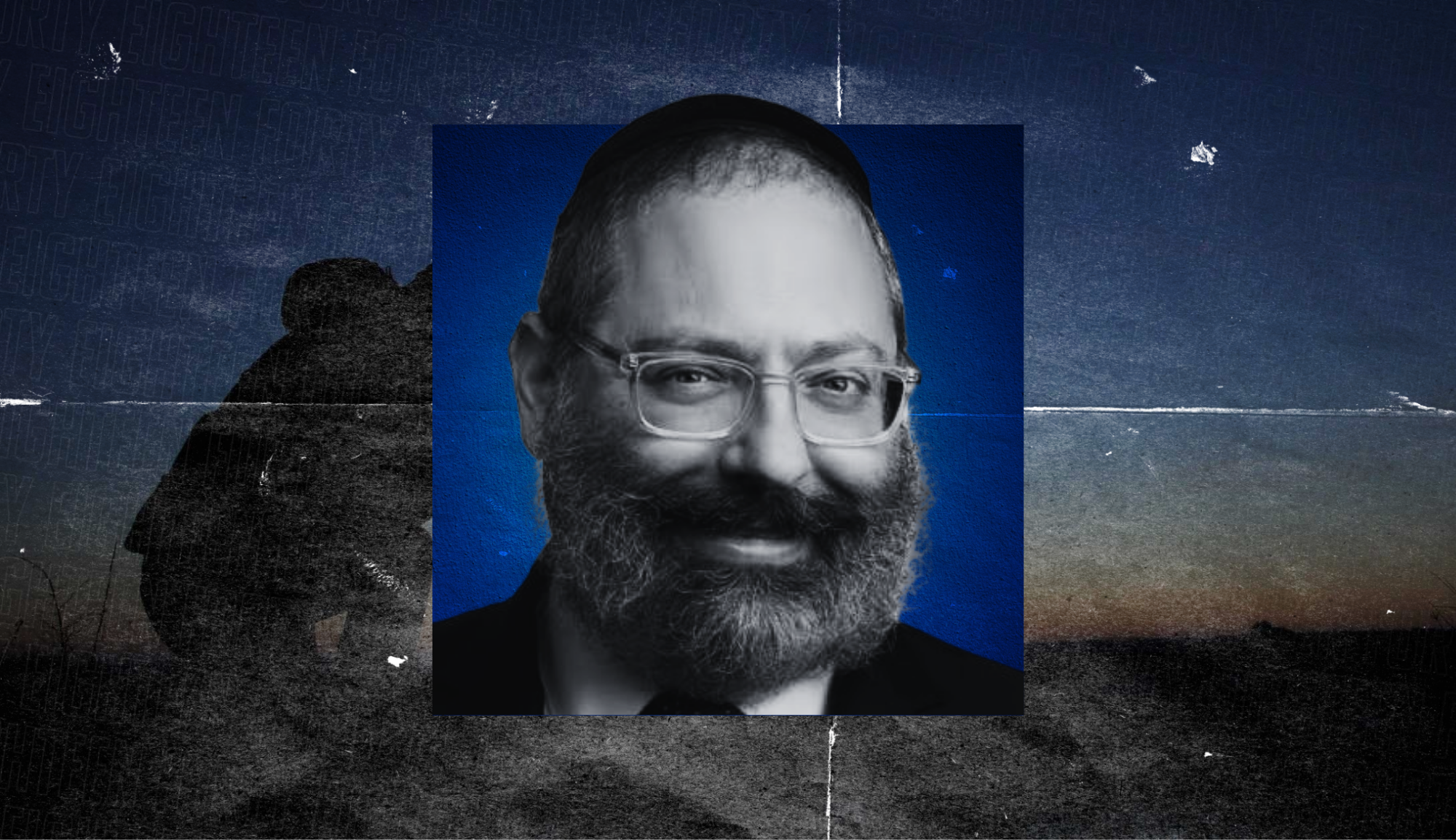
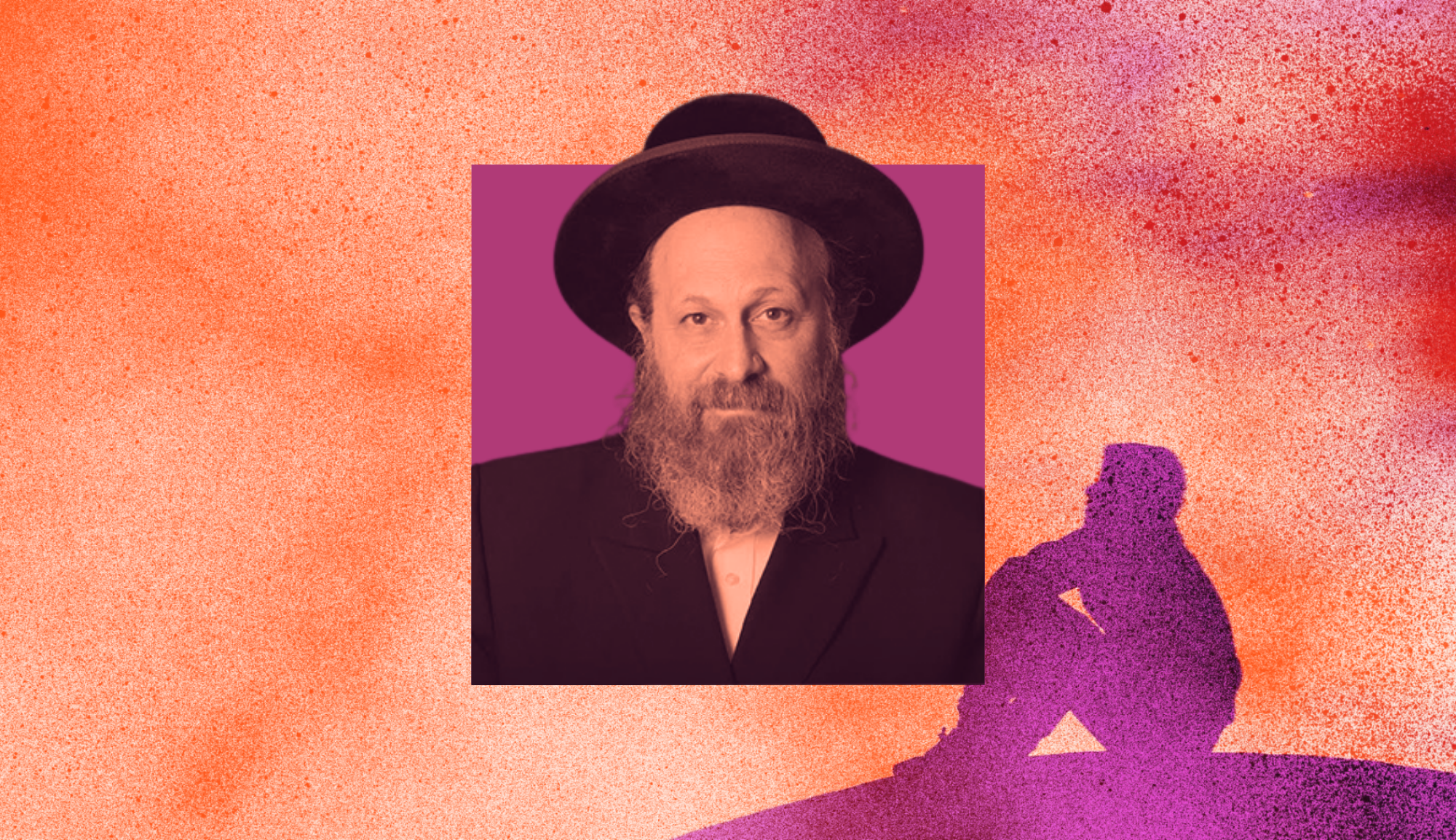
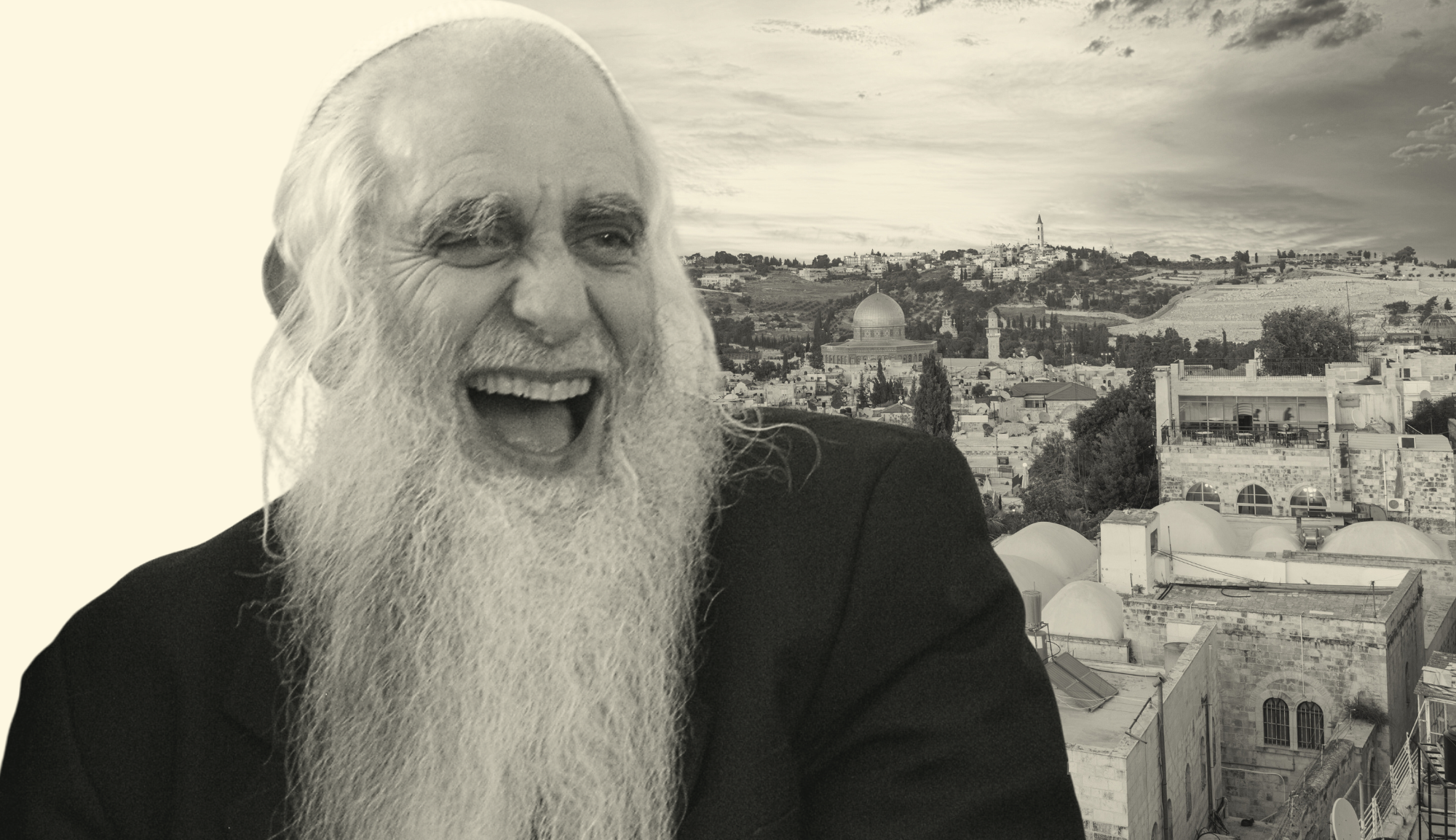
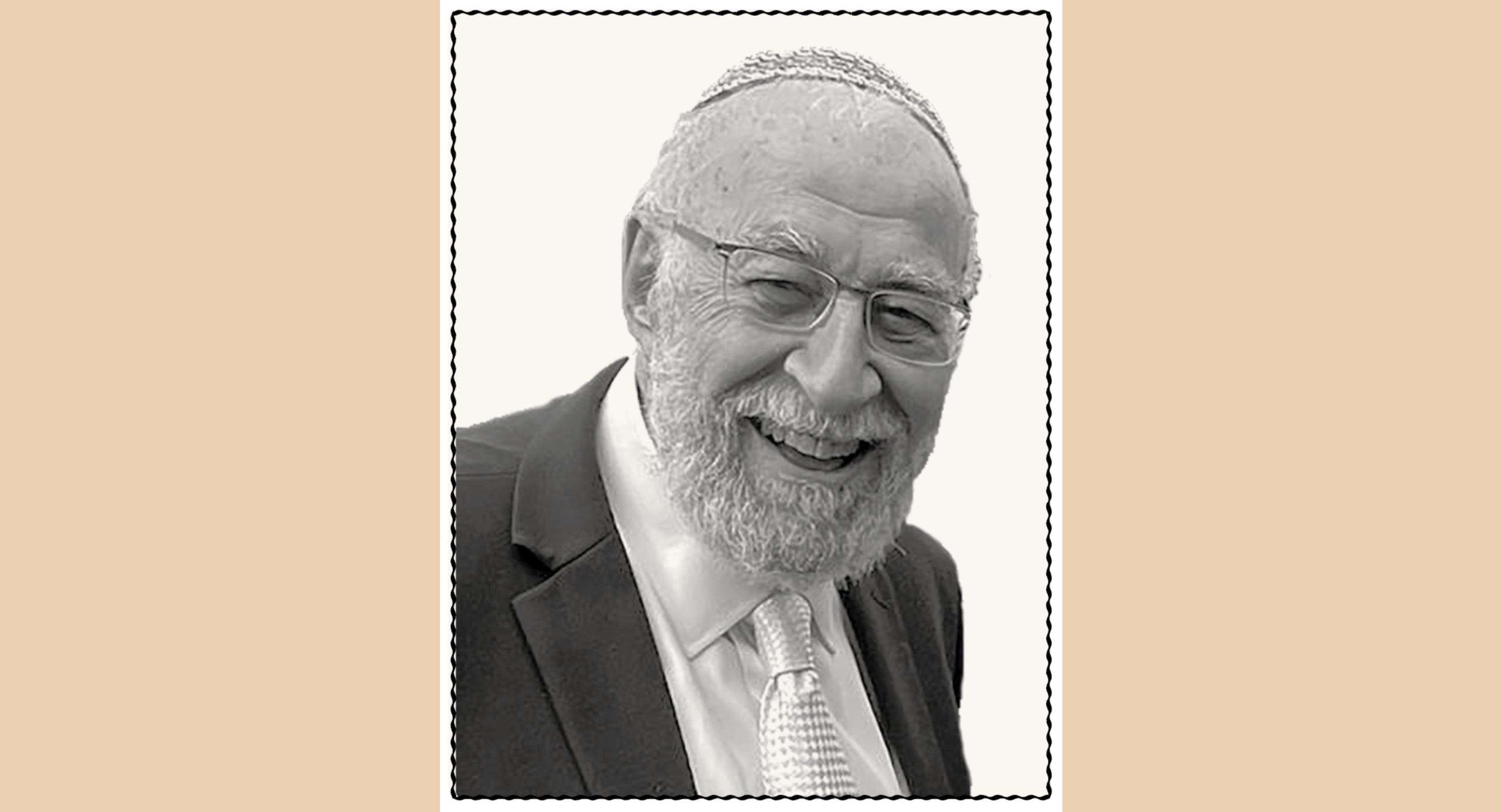
David Bashevkin: Hi friends, before we get to today’s episode, I wanted to share a few words, memories, recollections on the passing of Rabbi Moshe Hauer, the executive vice president of the Orthodox Union, who died quite suddenly over the final days of Yontef on Shemini Atzeres. The Jewish world definitely lost one of its great leaders with the passing of Rabbi Hauer. Rabbi Hauer really like embodied a kind of rare rabbinic presence. He was principled, yet open.
He was deeply rooted in tradition, in Yiddishkeit, in Torah learning, steeped in Torah learning, yet attuned to the complexity of the modern Jewish experience. He carried himself always and constantly with dignity, warmth, and a quiet strength that earned him the respect of every corner of the Jewish world. In some ways, it reminds me of something Time magazine wrote after the retirement of Michael Jordan. When Michael Jordan retired in ‘98 the first time, Time magazine noted that Michael Jordan when he traveled from the Chicago Bull stadium into the bus, he would always change into a suit and tie.
Why did he do that? He said, I want to make sure that when people see me, it’s their one chance they’re going to see Michael Jordan, I want to make sure that it’s dignified and looks a certain way. And I look at Rabbi Hauer as somebody who was constantly representing traditional Judaism, representing Orthodox Judaism, representing Yiddishkeit to the entirety of the world, and he carried himself with a very similar commitment. If this is going to be the one time that this person is interacting with a rabbi, with an Orthodox Jew, with a Jew altogether, I want to make sure that this experience is dignified, is gracious, is thoughtful, is substantive. Even passing him in the hallway, a two-minute remark, there was always couched and wrapped in dignity.
Rabbi Hauer joined the OU nearly around the same time that I was launching 1840, and over the years, we have worked together extraordinarily closely on matters related to the OU and quite a bit on matters related to 1840. And I’ll be honest, and this shouldn’t come as any surprise, we did not always see eye to eye. Our approaches to Jewish life and communications sometimes diverged. But what always struck me was his capacity to listen, to really see the people who were touched by 1840 and to recognize its potential.
He became a partner, a champion, a guide, an advisor, really in all of the work that we do. I remember I was one time sitting in his office talking to him about who we’re reaching and I was trying to explain to him, you know, like, oh, yeah, my parents listen to 1840. And I remember his response, he says, we did not create 1840 for your parents to listen. We want to reach way beyond.
I want to make sure that the people who really feel on the margins, who don’t feel like they have a voice, I want to be a partner in building this to ensure that they also have the proverbial neon entry sign marking entry points of how to enter and engage in Yiddishkeit. And the fact that we disagreed, yet he remained really one of our most valuable partners and champions in our growth, really just underscored the fact that the disagreements that we had never placed us on opposite teams. We were always working on the same team and fighting for the vibrancy of Jewish life, fighting for a passionate commitment to Yiddishkeit, fighting for a vision of a Yiddishkeit that could potentially address and reach the entirety of the Jewish people. This was a big part of his greatness, which of course I could never capture.
But that dignity that he had, being able to disagree without diminishing, differ without distancing, is something that stayed with me throughout. You know, there’s a beautiful idea I’ve been thinking about from Rav Hutner on Parshas Noach where the Torah says in Parshas Noach, in the seventh chapter in the 23rd verse, it says Vayisha’er ach Noach va’asher ito ba’tevah. That only Noah was left and those with him in the ark. Where Rashi says, quoting from the Medrash, that the word ach, it says only Noah and his family.
What’s the word only? So Rashi explains that this is coming to tell us a story that Noah was once late in bringing food to a lion, so the lion hit him. The lion struck Noah. Noah survived, but barely. And that’s why, Rashi says, to use the word ach, like it’s minimizing.
He survived, but barely survived. So Rav Hutner asks, how could the lion harm the one who saved him? What he was a little bit late so the lion bit him? I mean, we’re all sitting in the ocean together. So Rav Hutner has this beautiful explanation that I believe he applied to the Satmar Rav, but I think it applies quite beautifully to the character and really role that Rabbi Hauer played within the Jewish world. Rav Hutner answered that the reason why the lion kind of struck Noah is that this was not an ordinary lion.
It was was the last lion. The last of the lions, and when you have the last lion, it needs to be treated with a special reverence. This was the last of kind of the king of the jungle, you know, taken on this ark for survival. The last of the lions requires special reverence and in so many ways, Rabbi Howard has this image, at least in my mind of being the last of the lions.
A rabbinic figure who could speak fluently to Roshei Yeshiva and to lay leaders, to political figures, to pulpit rabbis, to non-orthodox rabbis, to the non-orthodox community, and really communities across the spectrum of Jewish life. When he passed, Rabbi Rick Jacobs, who is the head of the Reform movement wrote a very moving and beautiful tribute to Rabbi Howard. That tells you something. How many rabbis alive in the world today would be able to form connections and relationships with both Chasidic and Yeshiva leaders and also have enough of a relationship with the head of the Reform movement that he wrote a tribute to Rabbi Howard calling him his chavrusa, his study partner.
Rabbi Howard was in so many ways the last of a lions, a communal leader who could galvanize and connect to the entirety of the Jewish world. And what we worked on together, finding new entry points into Yiddishkeit, that is not a simple endeavor. And I know he received his share of pushback for standing with us, but he did stand with us. He believed that the Jewish future is wide enough for many doors, many voices, many ways of finding our way in.
And right now with his passing, especially so suddenly and so unexpectedly, our teva, our ark, feels quite a bit emptier without him. But his memory, his conviction, his care, and his courage will continue to guide us. Yehi zichro baruch. May his memory and his legacy continue to inspire.Hi friends, and welcome to the 1840 podcast where each month we explore a different topic balancing modern sensibilities with traditional sensitivities to give you new approaches to timeless Jewish ideas.
I’m your host, David Bashevkin, and this month we are exploring AI, artificial intelligence. Thank you so much to our series sponsors, the American Securities Foundation, which we’ll talk about a little bit more how we found them and partnered with them. This podcast is part of a larger exploration of those big juicy Jewish ideas. So be sure to check out 1840.org.
That’s 18forty.org where you can also find videos, articles, recommended readings, and weekly emails. One of the things that I sometimes like to do, not too often, but I would say once a year, is I go back and I try to almost remember what I initially had in mind or what the initial vision was for 1840. And I’ll be honest, if you go onto our YouTube page, which anyways, our listeners should be helping us out much more in establishing our presence on YouTube. We could really use your help.
If you go on, subscribe, leave a rating, really helps us reach new listeners. So thank you for that. But if you go on to 1840’s YouTube page and you go to the very first video that we ever uploaded, which was really kind of announcing what this project was, what we were trying to accomplish. There is a video called Exploring Big Questions.
And I want to play some of that video for you now because I think it explains quite a bit about this series and this partnership. And this is what we spoke about in the video. That little mark with the A and then the ring around it? At? See that’s what I said. Can you explain what internet is? It’s a giant computer network made up made up of started from Oh I thought you were gonna tell us what this was.
You were looking at a picture. But you don’t need a phone line to operate internet.
Eli Rubin: No, no.
David Bashevkin: As a society, it seems like we’re still trying to figure out what the internet is.
Well, we know what it is, but what does it mean for us? So many of its implications are clear. It provides access, it provides content, and it certainly provides a lot of memes. But it also provides challenges. What fascinates me when I re-listen and re-watch this video, aside from the anemic amount of YouTube views it still has from five years ago, which is okay, that’s okay, is really what spurred the creation of 1840, why we even called it 1840, which many of our listeners know is kind of the beginning of the industrial revolution and was a year, kind of a messianic year within the Jewish world and even in the non-Jewish world of trying to grapple with what modernity would bring.
And I started 1840 really from the very beginning as a response to what I thought felt intuitively was this kind of this rapidly changing landscape. Keep in mind, we started this before COVID, but it launched after COVID had already begun in May of 2020. And there was just this really foreboding feeling that Jewish life was changing and evolving, not becoming less or more, but the way modernity was intersecting with just the experience of what it feels like to grow up Jewish, how we fashion our Jewish lives felt extraordinarily different. And from the very founding of 1840, both in its name and kind of in its opening video, there was kind of this vision to talk about theological matters, sociological matters, emotional matters through the lens of modernity, of this changing world that we’re all a part of.
You don’t need to be a modern Orthodox Jew, you don’t need the word modern in your denominational affiliation to feel the pull of modernity within our lives. And it was because of that that we have addressed AI in the past. It’s because of that that we’ve spoken about questions that emerge from modern scholarship. It’s because of that that we discussed the relationship between science and Torah in one of our earlier series.
And in creating this kind of like mutual space of exploration, this mutual space where we can explore our own identities, we’ve been slowly building 1840. And around a year ago, a dear friend of mine and a former guest on 1840 named Mori Litwack, who you should be familiar with because he is really perhaps our greatest fighter and champion for Jewish education, specifically for the funding of Jewish education, of religious education. Mori Litwack should be on everyone’s radar. Mori introduced me to an incredible group of people, Tyler Deaton, Meredith Potter.
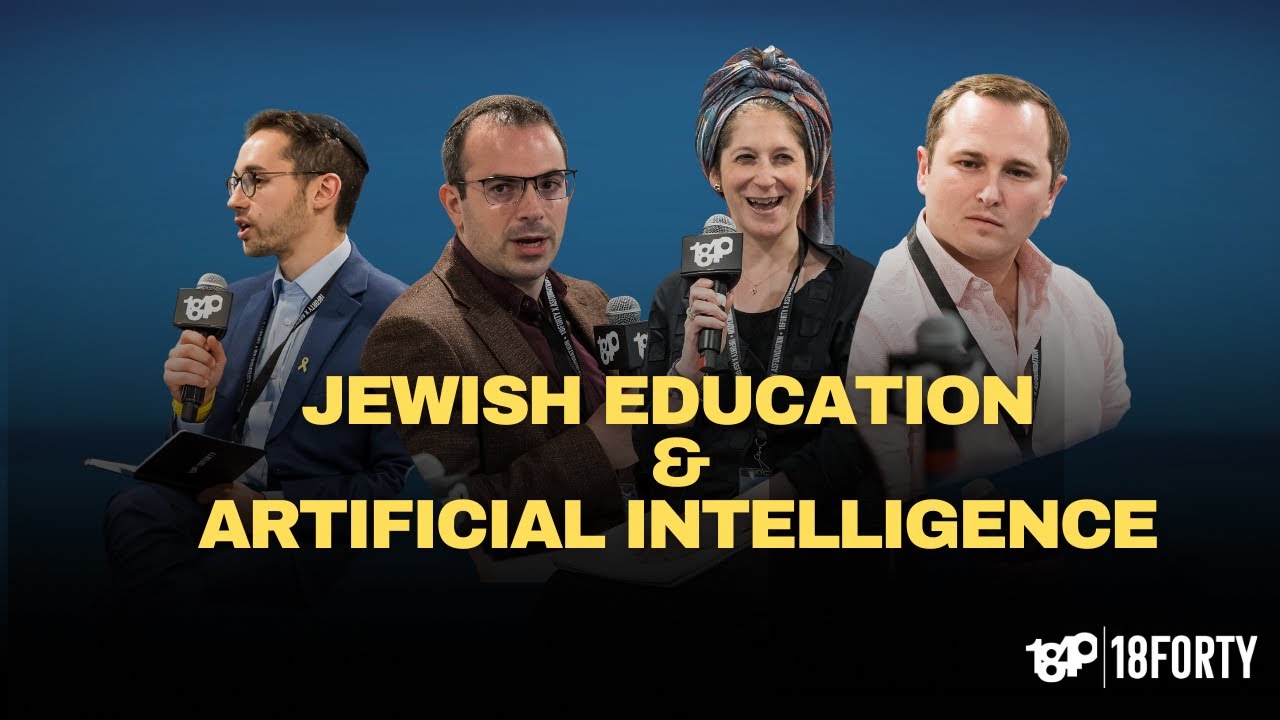
I don’t want to start mentioning each and every name, but these are representatives of an organization called American Securities Foundation, abbreviated as ASF, who are working now with religious communities. It’s not affiliated with any religion, it’s certainly not a Jewish organization, but they are working with religious communities to both prepare and discuss the opportunities and threats of artificial intelligence. And they had reached out to me specifically to see would we be able to convene a gathering of Jewish leaders and thinkers in the tech space to talk about this, have conversations, inviting people from the outside to talk about kind of the effects, opportunities, challenges, all coming with AI. They incredibly graciously funded not only this gathering which took place in the middle of September, but they’ve also become incredibly valued partners in helping us kind of think through the way AI is changing society, changing our individual lives, and what questions that may or may not pose to religious communities and specifically the Jewish community.
The conference that we ran was an absolute joy. I mean, I don’t want to list the people who did attend, you know, we had invitations that went out, but it was absolutely lovely and really credit to Tsruli Fruchter on the 1840 team for assembling and putting really every detail together. It is really a tribute to his leadership and his vision that it went so well and it was such an exciting and beautiful gathering, one that we hope to have more of. But the point of partnering with 1840 is that what is nice about partnering with us specifically, and this is a pitch for anybody else who may want to partner with us, is that aside from a conference talking about the subject matter, we also have an online platform where we can share those conversations with our listening community.
And it was because of that that I said, look, let’s gather for a conference. We’ll have people come together, talking. We don’t want to make it big. It was really, really kind of small.
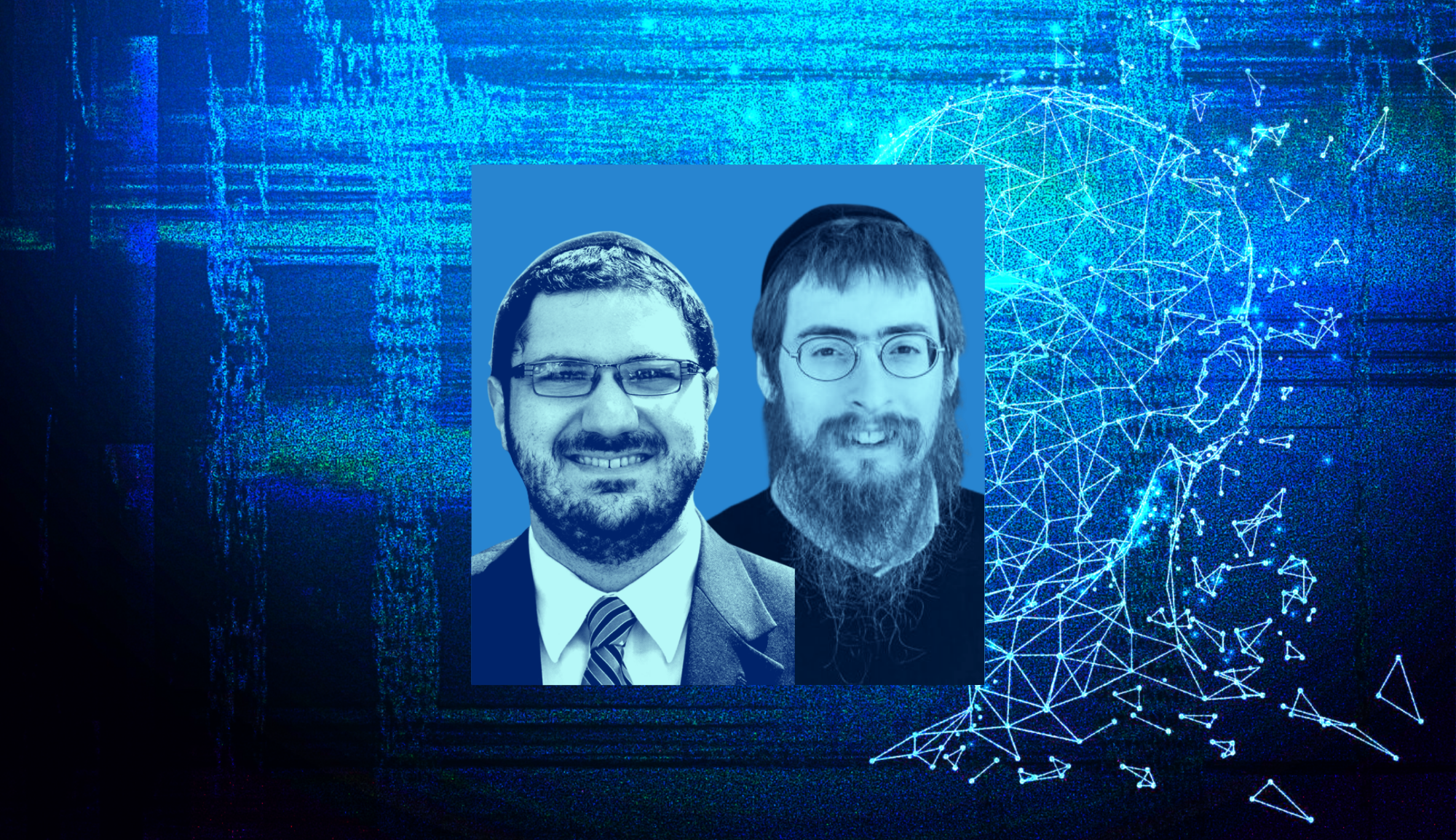
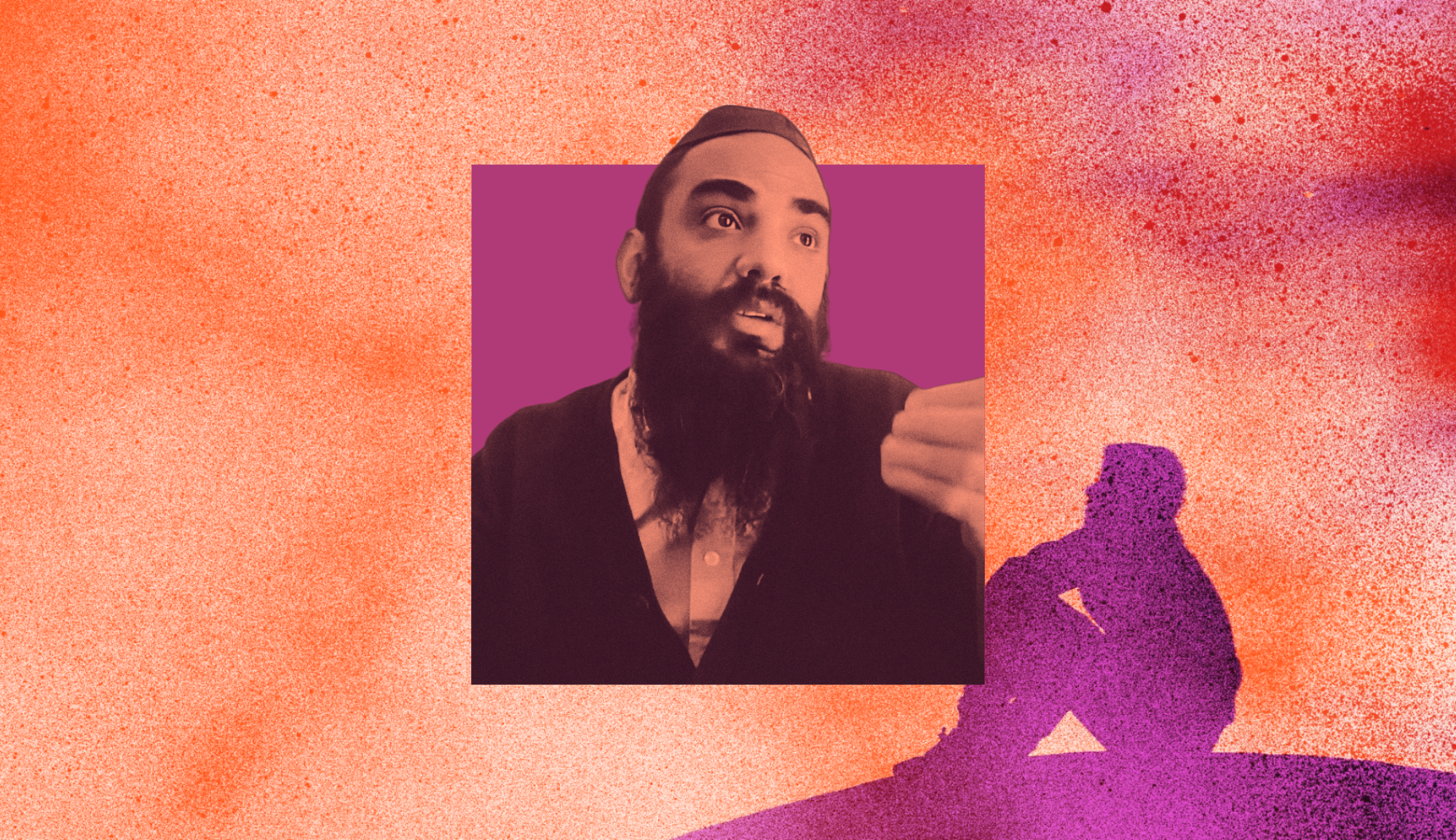
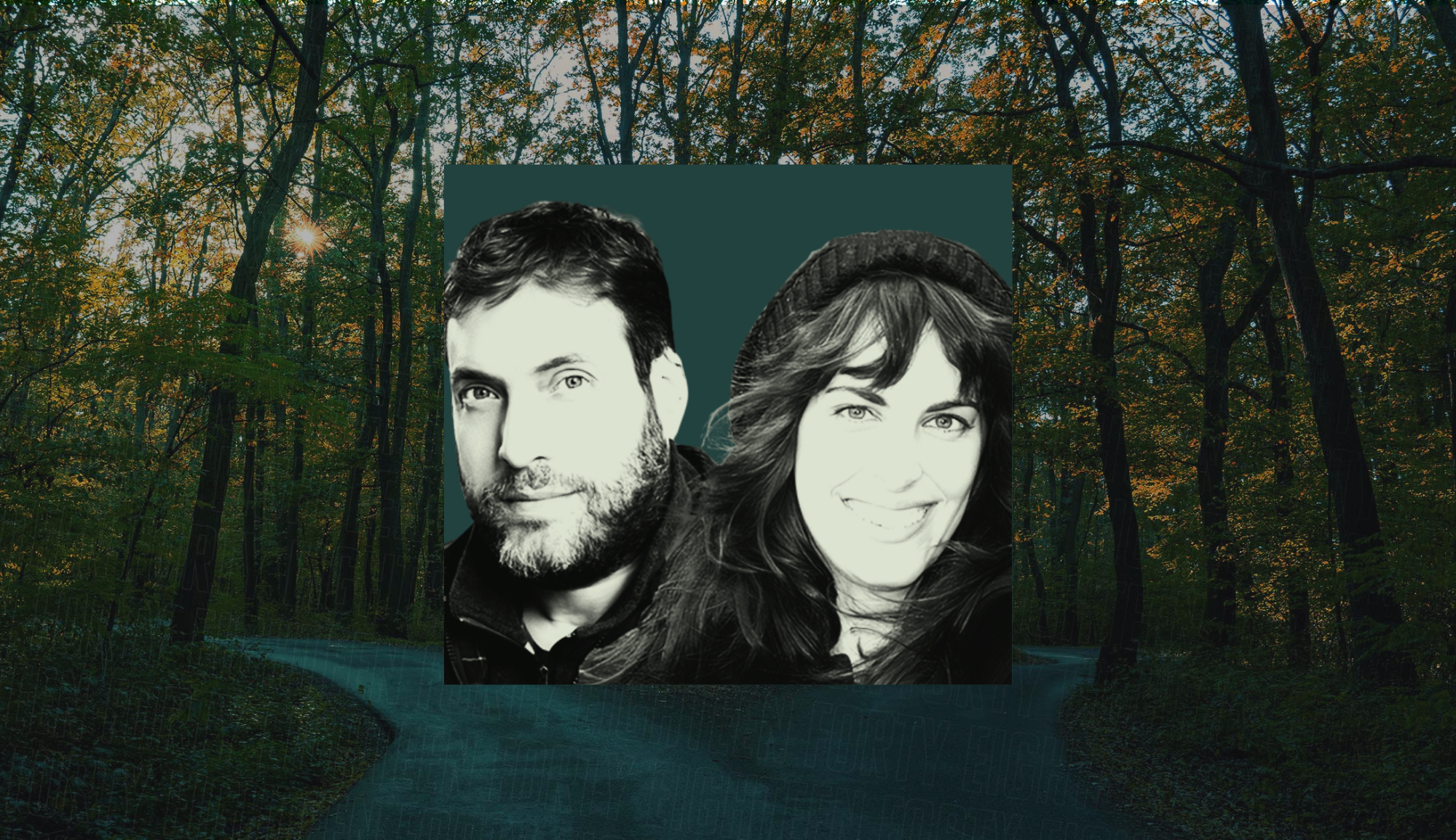
Something maybe 50 people, even less. But we can take the conversations that we have here and they don’t have to remain in this room. We can share them with the rest of the world, which is what we are doing today. And in the first conversation that we are sharing that emerged from this conference that 1840 ran in partnership with the American Securities Foundation, and really we’re just so grateful for their partnership, is a conversation that we had called What Does It Mean to Be Human? It’s a conversation that I had with two former 1840 guests, Rabbi Eli Rubin, who you may remember from our series on Chabad, as well as our series on social justice.
That was from a very long time ago, we’ve had him on twice, as well as Stephen Rodes Gottlieb, who we had on during our series on rationality. I chose both of them because I think they have really fascinating perspectives from a theological point of view of what makes the experience of being human unique. What, in fact, makes us human. As you will hear in the conversation, this is a question that was posed in some ways by Alan Turing.
In 1949, Alan Turing, who was a computer scientist, came up with this idea of an imitation game. game, which is if you have somebody corresponding via text to both humans and a computer, would a computer ever be able to fool somebody solely in a conversation via text that they are in fact human. This is known as the Turing test. Imagine you’re texting someone and you don’t know if you’re texting a computer or a human being, would a computer be able to fool you, and what would you do to kind of prove your own humanity to somebody? Now, obviously, the calculus of Turing tests has changed dramatically with the advent of AI, what we call loosely AI, really LLMs, large language models, some of which we get into the details and specifics of and we definitely discussed at the conference.
But what this conversation is really about is trying to grapple and understand with what essentially makes us human. Because I believe that if we understand what makes us most human, we also have the ability to invest in those areas to ensure that AI and the advent of technology never undermine or never erode our own access to our own humanity. So I think this is an absolutely crucial conversation. I look at this as the beginning of a conversation, what makes us human, that we should continue in our own lives in that Turing test, so to speak, and figuring out with the advent of AI, how do we get in touch with our own humanity, not just to keep up with AI, but what are the parts of us in our own experience as humans that are almost untouchable by the world of AI? It is with that introduction that I am so privileged to introduce our conversation from the inaugural 1840 conference in partnership with ASF on artificial intelligence and the Jewish community.
Here is our conversation with Rabbi Eli Rubin and Rabbi Steven Road Gottlieb. Okay, friends, I’m so excited to get started with our first panel, really a live discussion. For me, this is the most central question that really occupies my thought and where I come from, which is not so much the details or the predictions of where technology is going, but really turning inwards and trying to understand what is the nature and the fabric of our own humanity. And I wanted really to begin by first introducing two people.
I’ve had them both on 1840, and I’m very grateful that you are here today. First, my friend, Rabbi Steven Gottlieb, who is a rabbi in Philadelphia and has written on consciousness and where consciousness studies intersect with Jewish faith. And he got, I remember Philip Goff, who is a very well-known writer on science and consciousness, interacted with him after really presenting, I think quite marvelously, the Jewish approach to consciousness. And my really dear friend for so many years, Rav Eli Rubin, when I am spiraling and having an existential mystical crisis and I need somebody to voice note at 2 o’clock in the morning to understand the language with which I could capture my dread, Eli is the recipient of most of those, which is why he looks so… But really to have him here is an incredible privilege.
And I wanted to begin with an understanding of what the language the Torah uses to understand self. We use a concept very liberally in our language where I will talk about myself. I can conjugate the possessive, this belongs to me. I think that.
And when I say the word I, I am obviously referring not just to my body, not just to my contemporary self, not just to my memories, but my I feels like it includes so much more. And I am curious, how does the Torah approach, what is the language that the Torah uses to describe the ingredients, the components that actually contribute and make up our self? Maybe we can start with our friend, Rav Eli.
Eli Rubin: Good afternoon, everyone. I just want to say first of all, thank you to Dovid for inviting me.
And in a way, I’m grateful that I’m completely unprepared to talk about this topic, in that Dovid didn’t send me any questions ahead of time. But I’m grateful for that because is there really any way to ever prepare to explain what it is to be a human being? I think to prepare would be to do a disservice to the topic at hand. So having said that, I think obviously my intuition when faced with the question of what it is to be a human being, as a Jew, is to go to the first chapter of Genesis where we talk about the creation of man, creation of the first human being. And all the commentaries, of course, discuss the many nuances and distinctions between the way the creation of Adam, the first man, is created and the description of how other creations come to be.
And that is, most strikingly, that the other creations are products of divine speech. God says, let there be such and such, and then in the case of the animals, vatotzei ha’aretz, the earth gave forth as a result of God’s speech, the earth produced nefesh. nefesh chayah, living beings. In the case of man, we find God speaking again, but it’s not a command that results in the automatic generation of the thing that is supposed to come into being.
Instead, God says let us make man and then it says v’yivra Elokim, God created. So it’s not that the earth gave forth man, but God created man. So, there already we have one distinction, which is that God is directly involved in the creation of humanity and not outsourcing it, not allowing it to be automated by the earth that already exists. But the distinction that I want to focus on is the distinction of man as medaber, the human being as medaber, as a speaker, as one who has language, uses language, and in the way that the Chabad thinkers conceptualize it, we have a phrase from the Alter Rebbe, Rav Shneur Zalman of Liadi, in the opening of Torah Or, which is a very important compendium of commentary on the Torah, where he says that the human being has language engraved on the soul in the very essence of the being of what it is to be human.
So, it’s not, language is often thought of as kind of the end product, the last, the most peripheral thing in human activity. There’s the thinking that we do internally and there’s the speaking that we do externally. So language can be thought of as a kind of superficial dimension. And often it is a superficial dimension.
But the idea of, in the Jewish tradition of calling man, the human being, medaber, the one who speaks, as conceptualized by the Chabad thinkers, is not a superficial kind of speech, but it is a speech that emanates from the very essence of the self, what it is to be human is to have the capacity to communicate to others. There’s a lot of things to talk about here, a lot to unpack, but I want to give time and we can develop the thought as we go.
David Bashevkin: Absolutely, absolutely. So Steven, in jumping in, he was talking about the centrality of language.
I’m curious for you, when you conceptualize kind of the very founding of self beyond the opening of Genesis, beyond that notion of language, what other ingredients do you place into that conception?
Steven Gotlib: First of all, it’s really an honor to be here. So thank you Rav Dovid and thank you Rav Eli for being on this panel as well. I’m going to start at actually a very similar point to where Rav Eli started but move in a different direction. I’m going to start again with the creation of human beings, Adam and Eve, Adam v’Chava, but I’m going to focus on the commentaries and I’m going to use a very well-known and well-used commentary in the more progressive world but utilize it for a philosophical end, which is that when it says in the Torah that Hashem created them, man and woman, and commentaries say as one being first and then split into separate selves, into separate beings, man and woman, I think there’s an interesting way of reading that, which is that the formulation of self and identity and who we are that we have in this moment that we identify as, did not have to have been the case.
And the fact that it became the case, that we have an individual self as opposed to whatever that conception of self would have been like at that first conglomered human being was, I think points to what Hashem wants our sense of self to be like. And when I think about this in conversation with the major schools in the world of philosophy, not getting into any of the neuroscience or the related fields there, there are really three schools of thought that I think are all at least in some way compatible with that fundamental question. Way number one is the typical what you call the dualist perspective that there is a dual level of reality, body and soul. And that’s obviously we have souls, we have bodies, traditional, anyone who is coming from a traditional religious background will jump to that as the initial.
Then you have the materialist, which is everything is from the ground up, evolution, all of that. In order to have that, and there are philosophers like Daniel Dennett have written in depth about that, you have to have the mechanism for decision-making processes, responses, some small sense of self, going back to at least single-celled organisms, possibly even before that. Some people talk about the way that atoms respond. I’m not getting into any of that.
You can read up on it. And then you have panpsychism, the third perspective, which is that consciousness underlies all of reality, it’s just a question of how conscious things are relative to one another, which is extremely compatible with the Tanya, compatible with Rav Chaim’s Nefesh HaChaim. I’ve argued compatible with certain readings of the Rambam. And those are the three perspectives that you have.
The latter two perspectives, naturalism and panpsychism, run into what you call the combination problem, which is how do all of these individually conscious, or at least individually somewhat conscious things, combine to form a single sense of perspective? And I think when you’re coming from a materialist perspective, it really does hit a wall. There are certain arguments that you can only make to a certain point. However, when you come from the perspective that has divine consciousness attached to it, so then you have it operating sort of like how the Rambam defines prophecy in the Moreh Nevuchim, something that’s constantly emanating, constantly there in the background, but only certain people at certain levels are able to do it. And the miracle isn’t, can you do this, this is how it works, the miracle is where’s the stopping point? And there’s a way of thinking that certain scientists have used called IIT, Integrated Information Theory, which is a running scale from zero thought about this in my own self is that what makes us unique as human beings is that we’re able to achieve that number 10, and the line between us and these other kinds of creatures is precisely that line where Hashem has us in.
And the exact mechanics behind that are way too technical to get into in this subject. But in light of how the Torah intends for us to be, it is very clearly addressed to us as individual human beings created separately with our own understanding of our self-identity and free will, and we are meant to respond to it. And I think Hakadosh Baruch Hu put us in the position that we are such that we are able to come together in this form because it’s what he wants and the way that we best are able to interact with that and the world around us.
David Bashevkin: So I love those three models and I want to really share a question that I think may highlight some of the differences.
And one phrase that I think people intuitively feel and very often use, and you’ve both used it, is the notion of the soul, that we have a soul. In Hebrew they may use the word neshama or nefesh, but that we have this concept of a soul. What we are referring to when we talk about a soul is sometimes very ambiguous. I wonder sometimes, like in myself, when people use it colloquially, it was very soulful.
What are they referring to? They’re referring to some emotional enjoyment. Maybe it was at a very moving musical prayer service, and it was very soulful. I felt my soul leap out of my body. They’ll use terms like that.
And my question is, number one, how do you understand, what is the soul? And really more importantly, is that what I’m interacting with? Do I have access to that? When I am am sad or moved, or when I am praying or when I feel an impulse to pray, am I listening to my soul? Where is that my consciousness, that that movie that I see now, two people here and I’m judging your facial movements, and I’m trying to avoid the look of the crowd because I’m worried it’s going to stress me out. Is that my neshama talking? Is that just the highlight reel? Is that the tip of this iceberg? Explain to me what is the soul and how we actually interact with it.
Eli Rubin: So first you want to know what a human being is, and now you want to know what a soul is.
David Bashevkin: Quick, quick.
Yeah, yeah.
Eli Rubin: Okay, so just go back a minute to what I began with. The way I would want to conceptualize what distinguishes the human as opposed to all other beings, based on the initial distinction I pointed out to, is that other things are products of divine speech, but the human being has within the soul, within the self, within the individual human self, the capacity of divine speech. So the human is not a product of divine speech, but is a speaker of divinity.
Just to kind of begin thinking about the distinction between what it is to be human and what it is to be some other kind of being. In terms of what a soul is, so here too, we have in that first opening chapter of Genesis, we have the word soul or nefesh used about other kinds of beings too. In fact, the same phrase, nefesh chaya, is used both about animals and about the human being. So we have a passage where it says Vayipach b’apav nishmat chaim, God breathed into the nostrils of the man a soul of life, vayehi ha’adam l’nefesh chaya, and man became a living creature, which is exactly the same term used about animals which are produced by the earth.
So this suggests that animals and humans share this kind of bond, the duality of the experience of having a soul and having a body. You can be a creature, a chaya, which has no nefesh. You could be a creature which does not have a soul, but that is not the case. Everything, even non-humans have a soul.
So what is a soul and what is unique about the human soul? So, one of the things, again, my positionality here is that the way I think is I go back to the Chabad thinkers, the Chabad teachers, and I don’t attempt to speak for them, but I think with them. And so what I’m saying here is a product of my thinking through of what I’m seeing in these sources. And here too, we have this idea that animals too have souls. But the distinction is that the soul and the body of the animal are fundamentally the same substance.
They’re from the same realm. So the animal soul is fundamentally animalistic. There’s no fundamental gap between the soul of the animal and the body of the animal. One is the animating spirit.
It’s a kind of materialistic concept of life, right, which is that it’s just the animating spirit. It’s the thing that makes the machine move, nothing more. It’s not something from an entirely different realm, from outside of the system. It’s the thing that makes the system work.
So that’s one kind of soul, right? So a soul can be conceived of just as an animating force like electricity which makes a machine work. Right? That could be one way of thinking about a soul, and that is one way of thinking about a soul. But what’s unique about the human soul, and here we can draw a distinction from the text, where the animals to begin with are nefesh chaya. they emerge from the earth as living creatures, whereas man is formed first from the earth as a body, and then the soul is breathed into the body.
So the body and the soul are two entirely separate elements. They don’t emerge together. They’re not of the same realm. The soul comes from an entirely different realm and yet, it enters the body and animates the body.
And in doing so, here again we have this idea of the distinction between, am I a product of God’s word, or do I possess God’s word within me? So is your soul something that is merely part of the kind of terrestrial system of reality, or is it something from outside of that system? Is it an intervention, an intervention into reality? So I would want to conceptualize the human soul as an intervention, a divine intervention, into terrestrial existence, as opposed to other creatures, which are just features, functions. The soul is a functional element within the creative system. The human soul is a divine intervention in reality.
David Bashevkin: And in that model, just stay with me on the latter half, in the works of Chabad, are we able to access, when I am feeling spiritual, what am I feeling? Am I feeling just my regular emotions, that animating force, or is there a way to access the most essential parts of yourself, which is that interventionist, you know, divine not just being a product of language, but having divine language that can speak through you?
Eli Rubin: I would say that in the Chabad sources, we have a kind of ladder of soulful experiences.
You can experience soulful experiences which are the experiences of your animal soul. So, the soul isn’t just one thing and the psyche isn’t just one thing, there’s layers, okay? And there is a part of us that also has the animal soul, just like other animals, which kind of, it’s of the system. And part of the work of what it is to be a human being is to cultivate the discernment of what kind of experience am I having? Is this experience, the soulful experience, an experience of the animalistic soul, of the rational soul, of the divine soul? And within each of those categories, there are levels, and we’re complicated beings, and it’s not always easy to parse the different strata of experience, the different desires that we have, what is motivating us? And often it’s not just one thing, right? So we would hope that the higher reaches of ourselves are within our reach and can be brought more into our experiences, can be brought more to the fore, but that takes practice. It doesn’t happen naturally.
David Bashevkin: See, but I want to ask you a little bit because the way that you set it up about the three views: dualist, materialist, and panpsychist. There is a language that contemporary philosophers use when talking about consciousness called the hard problem of consciousness. I was wondering if you could articulate what in fact is that problem, and do you find Jewish sources wrestling with the very notion of conscious experience?
Steven Gotlib: I think the best way to do that is first to do a little demonstration. I’m going to invite everyone in the room to participate in this.
I am going to measure exactly 20 seconds on my watch. Close your eyes, don’t think of anything in particular, just close your eyes and let the time pass right now. Alrighty. First of all, 20 seconds is a long time if you really think about it.
Secondly, what many of us probably experienced was there were still thoughts coming into our head, but in between those thoughts, it wasn’t that there was nothing there. There’s a certain, quite literally indescribable sense of self that is in between the thoughts that come into our mind based on the stimuli that we have, either from our day-to-day experience or whatever happens to be on our mind thinking about in our subconscious and the like. That gap in between, where we are still us, but there are no thoughts in our head, is the hard problem of consciousness. The soft problems are the how questions.
How does this happen? How do we measure this? What does it look like? The hard problem is why is there a sense of self at all? Why aren’t I just a responsive robot going through everything based on only that? Why is there something that is there even before that first question of why and those first thoughts enter my head? That is the hard question, and that gets into the question of what is our soul. Because our thoughts that we had in between that are not us. Those are things that we were thinking either because it’s something that we were reading about, something we were interested in, something that got into our subconscious somehow, or something that is being utilized in various reasons. I used to work as a magician-mentalist.
I still do it every once in a while. Human beings are very, very easy to get to think in particular ways as a result of that.
David Bashevkin: That was the most nonchalant mention of being a magician-mentalist I’ve ever witnessed in my life.
Steven Gotlib: Oh, wait until dinner, I have a deck of cards in my pocket.
David Bashevkin: You snuck that in there really casually. I love that. Keep going. I’m so sorry.
Steven Gotlib: No, no, no. Different podcast. Anyway, we are that gap that is there. That is our experience. Everything else is something that is on top of that. What I want to propose is that there are still certain things that we are drawn to for no apparent reason. There is a reason that some of us really like the singing minyanim and some of us don’t.
There is a reason that some of us are drawn to particular subjects, think in particular ways, that goes beyond that. That also gets to who are we at our core, in our kishkes as one might say, and that is the soul question. When we find those interests and utilize them and then pick up on the stimuli we happen to respond to them in addition to that, that is something that we are doing responsibly, but in so doing that, we are completing who we are. And thus, dare I suggest, partnering in HaKadosh Baruch Hu in finding our purpose in life and moving towards our unique shlichut as maybe Rav Soloveitchik might have written about in a particular writing that he has.
Now as far as Jewish sources that talk about this kind of thing, so I’ve seen it in passing in many different places. The three sfarim that always comes to my mind that addressed the philosophical end of what it means to have been the Tanya, Nefesh HaChaim and Moreh Nevuchim. Those are always my go-to on it. But I think implicitly these are discussions that are really throughout our tradition because it gets to the bottom of what it means to be a human being in the first place.
And I think anyone who’s thinking seriously and religiously about this is going to ask these types of questions.
David Bashevkin: So one thing that I want to ask about as it relates to our humanity is the relationship on a very human level of Halakha and Jewish law. It’s very strange that Judaism is so legal-centric because in many ways, and many people have this experience, it feels like Judaism is asking people to ignore their humanity, that I’m a limited capacity. I’m tired right now.
I can’t do it. I can’t reach to that. What do you think is the function of the law, of commandedness vis-a-vis the cultivation of self? Why are we always in dialogue with the law and how are we supposed to understand Halakha especially when it often asks us to reach beyond or kind of ignore our most basic human comforts and tendencies?
Steven Gotlib: I guess I can take this one first and give Rav Eli some time to think. Whenever I think of the questions of how Halakha interacts with us, I always go to Rav Soloveitchik.
Literally the Ish haHalakha. And in Rav Soloveitchik’s writings, a lot of it is a focus on that Halakha is meant to give us not the why questions, but the what do we do questions. How do we actually live when push comes to shove? And Rav Soloveitchik argues that the halakhic heroic life is saying I’m going to give myself to that in all and through that I’m going to develop a almost halakhic sense of self that is in dialogue with that, in tension with that Rav Soloveitchik would even say probably, and is defined by that in a real sense but is mitigated through Halakha. Someone else who I’ve been thinking about a lot on this subject, I’m actually in the process of writing an article on this, is Rabbi Sacks.
Rabbi Sacks in his early writing, Rabbi Lord Jonathan Sacks, in his early writings was very critical of Rav Soloveitchik’s approach in this sense. He thought we shouldn’t be living in tension in the way that Rav Soloveitchik wanted us to. We shouldn’t be spending time philosophizing, we should aim for a synthesis rather than just having a thesis and an antithesis and leaving it in tension. And throughout his career, sometimes more explicitly, sometimes more implicitly, Rabbi Sacks wrote about the need to transcend that.
That you should start out as lonely men and women of faith and that we can use that as a point of view for when we are davening, when we’re in prayer, when we’re able to be in conversation with Hashem because that’s how we should be facing Hashem. We should ultimately transcend it. The tension is something we need to recognize and experience, but also seek to, in some way, move past through some synthesis. Rabbi Sacks had a lot of suggestions for that synthesis, and I think many different thinkers have tried to solve that in different ways.
For Rav Soloveitchik it was more about just acknowledging that tension and letting that tension live while also saying Halakha is quite literally the path by which we walk in the way that Hashem wants us to so that we are bringing the world towards its fulfillment. And so that’s usually how I see that integration and how we all think about that tension in our own lives is going to vary from person to person.
Eli Rubin: I think I would want to slightly broaden the question from law specifically as a category to Torah in general as a category of thought, as a category of literature, as a category of moral directives, which are larger than the particular things that you need to do on a particular day or like how you blow the shofar, to just a very idea that we in this century, in the 21st century, are looking to so much of our direction, our cultural direction, not just the legal, the way we govern ourselves, but what it is to be human, how to live in a broader sense, is from an ancient tradition, right? A tradition that comes from an entirely different kind of world and an entirely different kind of culture, right? And that is where the tension between self and Torah or law often lies. Often it’s not a function of the personal and the self.
It’s the function of a concept of self that comes from living in the 21st century. Sometimes we confuse the concept of self with a kind of mirroring or an image of self that we actually draw from outside of ourselves, from the surrounding society. And this is precisely why I think having the Torah and having a different, an alternate tradition of law, of moral values, of literature, of ways of imagining, of ways of talking, ways of arguing, ways of thinking about what reality is and what it’s meant to be is really extraordinarily helpful in allowing ourselves to emerge, right? So long as we’re totally submerged in society, it’s very difficult to actually find ourselves. It’s very useful to have this kind of foreign thing, right, this strange, often difficult, difficult to cope with, difficult to figure out.
How does this relate to me? How does this fit with the way I want to think? My intuition might be very different from something I read in the Torah. And that’s a great test for us. That’s a great way for us to actually say, well, how do I want to negotiate this? And in that negotiation, in that thinking, in that difficulty, that’s where self can emerge. I don’t think that’s a challenge to the self.
I think having this kind of system of laws is a way to allow us to see ourselves better.
David Bashevkin: I love that imagery that we’ve used a lot of times on 18Forty is in order to propel momentum, you need friction. You need to be in dialogue with. And looking at the relationship between soul and halacha as literally giving some aspirational, even if it will never be fully realized, but even in that aspirational tension is actually the catalyst for the emergent of self is quite powerful.
I have three rapid fire questions. I promise they’re not the same ones I always do on 18Forty. I don’t want to bore you to death. I promise you.
My first question really comes from Daniel Goleman, I believe, but I saw it in an interview with Brian Christiansen. Brian Christiansen wrote a book called The Most Human Human, where he participated in a Turing test to evaluate, but not as a robot, he participated as one of the undercover human beings. And he was later asked in an interview, every scientist has filled in the following sentence. The human being is the only being that blank.
I could tell you after how he filled in that sentence. How would you fill in that sentence? The human being is the only being that…
Eli Rubin: That speaks.
Steven Gotlib: The human being is the only being that is capable of recognizing our own flaws.
Eli Rubin: Can I explain?
David Bashevkin: Please.
Eli Rubin: I think that in a way, the obvious question that comes up when you talk about AI and humanity is the question of consciousness. But I think the more important question is the question of language and speaking, because the things that they seem best at is speaking and is language. And that forces us to ask the question of what human language and what human speaking really is in a much deeper way.
And maybe allows us to answer it in a deeper way than we had before.
Steven Gotlib: I would also add quickly, I would add one word additionally. The only creature that can recognize our own flaws unprompted. We can get AI to recognize its own flaws if we prompt it, but we don’t have to be prompted necessarily.
Sometimes we realize that.
David Bashevkin: I love that. My next question is, are there specific rituals in halacha, in Jewish life, that you feel personally get you in touch with your own humanity?
Eli Rubin: I think I would say the practice of studying Torah is the one that makes me feel most alive, is the one that makes me think about what it is to be human and what is the purpose of being human in the most profound kind of way.
Steven Gotlib: Davening.
This is something that might surprise people who know that I am a very, very, very fast dovener, just naturally. But I think dovening in its ideal form after we’ve said the words that the siddur has prescribed for us to say, there should be a moment of meditative connection that’s there, and that for me is an opportunity to really connect with who I really am as opposed to the thoughts swimming around my head.
David Bashevkin: Last question, what skills do you think society should be prioritizing to ensure that we remain human?
Eli Rubin: I think it’s the critical faculties, the abilities to question ourselves, to verify information, to assess information, to assess analysis, and to differentiate between superficial kind of language, superficial kind of speech, and real speech, speech that comes from the heart.
Steven Gotlib: I mean this in complete seriousness, I think everyone should be a magician.
Everyone should understand how it is that people think, how it is that we are misdirected in our selves and in others, where our blind spots are cognitively and in practice. And learning how to do that will be practical in a whole bunch of fields.
David Bashevkin: And just to reiterate, he is available for bar mitzvahs, bat mitzvahs, birthday parties. I we hope that’s the takeaway.
Thank you so much to Steven, to Rav Eli. We’re going to close. Yeah. And now we we’re going to open it up if there are questions for kind of like a more free flowing conversation.
Any questions from our audience?
Question: Yeah, I’ll go first. Do you feel scared about how AI might threaten your own humanity? You on a personal level.
Eli Rubin: No.
Why should I? I said before in the breakout discussion when the question was, how do you feel when people talk about AI? And I said I feel skeptical.
So maybe I’m at the wrong conference.
Steven Gotlib: I think that when I think about the challenges posed by AI that I’m seeing and interacting with, I think the question for me is less am I… I’m not bothered by AI as it exists. I’m not bothered by the fact that we can create things that act in these ways that give the impression the way that they do in conversation.
There are even some ways of thinking about the fact that it could genuinely be some kind of artificial man-made consciousness. We’ve made synthetic things before that Hashem has made before. It wouldn’t give me a crisis of faith if we created an artificial soul so to speak through AI. But what scares me is not the AI itself.
What scares me is the people who are using it and interacting with it and giving it its fodder and what that says about humanity as a whole and the ways that it can bring us. AI, ultimately like many things, will lead us faster and more dangerously down particular paths or let’s say faster and more excitedly down different paths. And the question is up to us, i.e. those who are using it and giving it its input and training it quite literally, is that going to be positive or negative? Is that going to be productive or dangerous?
Question: In the field of philosophy of mind, the notion of dualism ascribed to Descartes is kind of scoffed at. Why would we posit something immaterial? We have an intuition as scientists, as philosophers, that everything in the world can be described through some kind of means, doesn’t mean we have to subscribe to a physicalist or reductionist approach, it could be a more functionalist approach.
But how do we give a defense for, or would you give a defense for, the notion of a soul as something immaterial?
Steven Gotlib: Yeah, so I think that the philosopher who’s done this best that I’ve personally seen, based on just my own interests, in David Chalmers’ book “The Conscious Mind,” so he describes what he calls naturalistic dualism, which is that there is dualism, it is two separate things, but he’s operating on methodological naturalism and doesn’t want to acknowledge some kind of divinity there. But he does give a defense of dualism that I think can very easily be applied in a theistic concept, context I should say. I also think that the panpsychist approach, that consciousness is underlying everything, is very defensible across fields. You can see in certain fields within quantum physics, certain fields within microbiology and the like, indications of consciousness going all the way down that gives it a layer of explanatory power that can operate within a methodologically naturalist perspective, but is also very easily compatible with theology.
So I think either panpsychism or dualism are defendable from a philosophy of mind perspective. You’d have to ask the neuroscientists on that end, but my understanding is that even in that end people are considering these as possibilities.
Eli Rubin: I would question the premise that it’s problematic from a religious or theological perspective to say that there’s nothing spiritual. If we assume that there’s a divide between the divine and the material, and the material is not divine, and specifically the spiritual is divine, then you have a problem.
But I don’t think you need to accept that premise. In relation to the divine, I don’t think the spiritual is closer to the divine than the material is.
Question: So in facilitation groups earlier, Moshe Koppel suggested that every time somebody says AI can do this but it can’t do that, a few months later it can do that. So is there a danger in trying to precisely define what humanity is, in that whatever definition we give it, six months from now AI will be doing whatever that is?
Steven Gotlib: As I kind of hinted at in the answer to a question before, it would not surprise me, I would be shocked, but it would not intellectually, philosophically surprise me if we reach a point where AI is conscious by the signs of consciousness that we give it.
Obviously we’ll never know its internal perspective and if it has a sense of self. My money would say that it would not have a sense of self in the way that we do, but it would certainly pass all the Turing tests of having a sense of self. It already is passing the Turing test as far as I know for a basic sense. So I would not be shocked if there came to a point where we need to practically treat AI as if it is conscious, even if we do not know.
And that doesn’t bother me from a philosophical or theological or philosophical perspective. But it does give me pause in how we treat it and how we relate to it. I would not relate to an AI that is giving every sign of conscious conversation and communication with me. I would not treat it any differently, I would treat it substantially differently, but I would treat it almost like I’m treating my 15-month-old daughter.
Something that we should raise and take very, very seriously and try to make the best version of itself possible. And just like I would be very terrified of any human being growing up in a context in which it is learning sociopathy as something to emulate, I would be very worried about AI, quote unquote, growing up in that kind of context.
Eli Rubin: I think this question is a very important question and it’s precisely the reason why in the thinking, in the little bit of thinking that I’ve done about AI, I’ve focused in on language because language is the thing that we see it doing really, really well. And the question is what is different about human language? And if I may, just a little anecdote, chasidic story.
It’s said that many, many years ago, the Alter Rebbe, Rabbi Shneur Zalman of Liadi, visited the town of Shklov, which was a city known for its opposition to Chasidism. And while there, in the course of giving a Torah talk, he said that the angels are superficial and the human soul has integrity. So there was a massive uproar because all the great scholars of Shklov said, how can you say that the angels are superficial and that the human has more integrity? So he said it’s a clear Gemara. It says it’s a straightforward passage in the Talmud, the Talmud in Bava Metzia says that a person should always conduct themself according to the custom of the place.
And the proof is that when Moses ascended the mountain, he did like the angels did, he didn’t eat. And the angels, when they came down to visit Abraham, they did as human beings do, they ate. And then the Talmud says, did they really eat? No, they pretended, they made as if they were eating. So, said the Alter Rebbe, this is the distinction between superficiality and integrity.
To be superficial is to pretend to do something. It’s to mimic, and you can mimic very well. They appeared to eat. And you can appear to speak.
But to speak with integrity is something very different from speaking superficially, just as pretending to eat is something very different from actually eating.
David Bashevkin: One thing I want to ask about is specifically when you’re talking about divine language and the power of a language emanating directly from a person. I wonder, did any of this come up in the early years of Chabad when they began broadcasting the talks of the Rebbe? Was there anybody who was concerned or voiced a concern or addressed, I could imagine the notion that, well if it’s technology that is serving as the conduit, even if there’s a living person at the very end of it, it’s not going to capture the divinity that you would get from being there in person. Was there even concerns that people are going to stop showing up because they’ll just like Zoom services, you know, people, why show up when you can just get your high holidays on Zoom?
Eli Rubin: There definitely were concerns raised.
I think they had more to do with cultural concerns about using media, using radio. Radio is, you know, it’s for music, it’s for non-Jewish culture. And to use it as a vehicle, it’s like, you know, in some circles it’s considered unworthy to have a television in your house. It’s to have a radio is a little more kosher.
To have a television is … So there definitely were concerns raised. The interesting thing is that when the Rebbe did discuss the use of technology, he hit on I think what you’re pointing to in a very unique way, and it comes back to the question that was asked before about materiality. And he said, what’s happening here through using radio is that the wires, the metal wires are becoming imbued with divine meaning, right? So it’s actually sacralizing the materiality of the world to a new degree, to a greater degree than it was ever achieved before.
David Bashevkin: By, by bringing the words of the Rebbe to that wider audience.
Eli Rubin: No, and not just by bringing it to the audience, he was talking about the physical, the physical world itself now becomes permeated and similarly radio waves, which flow endlessly, you know, not just through the world but out into outer space as well. So there’s now divinity is being carried in the very fabric of being itself in a more revealed way, in a more open way.
Steven Gotlib: I’ll just add very briefly, with the caveat that I am not a Chabadnik, I’ve just had a long week, that if you if you look at the introduction to the Tanya, the Alter Rebbe does spend quite a lot of time saying, this is not the ideal way to get my messages to you.
Learning from a book is worse than learning from a person directly. Learning from a person directly, we’ll be able to have that particular relationship, particular context, etc. But if you have to consult a book, here’s the book that you should consult on that. And obviously the Tanya grew to become this cultural touchstone throughout. But I think AI, particularly in the LLM model of AI that we see, there is no reason to treat it differently than the Tanya with l’havdil.
Teaching is differently than the Tanya with the Alter Rebbe‘s warning with it. This is a book that has a very large book with a lot of information available to it that’s going to give it to you this information a very succinct and very streamlined way. But that’s a way to get content and get some general information. When it comes to how we ought to integrate it into our lives, it is no replacement for human beings and human interaction.
Question: Thank you. I am curious, because we think about human rights and we think about animal rights. Do you think that AI should have some level of rights? And is that a difference, I mean you talked about the difference of scales, where would AI be in terms of having some sort of rights of some kind?
Steven Gotlib: It’s very hard to tell without knowing that there is something internal there really going on in the way that we can know that with human beings, animals, etc. and the like. And even even with other beings, by the way, I have no knowledge of the fact that you are all conscious right now.
I’m assuming that you have a similar internal perspective as I do. I don’t know that. But the way that we interact indicates that. So I think at some point when we look at AI, we’re going to need to ask ourselves, if it’s giving every single indication of this, maybe it might be better to be safe than sorry.
I’m comfortable saying that. I know other people would say, no, we know for a fact that it doesn’t actually think and therefore we shouldn’t do that. I’m a cautious optimist and for me my cautiousness leads my optimism, not the other way around.
David Bashevkin: Thank you all so much.
Both Reb Eli and Steven kind of emphasized the role of language in defining and kind of being this essential feature of our humanity. I just want to call your attention to three different articles to kind of explore this further, one by each of the authors and a third kind of a more general. Eli Rubin elaborated on his approach in a phenomenal article called Adam, the Speaking Creature on Humanity and Language in the Era of AI. And he published it on Chabad.org.
org. It’s a really brilliant reflection on the role of language in Jewish mysticism, in Kabbalah. I’ll just read from the very end because he says something extraordinarily profound, which I think relates to some of the other writers that I’ll say afterwards. He writes, the gap between Torah and contemporary culture is aligned with the gap between the private language of God and the public language of nature.
This is the gap that human language negotiates and crosses, extending from the unarticulated essence of the self into the verbalized realm of shared meaning, legibility, and explanation. Through language, the gap of language is overcome. At the same time, it is precisely the gap of language that rescues our words from superficial mimicry. The gap of language makes it possible for humans to speak with integrity.
Meaning, there is this unbridgeable gap between what we say and what we actually experience in the own interiority of our lives. What makes us human is having both of these experiences, that private language, what he calls the unarticulated essence of self, that godliness that remains all of us, and then using that interiority, taking that interiority, and through the vehicle of language creating a public language of nature. Through language, the gap of language is overcome. The defining principle of humanity in this reading is the fact that we both have language and we also have a world where there is no language, that interior world, the world of so to speak, I’m using air quotes, of private language, if such a thing can even be called language.
It’s that universe of that internal understanding of self and that external projection through language of talking to friends and to family and to community and projecting through the vehicle of language what we are feeling inside that is the defining hallmark of our humanity, and it really highlights the fact that sometimes the most human thing in the world is to be misunderstood. The most human experience is to feel that gap, that gap between what language can capture and what can only be experienced in the interiority of our lives. The other article, which is written by the other correspondent in this conversation, is by Steven Gotlib, and that is an article that he published on 18Forty, and you can find it there on 18Forty.org, called Toward a Jewish Theology of Consciousness, where he asks the mystery of consciousness, the consciousness, that interiority, what Eli Rubin’s calling that private language has long vexed philosophers and scientists alike. Can God be the answer? It is an absolutely fascinating article that gives a great overview of some of the major ideas related to how we understand consciousness.
What is the conscious experience? Is that God speaking through us? And really introduces the different ways in which people deal with, so to speak, the hard problem of consciousness. Why does it feel like this to be alive? Why does being alive have this feeling? And it is an absolutely brilliant article and a fantastic introduction and overview to some of the questions of consciousness and I would strongly recommend taking the time, if this topic interests you, to take a look at that Toward a Jewish Theology of Consciousness. The last thing that I would just mention, because I think it underlies everything that we’ve been discussing about our humanity, is really trying to get a better understanding of what language actually is. I have been influenced quite a bit by a philosopher of language known as Ludwig Wittgenstein.
Wittgenstein, and there is a new biography on Wittgenstein that is being published, I think, as we speak in that great series, the Yale Jewish Lives series. If you don’t have any books from the Yale Jewish Lives series, do yourself a favor. Go online, go to Amazon, they’re not that expensive, get one of the Yale Jewish Lives series. They have ones on I would recommend the one on Rav Kook written by Rabbi Yehuda Mirsky.
It is absolutely phenomenal. But they have on all sorts of figures, on Kafka, on Freud, on Herzl, on Ben-Gurion, I believe. They’re absolutely phenomenal and they’re coming out with one now on Wittgenstein. And Wittgenstein really spent most of his time trying to understand what is the function of language.
And far be it from me to present Wittgenstein’s philosophy. Aside from the fact that it might bore many of our listeners to tears if they haven’t been bored already, but really more importantly because it is extraordinarily complex. I’ll just share with you a quote, a famous Wittgenstein quote where he says, language is not a private invention, but a shared practice. To imagine a language is to imagine a form of life.
Where Wittgenstein really tries to understand what is the role that language is playing. And this is especially true, and there are many philosophers and thinkers who have tried to apply Wittgenstein’s thought to Jewish theology or to So thank you so much for listening. This episode, like so many of our episodes, was edited by our fearless friend, Denah Emerson. Thank you so much, Denah.
If you enjoyed this episode or any of our episodes, please subscribe, rate, review, tell your friends about it. You can also donate at 18forty.org/donate. It really helps us reach new listeners and continue putting out great content. And of course, thank you again to our partners at American Security Foundation, ASF.
We are so grateful for your partnership and support. And of course, you can leave us a voicemail with feedback or questions that we may play on a future episode. That number is 212-582-1840. Once again, that number is 212-582-1840.
If you’d like to learn more about this topic or some of the other great ones we’ve covered in the past, be sure to check out 18Forty.org. That’s the number 18 followed by the word forty, f o r t y.org, where you can also find videos, articles, recommended readings, and weekly emails. Thank you so much for listening and stay curious, my friends.