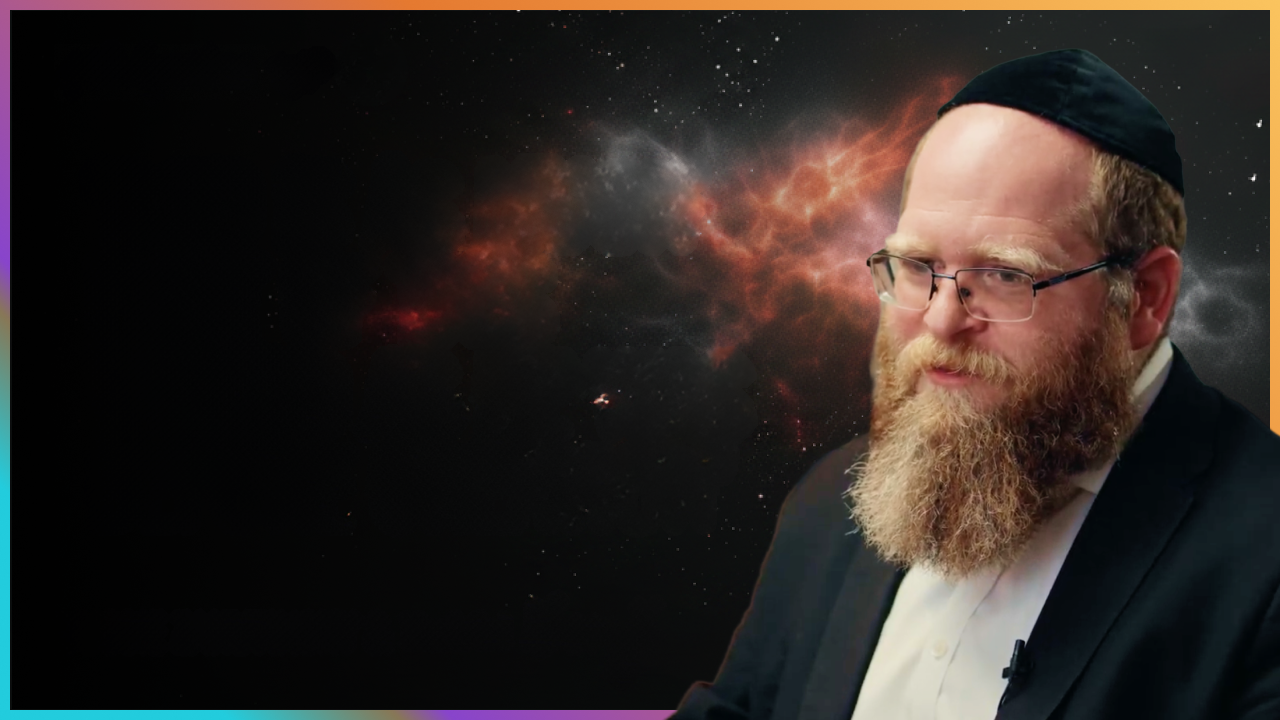
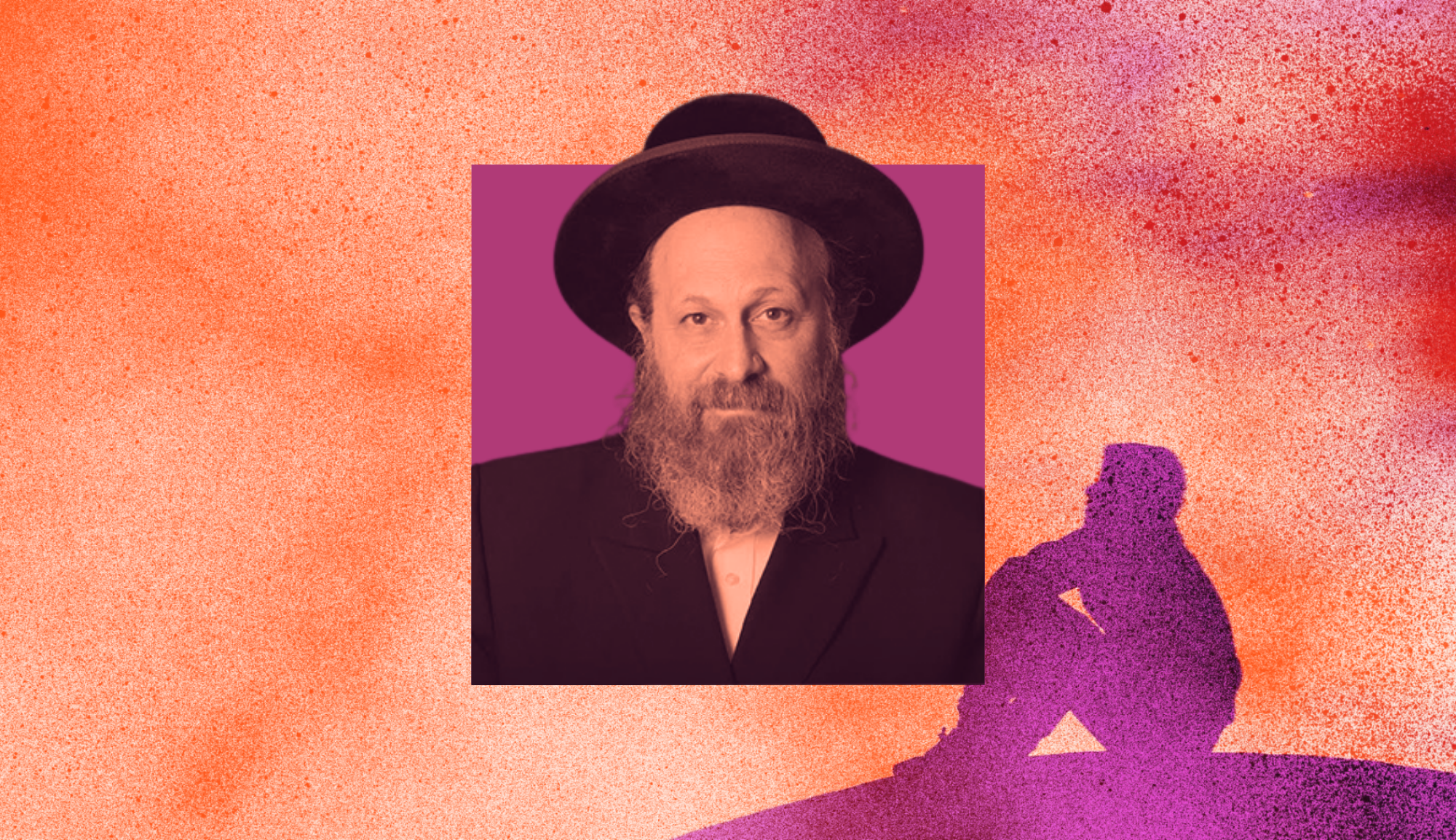
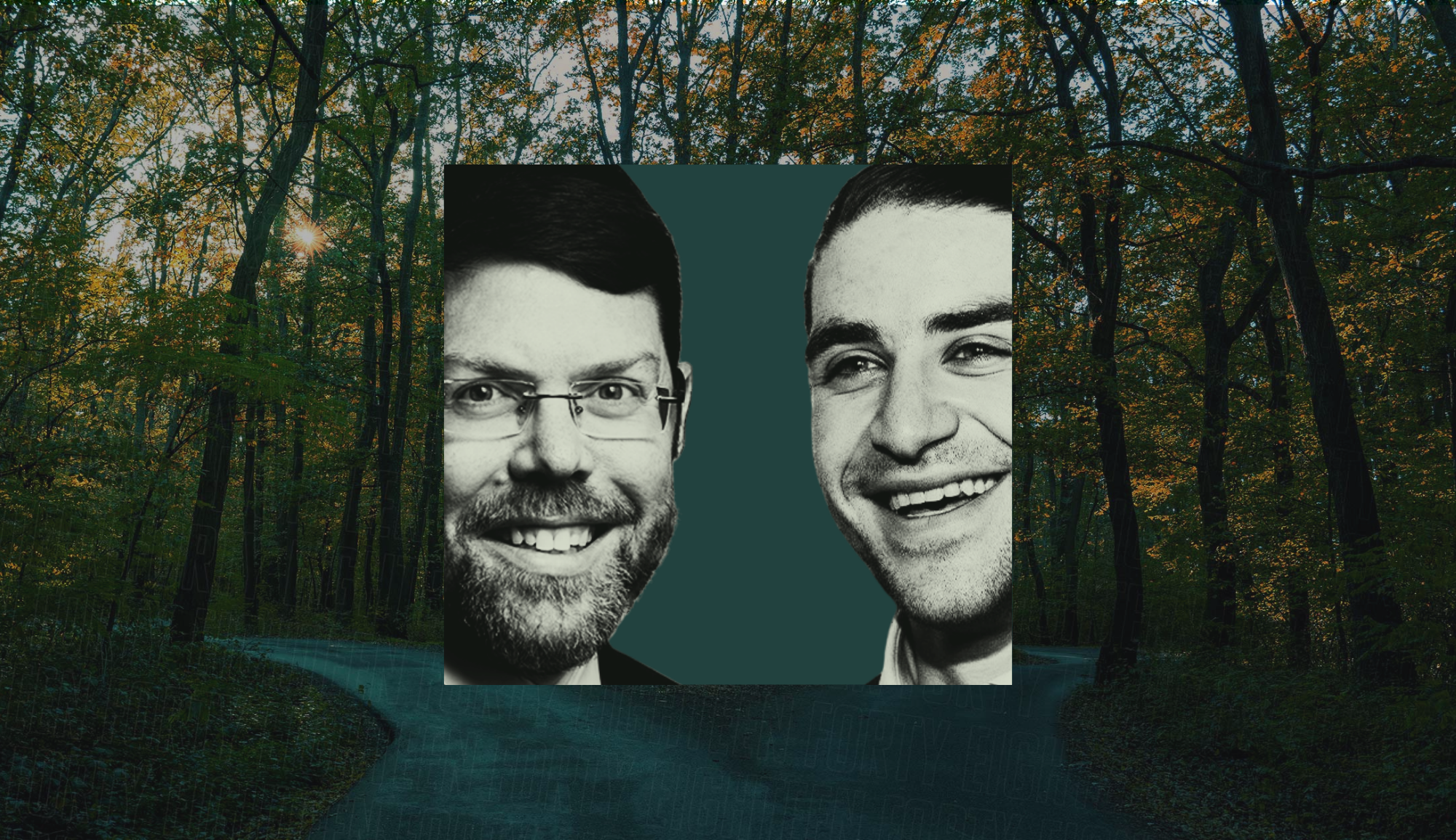
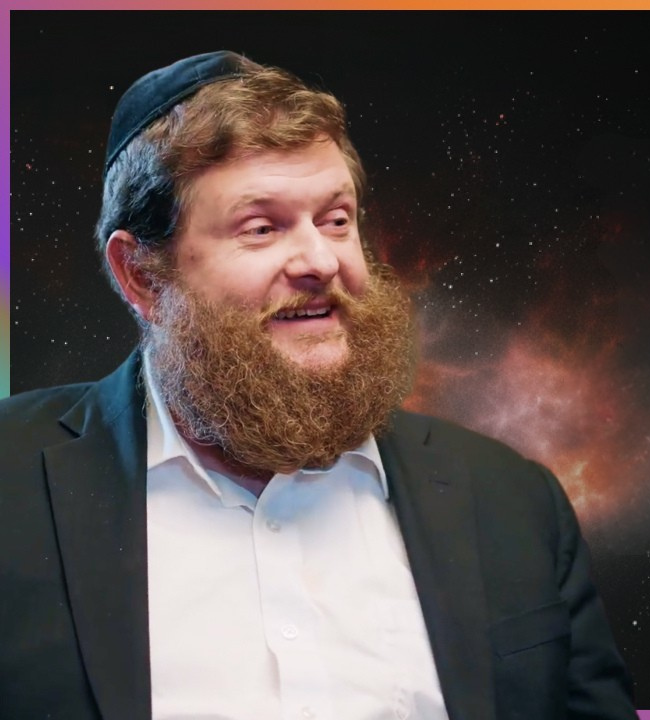
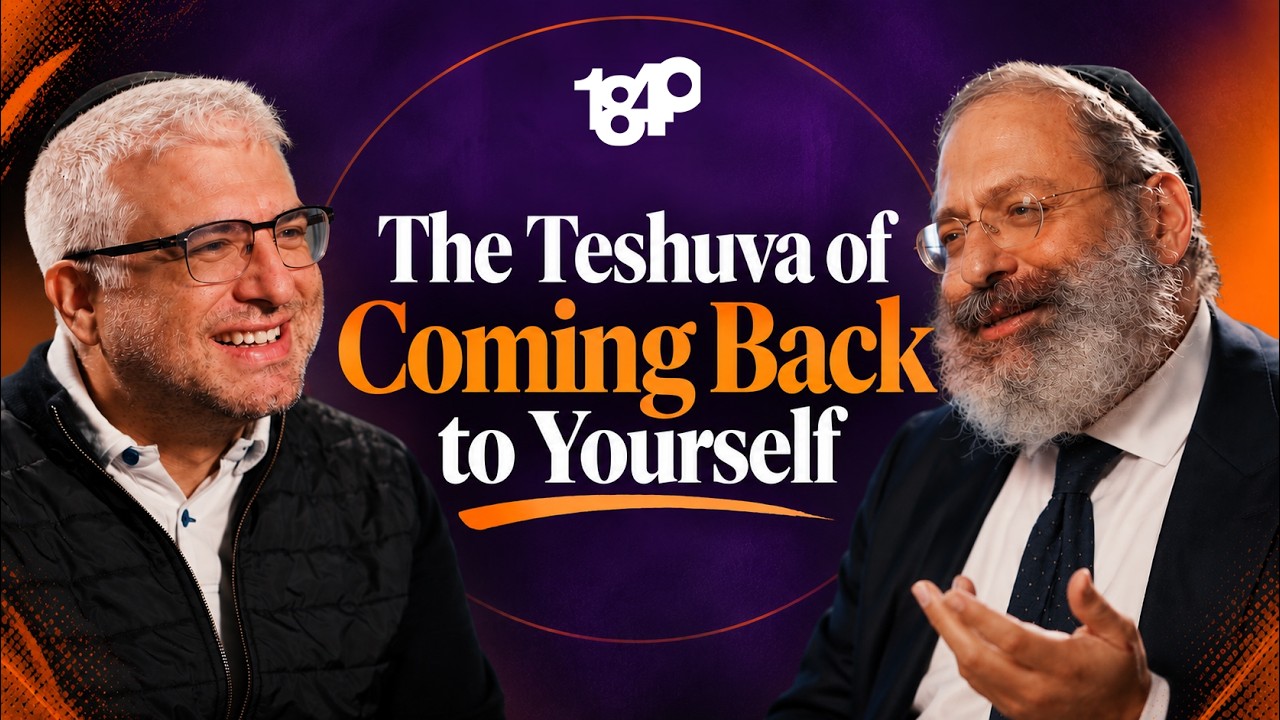
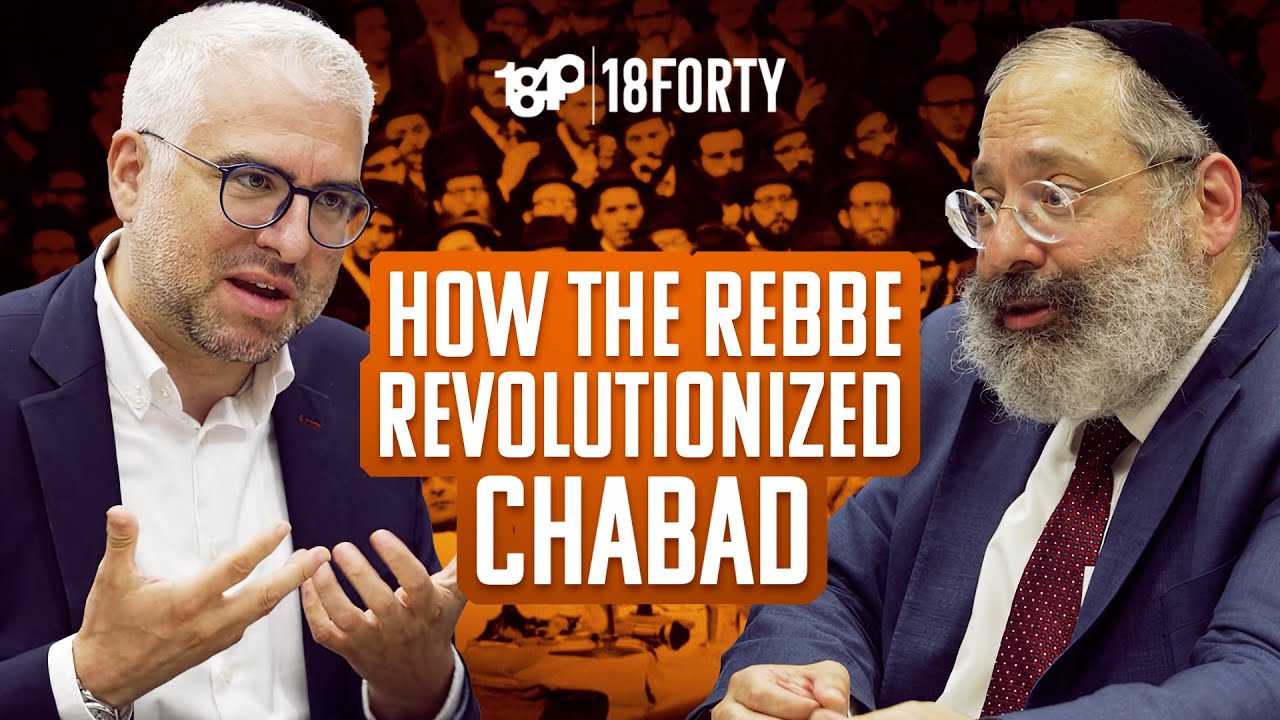
RABBI DR. BENJI LEVY. Rabbi Yussie Zakutinsky, it’s truly a privilege and pleasure to be sitting in your hometown, the rabbi of Mevakshei Hashem and really teaching people across the globe. Thank you for making the time.
RABBI YUSSIE ZAKUTINSKY. My honor and pleasure.
LEVY. Thank you, Rabbi. So, what is Jewish mysticism?
ZAKUTINSKY. Sometimes the simplest of questions are the hardest ones to answer. I would say Jewish mysticism is a framework through which one can experience how nothing has changed.
LEVY. You’re going to have to unpack that.
ZAKUTINSKY. What do I mean by nothing’s changed? On the deepest of levels, it means nothing’s changed since even before Creation. The same way God filled all of reality and was all of reality before Creation, so too, despite the fact that now there are gas stations and ice cream parlors and everything in between, despite the fact that there is a reality with so many moving parts, in a certain sense, nothing’s changed. And the lens through which one can experience that intellectually, emotionally, spiritually, viscerally, and bring that to the forefront of one’s own consciousness and others’ consciousness, that’s what we would call Pnimiyut HaTorah [the inner dimension of the Torah], Jewish mysticism, however you want to say it. But it’s that framing, it’s that lens through which one can experience on all levels how nothing’s changed.
LEVY. So, you personally came through not necessarily a typical Jewish mystical background.
ZAKUTINSKY. Whatever that is.
LEVY. Whatever that is. And you’re proliferating, you’re really growing this sense of Pnimiyut HaTorah, of this Jewish mysticism. How did you come to it? What is that journey for you?
ZAKUTINSKY. For me personally, the question that always propelled me and still does wasn’t so much why do we have the mitzvot [commandments] that we have, what’s the reason for them? To me, that was never my struggle. What fueled my personal fire and continues to do that is: What’s happening when I’m performing these mitzvot? Like, what is tefillin [phylacteries]? I know what tefillin are physically; you wrap them on your hand.
LEVY. You’re saying metaphysically, what’s the architecture behind it?
ZAKUTINSKY. What’s the experience? What is that space? I’ve mentioned this to people before, I show them these strings and I ask them, “What are these?” And the response would be, “tzitzit” [fringes]. No, it’s not. These are strings that I wear to allow myself entrance into a space in divinity and a space in my soul that’s called tzitzit. So these are strings that I wear to allow me entrance into that space that’s called tzitzit. What is that space?
LEVY. So essentially, tzitzit is a label and all these things we’re seeing are labels, and what this mysticism is doing is allowing you to look beneath the label of what actually is happening?
ZAKUTINSKY. To experience it through those. Every single one of the 613 mitzvot with all of its particular details are specific gateways into these places, these, so to speak, spiritual and levels of consciousness in which one can experience how nothing’s changed, right? But that’s what propelled me. I’m putting on these tefillin every single day and, God forbid, I never went through a period of not putting them on, but it was always haunting me: What am I doing? It has to be more than just the physical action. And again, the question to me was not why, but more of what. What is this?
LEVY. Can we double-click for a moment on tzitzit, or you can pick any example, to show that this is a label and what is peeling behind, what is going on?
ZAKUTINSKY. To take one particular mitzva and to give an example, the issue is that there are so many layers and differences in experience, it’ll take too long. But because there’s an intellectual strata for it, there’s an emotional one and so on. But I will say one thing, and I’ve mentioned this to people, to our friends in the shul [synagogue]. Ultimately, how does one know if you’ve entered into that space? Because it’s not just a matter of knowledge and it’s not even a matter of feeling per se; it’s not that either. Whether you’ve actually entered into that place of “nothing’s changed” through tzitzit, through tefillin, through Shabbat, or through keeping kosher. That space is almost unknowable, it’s almost undefinable because if it’s experiencing a little bit of pre-Creation, well, you can’t define pre-Creation because even the construct of definition is post-Creation, right? So the answer really is that there’s two markers. Just like when it comes to a pond, if a person throws a rock into a pond, there are ripples. So even if you missed that moment of the rock going in, if you see the ripples, you know a rock was there. So there are markers, there are indicators, there’s the ripple effects of being in that space. And the two markers are humility and loving other Jews, ahavat Yisrael [love of one’s fellow Jew]. If one is performing mitzvot and serving Hashem and it’s increasing their humility and their bond with other Jews, those are the indicators that you’re in that space of Jewish mysticism. If one’s mitzvot do not produce that, you’ve got to go back to the drawing board. So it’s not so much about intellectual understanding. If a person is an expert in Kabbala [Jewish mysticism] and divine names and all these things, but as a result of all of that their chest is more puffed and they feel superior to other people, it’s the exact opposite. They’re farther removed from that true place of the inner dimension of Torah than before.
LEVY. What makes you think those are the two markers? Is it based on specific sources or personal experience?
ZAKUTINSKY. So it’s something that to me, based on my understanding of things and my experience, that always resonated to me that those are the two markers. But then, thank God, I did find a source for it. I saw the Kamarna [Rabbi], the holy, the great tzaddik [righteous person], the Heichal HaBeracha, Rabbi Yitzchak Isaac Safrin, who was one of the great, great Hasidic masters and kabbalists of the 1800s. So he writes in one of his sefarim [holy books] this idea as well.
LEVY. Those specific ideas?
ZAKUTINSKY. Yeah, those specific things. Those are the two markers.
LEVY. In an ideal world, would all Jews be mystics?
ZAKUTINSKY. It depends what you define as a mystic. Someone that knows all divine names and is able to meditate, no, not necessarily. But this point of experiencing one’s service of Hashem and one’s Judaism as a way of connecting oneself to that place of divinity indicated by these two markers, absolutely.
LEVY. Beautiful. What do you think of when you think of God? We talked about the unknowable, the undefinable, but you’re in this deep connection through this study. What is the –
ZAKUTINSKY. I think of good things coming to the Jewish people. That’s what I think. When I think of Hashem my association is that the Jewish people are holy and they should only get good things.
LEVY. Is it coming through like a stream? Is there an image? How does one articulate that?
ZAKUTINSKY. So Hashem revealed Himself with His names. It’s no different than if I want to get your attention, Benji, so I could call your name. I understand that obviously through your name that’s a way of getting your consciousness, I grab your attention. You are not just your name, but your name is a vehicle through which I come in contact with you. So the greatest gift really of all time was Hashem revealing to us His name because you have to understand, without the names of Hashem, I don’t just mean these particular names and so on, but the ability of God, who is infinite and unknowable is at the same time approachable and knowable. That’s the great mystery of Judaism because there’s usually sort of a choice that a person has to make. Either I’m going to believe in an infinite God but therefore I can’t have any point of contact with Him, and therefore I’m going to have other things that I will sort of serve or connect to because there is an itch in the human being to try to connect to the transcendent. So if that which is transcendent is truly unknowable, I’ve got to scratch that itch in some other way. So that’s one option. Or I make God not so transcendent. But to be able to believe at the same moment that God is unbelievably transcendent and infinite and there are no words, but at the same time He’s approachable and He’s as close to me, closer to me than I am even to myself, and to be able to talk to Hashem in that way, that’s the great gift of Judaism. And that’s what Hashem revealed Himself with. I’ll just share one thing. The Vilna Gaon, the great genius of Vilna, Rabbi Eliyahu of Vilna, he used to say that one of his favorite tefillot [prayers] was Adon Olam [Lord of the World]. Adon Olam is an amazing thing. It’s one of the things you know from the time that you’re a kid; you sing it. Adon Olam is made of two parts. The first part of Adon Olam, the first couple sentences, is talking about how transcendent God is. The King from before Creation, everything only came into being because He said so. And then it transitions to the second part, which is “veHu Eli” [and He is my God]. That same God of the first sentences is my personal God. “Tzur chevli be’et tzara” [the Rock of my lot in a time of distress]; He’s my Rock that I hold on to when I’m going through a difficulty. That connection of feeling deeply personal to a reality that is transcendent, sometimes the best way, the best mashal, the best parable, the best medium to process that idea is the Jewish people. Because what’s a Jew? What are the Jewish people? Much more than what our eyes say. The more a person connects themselves to that, seeing themselves as part of the Jewish people, the more it refines their consciousness to allow themselves to be open to that which is truly transcendent. It’s only through the Jewish people.
LEVY. So you’ve talked about the purpose of each Jew in terms of learning and bringing about humility and loving other Jews and this incredible framing of what Jews are and who we can be, much more than meets the eye. But what is the purpose of the Jewish people?
ZAKUTINSKY. To show the world how nothing’s changed. And at the same time how you have physical reality and all the details that come with a physical world, to make this place a dwelling place for God Himself, how to show how nothing’s changed.
LEVY. So we started with this “nothing’s changed,” and our job is to show that nothing’s changed. Why does it really matter? Why does it matter for people that we need to show that nothing’s changed?
ZAKUTINSKY. Why does it? You’re asking a very good question. And the real truth is if you want to just cut through it, the real truth is why does a moth go to flame? It’s suicidal even, right? The answer is that’s what its instincts are, that’s what it’s made for. A Jewish soul and even its casing in the Jewish body is made for this. So a person can explain, the moth can come up with all sorts of theses and books to articulate why it wants to go to a flame, but all of that is really just a waste of time. That’s its metziut [reality], that’s what it was created for. And by the way, that’s where real joy comes from. If you had a lion chasing a zebra, and you take the lion to the side and say, “Lion, are you happy?”
“Am I happy? This is my greatest joy in life is chasing a zebra.”
“Why?”
“Because this is what I’m supposed to do. This is my nature. This is who I am.”
If you ask the zebra while it’s being chased by the lion, “Are you happy?”
“Of course I’m happy because this is what I’m created for also; this is what I’m supposed to do, I’m supposed to run away from lions.” When a person is doing exactly what their spiritual instincts are, there’s no greater joy than that. And that’s what Hashem wants of us, to experience that joy.
LEVY. But how do we navigate that? Because we also have physical instincts. So there might be a spiritual instinct to procreate, but it expresses itself through something else when someone’s younger. There might be a spiritual instinct to want to help people but it can express itself in another way. So that term instinct even is something that one needs to refine in Judaism. How do we actually?
ZAKUTINSKY. 100 percent. Listen, at the end of the day a person has many voices inside. And it’s not necessarily our job to turn off a particular voice. Very often a strategy is really raising the volume of the voice that should be raised to the point where it drowns out the other noise. So there’s a reason why Hashem gave us a physical body because again, the point is that specifically in the physical world, that would seem to be the most opposite of what was before Creation, specifically there to reveal how God is as much part of this world as He was before Creation. And that’s the great accomplishment. You asked before why we care about such an accomplishment. So I could begin to explain to you why, but the ultimate reality is that it’s what we’re made for. We’re made to reveal that and because of that, that’s why we care so much. And true happiness is going to come from that experience.
LEVY. Wow. So if all these different mitzvot, these different commandments are code words, like we explained tzitzit or how we’re trying to uncover here, let’s take two examples. Tefilla, prayer. How does prayer work? What are the mechanics of prayer?
ZAKUTINSKY. It’s an interesting thing. Again, it’s multilayered. On the most elementary of levels, from the time that a person’s a little kid, prayer means the kid wants a toy and the parent’s like, “No, it’s not for you.”
The kid’s like, “I really want it.”
“No, it’s not for you.”
“Really, really,” ke’ilu [sort of] pestering the parent until the parent says,
“Okay fine, genug shoyn [enough already], take the toy,” right? So you keep on pestering God, eventually He’ll give in, right? There’s holiness to that. One of the great, most important things of tefilla is authenticity. So if that’s what a person’s feeling, it’s also okay. Then you become a little more sophisticated and then prayer becomes by the kabbalists and so on, it becomes an exercise of channeling divine names and creating spiritual infrastructures to allow God’s presence to come into the world. Wherever God’s presence is, that place blossoms. So if there’s a particular aspect of a person’s life that is not blossoming, that’s an indication that that space is too much post-Creation, it’s not enough pre-Creation there. So tefilla is then an exercise of –
LEVY. Like a spiritual plumbing kind of thing to get the pipes –
ZAKUTINSKY. That’s what the mekubalim [mystics] will do. But the truth of all truths is that it’s hard to find the right words, but it’s like when you’re a kid, when you think of God He’s like this father figure in heaven. And then you become older, God becomes more like an algorithm. And then you become more sophisticated and you realize that maybe it’s closer to the father figure than the algorithm. At the end of the day, tefilla is about experiencing Hashem’s presence in your life, you know what I mean? And being able to say that my difficulties are not just my difficulties, Hashem’s experiencing those difficulties too. Why would He do that to Himself? I don’t know. But sometimes just realizing that, again it’s on a more sophisticated level, that itself is taking a corner of the world, so to speak, which is going through difficulty, whether it be a person’s livelihood, health, you name it, and saying and trying to bring a little bit of a taste of pre-Creation back into that space. On the simplest of levels, it’s by acknowledging that God is with me in that moment, God is in charge of it, and He’s experiencing it with me. So that to a certain degree is a very, very simple intention to have.
LEVY. Simple and very sophisticated.
ZAKUTINSKY. Not very sophisticated,
LEVY. When it’s also sophisticated to come to that simplicity.
ZAKUTINSKY. Which is taking an area where until now you feel lost in and you’re saying, no, no, no, how can you be lost when the bigger picture of where you are is in God’s presence? And this place is also saturated with Godliness, just like it was before Creation. And then when you strengthen yourself with that faith and you’re able to pick yourself up and to be happy and to go forward, then you’ll see slowly but surely the place will begin to blossom because you peeled back the layers and you showed how God’s there. And wherever God is, that place is good.
LEVY. Amazing. So what is the goal of Torah study then?
ZAKUTINSKY. Same idea. Torah study is a very unique and a very potent way of a person revealing God’s presence in all layers of their consciousness. If there’s any place in a person that the reality of post-Creation, which is a sense of independence and ego, is the strongest, it’s in the intellect. So if in the intellect one can focus their mind on learning about what God thinks about as opposed to just what we think about, there’s no greater transformation of post-Creation to infuse pre-Creation into that than Torah study.
LEVY. Which in a sense also refines our entire being because it’s going through the neural pathways.
ZAKUTINSKY. It’s who you are, it’s your identity.
LEVY. Amazing. Does Jewish mysticism view women and men as the same?
ZAKUTINSKY. No. No two people are ever the same anyway. No two men are the same, no two women are the same. No. Men have this task of turning the world into a dwelling place for Hashem and so on, and peeling back the layers and showing how even after Creation God is as much there as before, this is a task that no individual person can do. And therefore Hashem allots to each person a particular corner of the world, so to speak, that they have to work on. And that’s true individually, and that’s true zooming out. Men have a certain particular space of the world that they have to accomplish this, and women at the same time in their space. In the mitzvot that Hashem gave for men and for women, and the same thing it is within men, kohen [priest], levi [Levite], Yisrael [Israelite], all different, if you’re in Eretz Yisrael [the Land of Israel] versus chutz laaretz [outside the Land], you name it. I mean, every particular corner of the world has its particular challenges and particular tools needed to fix it, and particular people are given those tasks. So there’s no question that people are definitely different; that’s basic, that’s intuitive.
LEVY. And should Judaism be hard or easy?
ZAKUTINSKY. It depends what you mean by hard and easy. Is the lion exerting energy chasing the zebra? Is the zebra exerting energy being chased by the lion? Certainly. But they’re happy doing it. So very often we make the mistake of associating easy with joy and hard with being sad or upset. It has to be with energy, but that energy should come and be associated with a deep sense of tranquility.
LEVY. Amazing. Why did God create the world?
ZAKUTINSKY. I don’t know. You have to ask Him. If I go to the grocery store, and I’m shopping at the grocery store, and someone asks me why are you here? I could tell them I’m here because my wife sent me shopping. If that person is just a tangential figure in my life, then he’ll be satisfied with that answer and he’ll continue on his way. If the person is a little more connected to me, then they’ll say, “No, why are you here?”
And I’ll say, “Okay fine, it’s because my wife needs to make a cake.” And then the person might walk away.
If the person’s closer to me, then they’ll say, “Nu [come on], why does she want to make a cake?”
I’ll say, “Oh, it’s because it’s my brother’s birthday.” The person will walk away.
Someone that’s close will say, “Oh, your brother’s birthday? Is he coming over? Are you going to see him today?”
So the question of why we’re here and why Hashem put us here, there are infinite layers to the answer of why you’re here. What is going to be satisfying to you [depends on] how developed your soul is. The less developed, the more satisfying the answer is just in order to get these ingredients. “Okay, thank you.” The more deep and developed, that’s not going to be satisfying. “But why do you want, what are you going to do with these ingredients?” And they’ll be satisfied with that. So it’s a multilayered thing and you have to know where you’re holding.
LEVY. But that’s a bit counterintuitive, because basically what you’re saying is the more simple you are, the more easily you’ll be satisfied, meaning that those that are really interested and really engaged sometimes may have the most difficult interaction with these deep questions.
ZAKUTINSKY. 100 percent. That’s an indication of them having to go further. They have to go deeper. 100 percent. It’s no different than if you have a fourth-grade education. That is good for a fourth grader. But even if your knowledge is of a fourth grader, if your potential is college level, then a fourth-grade education will feel like a prison.
LEVY. So a lot of people I ask will say dira betachtonim [a dwelling place in the lower realms], that God wanted a dwelling place in the lower world so to speak.
ZAKUTINSKY. That’s from Chazal [our Sages], the Midrash [homiletics] says that. But what does that mean?
LEVY. So unpacking that, how does that happen?
ZAKUTINSKY. You have to keep on evolving, so to speak, and then the answer will evolve with you.
LEVY. Amazing. And so can we do something against God’s will once we’re created?
ZAKUTINSKY. God wins at the end, but part of being Godlike is having free will and being able to accomplish something truly. But the Lifeguard is watching to make sure that everything ultimately works out.
LEVY. And what do you think of when you think about Mashiach [the Messiah]?
ZAKUTINSKY. I think of the Jewish people realizing who they are.
LEVY. Is it a being? Is it an era?
ZAKUTINSKY. It’s the return of the kingdom of the Jewish people with the ability to keep all of the mitzvot [commandments] properly, where the world is able to finally get to work. Right now it’s like if a person’s cooking, you do prep. So we’re in the thousands of years of prep. So people think when Mashiach comes, okay now you can sit back. No, no, that’s when you actually get to work.
LEVY. What will the work be if Mashiach is here?
ZAKUTINSKY. We could finally, actually keep Torah and mitzvot the way they’re supposed to be.
LEVY. And is the State of Israel part of this final redemption?
ZAKUTINSKY. Everything. You know there’s a story from the Chafetz Chaim, the great tzaddik [righteous person], when they signed the Balfour Declaration. So they came to the Chafetz Chaim and they asked him, “Nu [well], Rabbi, is this the beginning of redemption?”
So the Chafetz Chaim said, “Bring me a Chumash [the Five Books of Moses].” He took a Chumash and he opened “Bereishit bara Elokim” [in the beginning God created]. That was the beginning of redemption. Everything is a step in the right direction. The Lifeguard is watching, everything is part of the process. But the main thing is our responsibility is to bring the redemption to ourselves, to the moment, and to that day. What’s called Mashiach prati, the particular Mashiach. The Mashiach klali, [the collective Messiah], the bigger picture of when the collective world is ready to actually start working, God will determine that and it should be very, very soon. But the main responsibility we have is to find that redemptive consciousness within ourselves, and that’s what we’re talking about, which is peeling back the layers of Creation and realizing and really connecting to that truth that God is as much here as He always was. With those two markers of humility and ahavat Yisrael [loving your fellow Jew]. That’s a redemptive, that’s bringing Mashiach to that moment.
LEVY. So what is the greatest challenge facing the world today on a broader level?
ZAKUTINSKY. I’ll give you, maybe, not such a nice example. If you had a dead body, if the soul left the body, what happens to a dead body? Everything begins to fall apart. So if a person wants to fix the problem, you could scotch tape it and duct tape it. At the end of the day, the real solution is to bring the soul back into the body. When the soul goes back in the body, the body takes care of itself. What are the problems facing the world? Everything. Because when the soul is removed, then the body falls apart. So, again, you could scotch tape this part, you could sew this part together, you could make a Frankenstein’s monster out of it. The real solution is to bring the neshama [soul] back. And since the destruction of the Beit HaMikdash [Holy Temple], the soul of the Jewish people and the collective world has left. And what we need and what we have to figure out to do within our own lives and in our surrounding circles is to reintroduce the soul back into the world. And on a larger scale, that’s what I’ve been talking about. The Creation means the body. The reality of Hashem before Creation is the soul. To bring the soul back into the body, then all the problems of the body take care of themselves.
LEVY. How do we do that?
ZAKUTINSKY. Through keeping meticulously all the laws of the 613 mitzvot with this consciousness of trying to do them in a way that increases humility and ahavat Yisrael.
LEVY. And on a universal level for all people beyond Jews?
ZAKUTINSKY. Same thing, introduce them to their Seven Noahide Laws, but with that framing of a sense of responsibility and a sense of purpose. It’s not just a matter of keeping these laws and not to kill; most people don’t kill. You know what I’m saying? But it’s a matter of those Seven Noahide Laws coming from a consciousness of purpose, of responsibility, of movement forward, of being part of God’s universe. In that context, in that framing, then the Seven Noahide Laws will be able to propel that, that’s also for the level of introducing the soul back into the body of the non-Jewish world.
LEVY. It feels like a big issue here is the framing, meaning that there’s a lot of people that are keeping the body of law, so to speak, but lacking that soul of law with that framing and that conception is what you’re –
ZAKUTINSKY. You could deal with the symptoms. And there’s nothing wrong with that if you have a person whose particular focal point is dealing with the fingers of the body. Okay. But I would say that what’s more productive long-term is to reintroduce the soul. And once that happens, like I said, the body takes care of itself.
LEVY. So how has modernity changed Jewish mysticism?
ZAKUTINSKY. I think as we get closer to Mashiach, the, I guess for lack of a better word, the Hebrew word nekuda, the essential point, becomes more clear. And in the earlier generations, it could be mysticism was more focused on the technical divine names, the mathematics of it. But as we get closer to Mashiach, I think the nekuda, the essential point that can’t be identified in any way other than by its markers, which is humility and ahavat Yisrael [loving your fellow Jew], that becomes more pronounced. And so it actually becomes much more universal, it becomes distilled to a point of where you don’t necessarily have to take a person and change their schedule in order to introduce them to this. I’ve been asked before whether if I was in charge, which I’m not, would I change the school curriculums and instead of learning Gemara [Talmud] in yeshiva [academy], would I teach Kabbala and things like that? No. No. Maybe that should have been done, maybe that would have been the approach a thousand years ago or 500 years ago, 200 years ago and so on, but now as we get closer to Mashiach, the nekuda, the point, the essential distilled essence of Jewish mysticism becomes more clarified. And that point of Jewish mysticism, which is what we’ve been talking about, can be found in Talmud, in Chumash, in saying hello to another Jew, in everything you’re doing anyway. It’s just doing it with that consciousness of humility and loving other Jews and with a sense of searching for something. [With] those three ingredients, you’re a Jewish mystic.
LEVY. We shouldn’t change what we’re teaching, we should change how we teach it.
ZAKUTINSKY. I think that’s the main thing. Those three ingredients: humility, ahavat Yisrael, and a sense of searching for something. If you have those three ingredients, then everything you’re doing is then holy.
LEVY. You added the third to the Kamarna, the sense of search.
ZAKUTINSKY. I did. I did. But because that opens you up to the experience. You know what I mean?
LEVY. Well humility actually whets the appetite to search. And loving another Jew, what do you do when you love someone? You need to get to know them better, you need to connect. So –
ZAKUTINSKY. It’s all part of that.
LEVY. It’s a seif, it’s a subcategory. What differentiates Jewish mysticism from other mysticisms of other religions or religious traditions?
ZAKUTINSKY. So the truth is, again, I’m not an expert in other religions, but from the little that I do know, I think the direction is very different. In other disciplines, the goal of the mystic is to go up. By Judaism, the goal is to bring down, is to take light and to take pre-Creation divine consciousness and not to escape there but to reveal it down here. So it’s a very different direction. It’s almost the opposite.
LEVY. So does one need to be religious to study Jewish mysticism?
ZAKUTINSKY. There’s no such thing as religious versus not religious. Every Jew stood by the foot by Mount Sinai. Every Jew was given all of Torah, every Jew was given this task and this gift of fixing their corner of the world and we have the tools with which to do it with humility, and loving other Jews, and with a sense of searching, and so on and so forth. Every other label is man-made. And that’s post-Creation, which is the opposite of being a Jew.
LEVY. Therefore, everyone should be able to.
ZAKUTINSKY. Every person has to do what’s within their toolbox. And these toolboxes are given to us from God because you can’t become supernatural with all natural ingredients, you know what I’m saying? So it has to be given from On High. But there’s no such thing as a religious Jew and there’s no such thing as a non-religious Jew. All there are are Jews.
LEVY. If it’s open to everyone, this toolbox, can it be dangerous?
ZAKUTINSKY. Anything can be dangerous. A person has to approach everything in life with guidance and as a healthy person. If a person is healthy and well and balanced and grounded and so on, then that’s part of life, you know, everything can be abused.
LEVY. Your students, almost chasidim [followers], see you as their rabbi, and you’re a rabbi for Klal Yisrael [the Jewish People], teaching so much important Torah. That’s one layer, and then you’re interacting with your own wife, your own children. Has the study of Jewish mysticism impacted your own personal relationships? And can you give an example of that?
ZAKUTINSKY. It better. If it’s not, if a person doesn’t find themselves becoming a better husband and father, then uh-oh, then that’s not healthy, it’s not holy.
LEVY. Is it like a certain intention that you actually see in the home or that you see in these places?
ZAKUTINSKY. Well yeah, a person certainly has to approach things differently the more connected you are to the depth of Torah, but it has to change the person himself. Again, the Talmud [body of Jewish law] tells us about God, “bemakom she’ata motze Gedulato sham ata motze Invetanuto,” where you find God’s greatness, that’s where you find His humility. In other words, how do you know that you’re in the presence of Hashem? When you’re comfortable to go to low places. I don’t mean low, unholy, and unhealthy; I’m talking about low just, you know. How do you know someone loves you? Because they say “I love you,” because they buy you presents? The indicator of love is if they’re willing to put themselves in an uncomfortable place for you. Moser nefesh [self-sacrifice], to sacrifice themselves for you. So God, all we know about God is His sacrifice for us, right? It’s His willingness to think about us and to descend into our lives, which in comparison to Him is pretty small, right? Like our entire relationship with God is one of Him sort of putting Himself in uncomfortable places for us. So if my service of Hashem and my mitzvot are bringing me to a connection to Hashem, then I’m going to mimic that as well. So automatically I will find myself more inclined to happily go into uncomfortable places and in narrow spaces, so to speak, for my wife and kids, and it won’t feel like an overwhelming task because that’s what it means to be Godlike. It doesn’t mean that every day you’re on, you know what I mean, but overall that’s the shift that a person should have.
LEVY. So we’ve talked a lot about the way these teachings impact our life. Can we learn a teaching? What is an idea that resonates with you right now that you’d like to share?
ZAKUTINSKY. There’s a teaching that we find in the holy Zohar [the foundational work of Jewish mysticism]. The Zohar says that we associate the coming of Mashiach [the Messiah] with teshuva [repentance], with people returning to Hashem. And we usually associate teshuva, returning to Hashem, with people that are disconnected from Torah and mitzvot. So the person is sort of lost at sea, right? And teshuva means for them to find their way back home. The Zohar says in [its commentary on] the Torah portion of Behaalotecha that that’s true, but you don’t need Mashiach for that. Any good teacher should be able to do that. What do we need Mashiach for? So the Zohar says Mashiach is really to turn tzaddikim [righteous people] to do teshuva. That the righteous should do teshuva, should return to Hashem. If a person’s righteous it means that they’re living correctly. What does it mean for a righteous person to return to Hashem? If it is referring to the area of life that they’re not righteous in, then they’re not righteous in that. But to say that a righteous person will return to Hashem means it is referring to that area that they’re righteous in, that they should return to Hashem. What does that mean? The answer is this point. Very often the mistake that the righteous make is to think that they understand everything, that God’s the algorithm, and everything makes sense, and they know exactly what the plan is. So you have two Jews, one is a Jew that is lost at sea, that doesn’t know his up from down, his right from left; he is completely confused. That person’s teshuva, that person’s return, means to give them clarity. Then you have another person, their entire life is clarity to the point where they’ve never experienced not understanding anything. Not understanding intellectually, emotionally, everything. For that person what is teshuva? What is to be returned to Hashem? It means to be shown that the God that you think you know, you never met. And that unifying force of showing how God is close to those that feel they never met Him, but completely far from people that think they know Him, that’s what Mashiach does. That’s the goal of Mashiach. And ultimately Jewish mysticism is about bringing together those two groups. That the same God, God is so deep, and so transcendent, and so outside of the framework that we approach Him with that therefore, just as God can be known, He can be unknown at the same time. And that’s the teshuva this time of year. I don’t know when this will be shown, but it’s Elul [the month] right now. The Arizal writes, the great kabbalist Arizal says that the pasuk, the verse that is shining in the month of Elul is “haNoten bayam derech,” the One who puts a path in the ocean. The Arizal says that you can read that verse in Hebrew two ways. You can read it as Hashem puts a path in the ocean. Or you could put it that Hashem puts an ocean in the path. So there are some Jews who are lost at sea, they don’t have any clarity. What does teshuva mean for them? That Hashem puts a path in the ocean. But there are other Jews, their entire life is a path, and they’ve never been confused in their life, and they look at other people who are confused and say, “I don’t know, they don’t get it.” Those people have to do teshuva. What does Hashem need to do for them? Put an ocean in their path.
LEVY. Beautiful.
ZAKUTINSKY. So that’s what teshuva [repentance] does.
LEVY. Amazing. It sounds also like karov Hashem lechol korav [God is close to all who call Him], those that reach out to God that are looking, He’ll be close to, but also the end of the pasuk, the end of the verse is like, those that are seeking out to Him in earnest.
ZAKUTINSKY. Yeah.
LEVY. We also need to bring both sides.
ZAKUTINSKY. The name of the shul [synagogue] is Kehal Mevakshei Hashem, the congregation of those that search for Hashem. I’ve told the guys before, I joke about it you know, that every Jew is welcome in the synagogue except for those that think that they already got to Hashem. If you think you got there, then we kick you out. As long as you’re searching for Hashem, then you’re welcome. That’s koreHu be’emet [those who call upon Him in truth], those that are truly searching. Well, Rabbi, you clearly in your own life are searching, which is an incredible lesson in and of itself, and causing so many others to search. And while we may never ever get there, may we always be seeking every step of the way and it becomes that much closer so we peel the onion one level deeper. It will be revealed that in our search Hashem was searching with us too.
LEVY. Amen. Shkoyach [thank you]. Thank you so much.
ZAKUTINSKY. Pleasure. Hatzlacha rabba [much success].